
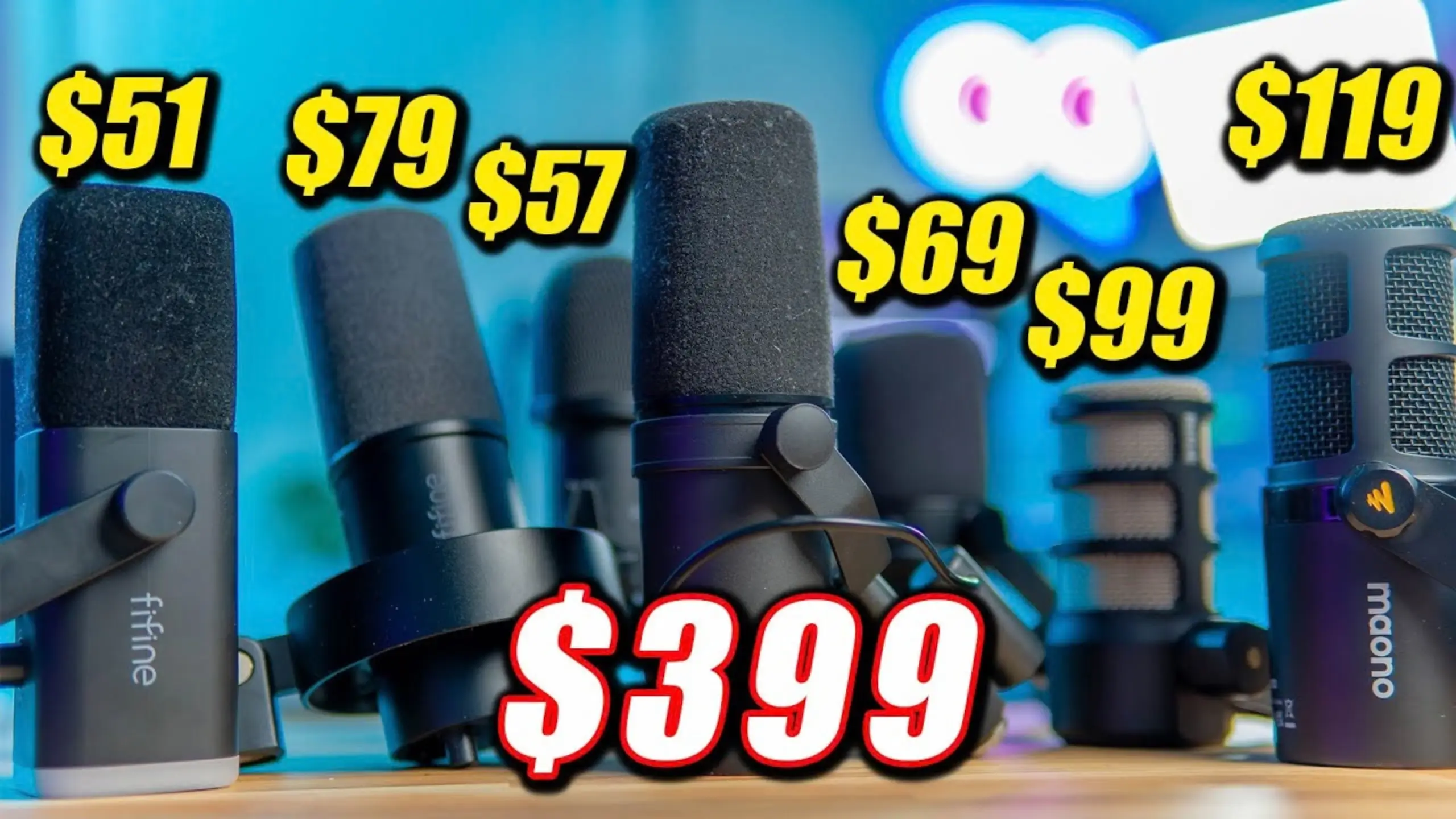
7 Best Dynamic Microphones in 2026 (USB, XLR and Hybrid Picks)

Dynamic microphones have taken over creator setups for one simple reason: they hear you and ignore most of your room. You speak close, you keep the gain moderate, and your keyboard, air conditioner and roommates fade into the background.
What is the best dynamic microphone? Here we picked seven dynamic mics that kept coming up, from roughly $50 budget options to the roughly $400 Shure SM7B. From beginners to pros, streaming to podcasting, there’s one for you.
7 Best Dynamic Microphones At A Glance
- fifine AmpliTank Tank6 – Best overall
- fifine AmpliGame AM8 – Best for beginners and budget streamers
- fifine AmpliTank K688 – Best for hands-on control and a warm tone
- Shure SM7B – Best for pros with a full XLR setup
- Maono PD400X – Best for tweakers who want software EQ
- RØDE PodMic – Best XLR-only mic for podcast desks
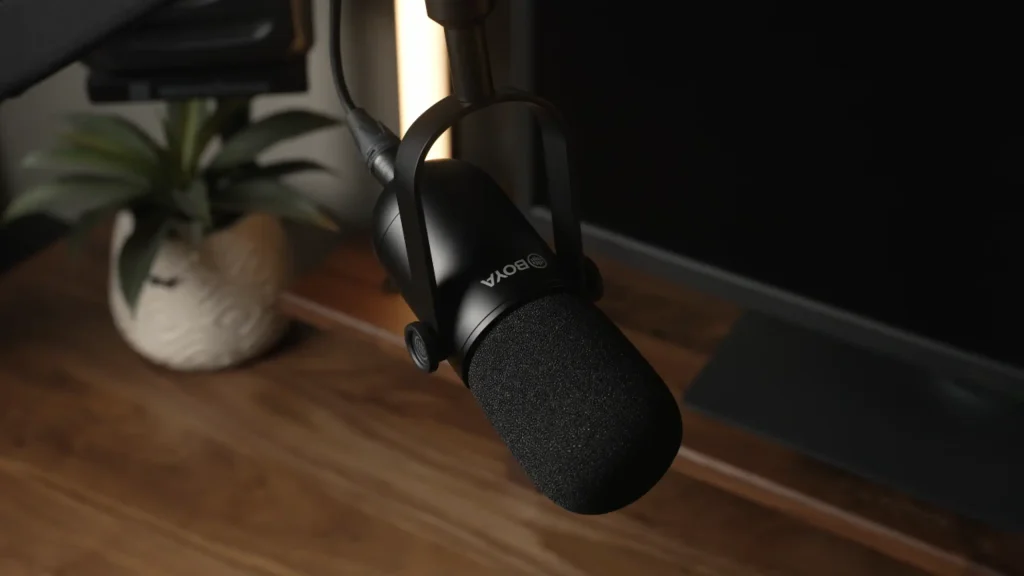
- BOYA BY-DM500 – Best for a deeper, bass-heavy voice
Inside the 7 Best Dynamic Microphones
Our scores weigh five factors: out-of-the-box sound, noise rejection, connectivity, build, and total setup cost. Here is how these dynamic microphones perform.
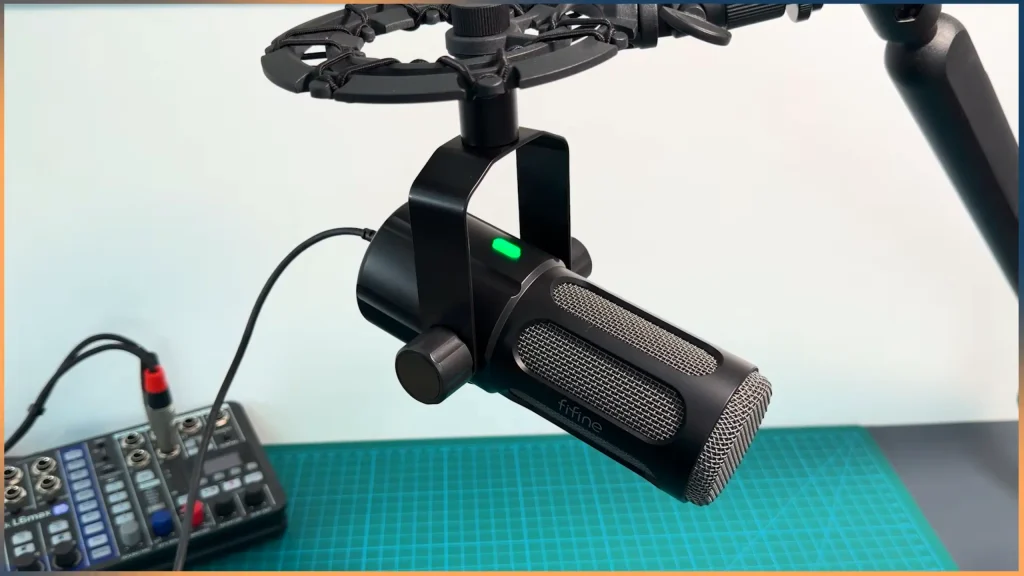
1. fifine Tank6 Microphone – Best Overall
Mini-review: An all-metal USB and XLR dynamic mic that sounds great raw, rejects noise well, and allows a clear upgrade path.
What you get
- Solid metal build from top to bottom
- USB and XLR in one mic, with a tight quality gap between them
- Onboard mute button plus gain wheels for both mic and headphones
- Headphone monitoring with no discernible latency
- Strong side and rear rejection for noisy rooms
What could be better
- Plosives creep in if you talk straight into the capsule
- Handling noise is manageable, but you’ll hear it if you grab the mic mid-take
The fifine AmpliTank Tank6 Microphone is the best dynamic microphone overall in our testing. @MichaelNobleMusic tested it, ran the entire video with zero post-processing, and called it a possible new favorite.
The sound quality is surprisingly great. Whether using the USB mode or connecting the fifine SC8 audio mixer via XLR, this dynamic mic can provide a warm and clear sound.
Noise rejection is the other headline. The cardioid pattern drops the sound from the side or behind the mic. Plosives stay under control as long as you keep the mic slightly off to the side of your mouth, so a pop filter is optional rather than essential.
2. fifine AM8 Microphone – Best for Beginners and Budget Streamers
Mini-review: For about $50, you get USB and XLR, touch-to-mute, RGB and headphone monitoring, plus sound like the SM78.
What you get
- USB and XLR for around $49 to $50
- Capacitive touch-to-mute, RGB lighting and a direct-monitoring headphone port
- Plugs into a PlayStation over USB
- Clean sound at 100% Windows volume with no processing
What could be better
- The plastic body picks up handling noise, so a boom arm helps a lot
- Not the pick for instrument recording or serious voice-over work
fifine AmpliGame AM8 microphone delivers a clear and warm sound like the Shure SM78 mic. At about $50, many reviewers, such as @DarkenedCyrus, recommend it as the beginner choice. The reason is practical: the AM8 sounds decent to great the moment you plug it in.
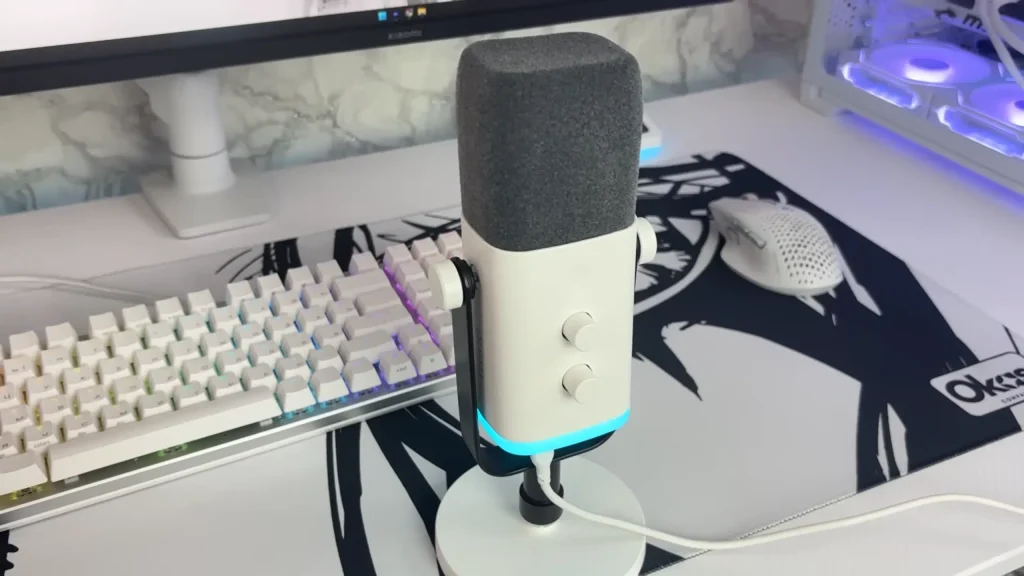
When recording over USB with fifine AM8 microphone, neither noise, like a washing machine running or a dog barking, was picked up in the audio.
The plastic body might cause some noise. In a separate sound test, @DarkenedCyrus mounted it on a boom arm to cut down on handling noise from the plastic body, running it over XLR at 50 dB of gain. For great convenience? The fifine AM8T microphone kit can improve your streaming or recording setup.
3. fifine K688 – Best for Hands-on Control and A Warm Tone
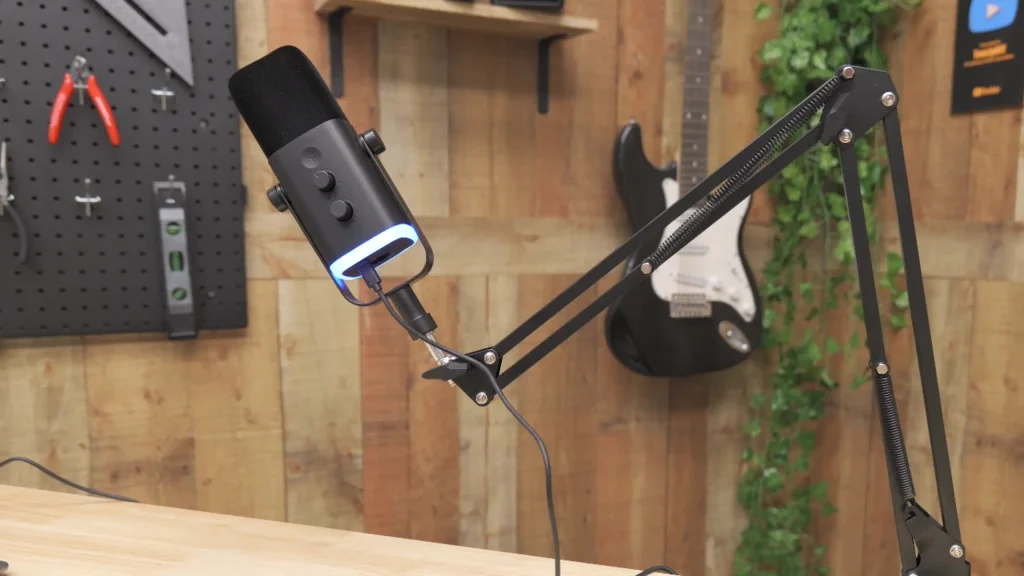
Mini-review: A USB and XLR mic with physical knobs for gain and headphone volume, and a warm, full tone that meets your needs in professional recording.
What you get
- USB and XLR, so you won’t need a new mic when you move to a mixer
- Separate knobs for mic gain and headphone volume on the bottom
- Warm, rich tone that flatters thin or nasal voices
- Tight cardioid pickup that cuts keyboard and room noise
What could be better
- Output drops fast when you move away, so you need to stay close
- Costs a bit more than the AM8 for a similar feature set
The best fifine K688 microphone story comes from a blind test from @StreamScheme. He played three clips and labeled one as a Shure SM7B running through a full processing chain. The twist: that clip was actually the K688 with just a compressor and a lightly adjusted three-band EQ.
The fifine K688 dynamic microphone provides a warm and full sound and has strong rejection of playback noise with the cardioid polar pattern. @StreamScheme describes his own voice as nasal, but the fifine K688 mic gives a rich and warm sound, even when the air conditioner was running and the keyboard was being typed.
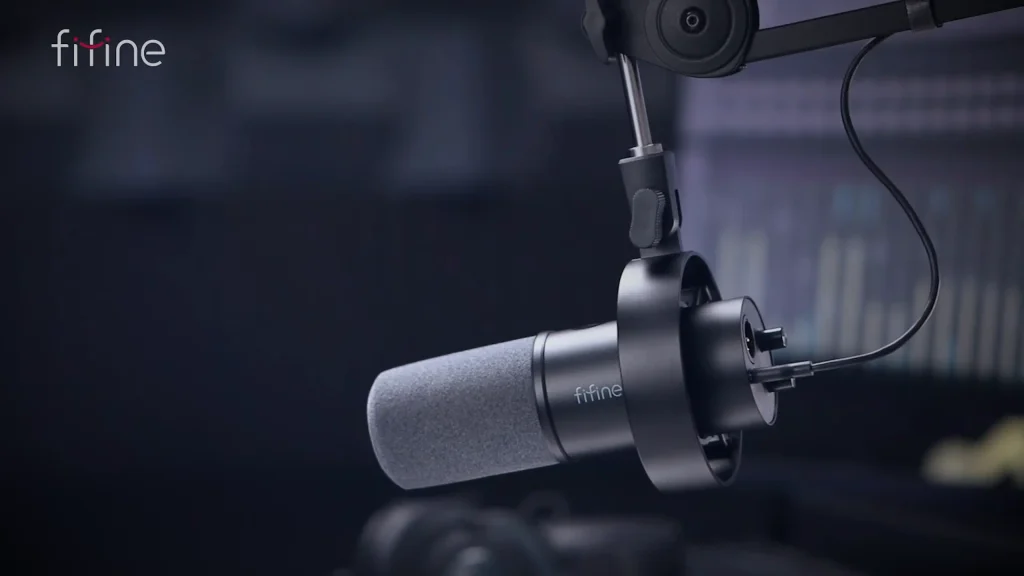
The smooth knobs on the K688 microphone are a little quieter than the clicky buttons on the Samson Q2U. If you like easy built-in control, refined design, and the pro-level sound, the fifine K688 dynamic mic is your pick.
fifine Tank6 vs AM8 vs K688 Microphone
| Tank6 | AM8 | K688 | |
|---|---|---|---|
| Connection | USB + XLR | USB + XLR | USB + XLR |
| Body | All metal | Plastic | All metal |
| Onboard controls | Mute button, mic and headphone gain wheels | Touch-to-mute, headphone port | Mic gain and headphone volume knobs |
| Standout trait | Buy-once build and near-identical USB/XLR sound | RGB, console support, lowest price | Warm tone, tactile control |
| Approx. price | ~$115 | $49–$50 | ~$75 |
4. Shure SM7B – Best for Pros with A Full XLR Setup
Mini-review: The industry-standard broadcast mic, with a huge ceiling once you give it enough gain and some EQ.
What you get
- A proven, well-built broadcast mic
- High-pass filter and presence boost switches on the back
- Two windscreens, including a thicker one that doubles as a spacer
- Natural de-essing effect that tames harsh S sounds
What could be better
- Gain hungry: many interfaces need a Cloudlifter (about $149 extra)
- XLR only, with a full setup that can approach $1,000
- Can sound muddy or flat out of the box
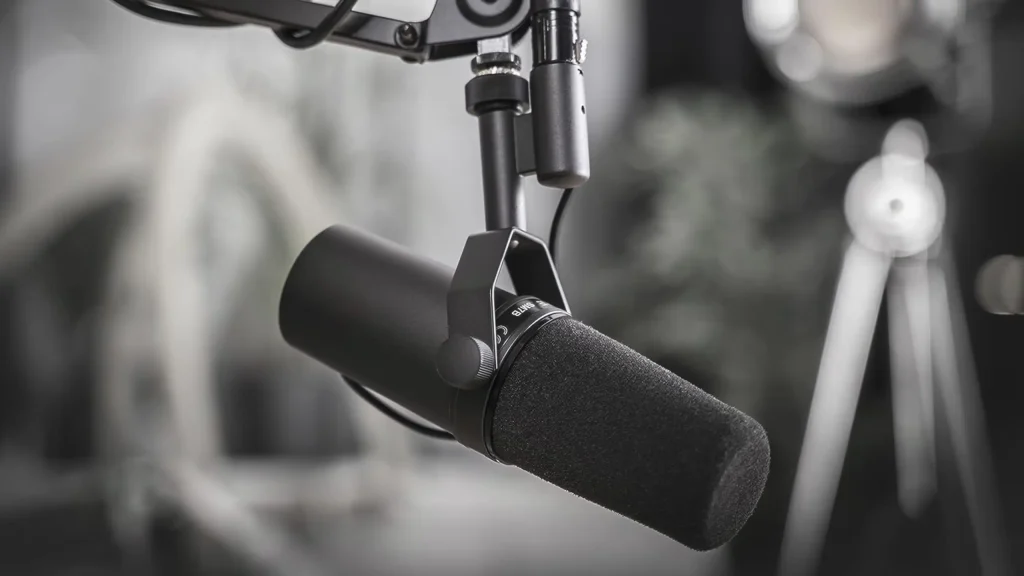
The SM7B earns its reputation, but it asks a lot. In one raw sound test, it needed 61 dB of gain, the most of any mic on the table. To get usable levels, it had to max out its Focusrite Scarlett 2i2 preamp. If you speak slightly, like narrators of audiobooks with a quieter voice, a Cloudlifter will help.
Out of the box, the SM7B is a little muddy or flat. The built-in switches and some EQ fix that, but that takes skill. So, if you already have the chain and are good at microphone adjustment, pick it. Skip it if this is your first mic.
5. Maono PD400X – Best for Tweakers Who Want Software EQ
Mini-review: A USB-C and XLR mic with companion software for EQ and compression, and a smooth XLR sound.
What you get
- USB-C and XLR in one mic
- Maono Link software with EQ, compressor and tone presets over USB
- Touch mute that glows red when muted and green when live
- Smooth mids with good lows and highs in XLR mode
What could be better
- Onboard controls and lights do nothing in XLR mode
- A hardware limiter kicks in over USB during very loud moments
- Pricier than the fifine hybrids at $130 to $150
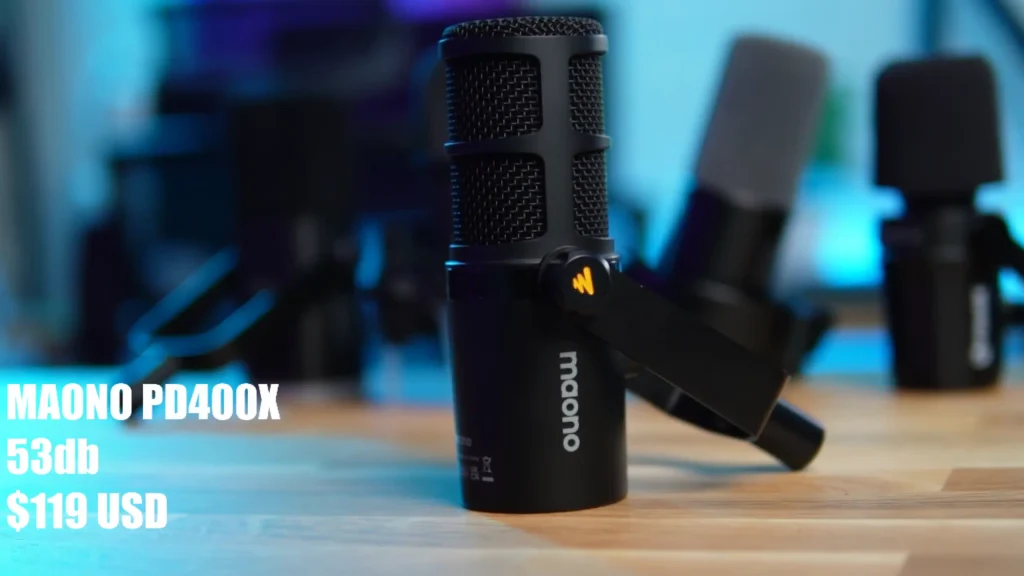
One tester described the PD400X as what you’d get if the RØDE PodMic and SM7B had a baby and added USB. In XLR mode, another reviewer called it one of his favorite-sounding mics straight out of the box, with clarity and presence to spare.
Over USB, the software tone modes — deep, bright, natural and legacy — let you tailor it to your voice. Gamers should note the USB limiter: if you yell in a clutch moment, it will clamp down, and you can’t disable it.
6. RØDE PodMic – Best XLR Mic for Podcast Desks
Mini-review: A heavy XLR mic with a punchy, forward sound and an internal windscreen.
What you get
- Hefty build that stays put
- Effective internal windscreen
- Dual-thread yoke that mounts without adapters
- Mid and upper presence that sounds almost pre-compressed
What could be better
- XLR only, so you’ll need an interface
- The capsule sits deep inside, so you need to get closer
- No built-in EQ or filters
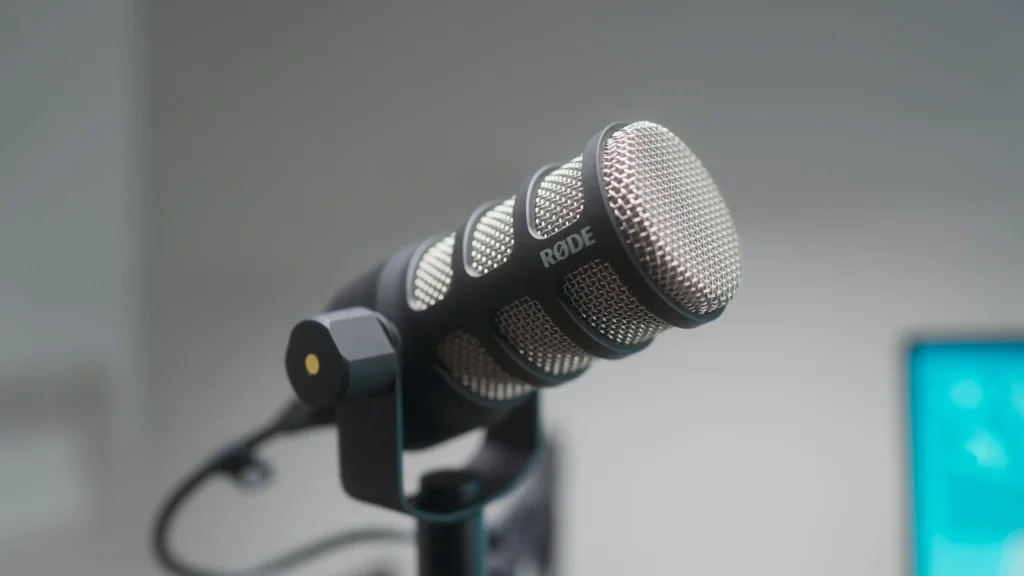
The PodMic shows up in countless budget podcast setups, and it’s easy to see why. @DarkenedCyrus said its presence makes it sound compressed even though it isn’t — great if you like a finished sound without editing.
It needed 55 dB of gain in the raw test, more than the fifine mics. And because the capsule sits further inside the body, you have to lean in to get that close-up proximity effect.
7. BOYA BY-DM500 – Best for A Deeper, Bass-heavy Voice
Mini-review: An XLR mic that needs less gain than most and delivers the bassiest sound without turning muddy.
What you get
- Needed less preamp gain than most mics in its test
- Rich low end with solid mid and high presence
- External windscreen included
- Dual threads for easy mounting
What could be better
- XLR only
- No built-in features beyond the basics
The BY-DM500 targets PodMic buyers directly at a nearly identical price. It’s the bassiest of six mics, yet it still kept enough mid and high presence to stay clear. If your voice sounds thin on other mics, this one adds weight.
Which Dynamic Microphone Should You Pick?
| If you… | Pick |
|---|---|
| Want one mic that lasts from beginner to pro | fifine Tank6 Microphone |
| Have about $50 and want to stream or game today | fifine AM8 Microphone |
| Want physical knobs and a warmer voice | fifine K688 Microphone |
| Already own an interface, Cloudlifter and EQ skills | Shure SM7B |
| Love tweaking EQ and tone presets in software | Maono PD400X |
| Run an XLR podcast desk and want a punchy sound | RØDE PodMic |
| Have a thin voice and want more low end on XLR | BOYA BY-DM500 |
How to Pick A Dynamic Microphone
Noise Rejection
A dynamic mic with a cardioid pattern picks up what’s in front and rejects the sides and back. That’s why @DarkenedCyrus could run washing machines, air conditioners, and mechanical keyboards without ruining takes.
The trade-off: output drops fast with distance. If you put the mic far away from your mouth, the sound is thin and distant. Stay within about 3 to 6 inches. Check out our microphone placement guide.
USB, XLR, or Both
| Connection | Best for | Watch out for |
|---|---|---|
| USB only | Plug-and-play, phones and tablets | Hard to run multiple mics; you’ll replace it to upgrade |
| XLR only | Multi-mic podcasts, interfaces, mixers | Needs extra gear from day one |
| USB + XLR | Starting simple and upgrading later | Some controls may not work in XLR mode |
Many dual-connectivity microphones, like fifine AM8, Tank6, and K688 dynamic mic, will provide an upgrade path for many users. From beginner to pro, a hybrid dynamic mic solves that. See our guide about USB vs XLR microphones.
Gain Requirements
Dynamic mics need more gain than condensers, and some need a lot. Here’s how much gain these best dynamic microphones feature:
| Mic | Gain used (XLR) |
|---|---|
| fifine AM8 | 50 dB |
| fifine K688 | 50 dB |
| Maono PD400X | 53 dB |
| RØDE PodMic | 55 dB |
| Shure SM7B | 58–61 dB |
If your interface tops out early, a gain-hungry mic may force you to add a Cloudlifter. Check out the condenser vs. dynamic microphone guide.
Build and Handling Noise
Metal bodies like the dynamic microphone fifine Tank6 feel sturdier and usually transmit less handling noise. Plastic bodies like the AM8 microphone keep costs down but benefit from a boom arm. Either way, avoid touching the mic while recording.
Wrapping Up
The fifine TANK6 mic is our overall best dynamic microphone. You can start on USB, move to XLR later, and keep the same solid metal mic the whole time. The sound holds up raw in both modes.
It isn’t the only smart buy. Pick the fifine AM8 if budget comes first, or the K688 if you want tactile knobs and a warmer voice. Choose the Shure SM7B if you have the gear and skills to feed it. The Maono PD400X suits software tinkerers, while the RØDE PodMic and BOYA BY-DM500 make sense for XLR-only podcast desks.
That said, whatever you choose, mic technique matters as much as the mic. Get close, angle it slightly off-axis, and set your gain to match.
FAQ
Do I need a Cloudlifter for a dynamic microphone?
Not usually. Most budget dynamics in this list worked at around 50 to 55 dB of gain. The Shure SM7B is the main exception, since many interfaces can’t drive it cleanly without a booster.
Should I turn on phantom power for a dynamic mic?
No. Dynamic mics don’t need phantom power, so leave it off on your interface.
Is a dynamic mic better than a condenser for streaming?
For most home setups, yes. Dynamic mics reject more room noise when you speak close, so you don’t need acoustic treatment to sound clean.
Can a $50 dynamic mic compete with the Shure SM7B?
For streaming and content creation, it can get surprisingly close. In one blind test, viewers mistook a lightly processed fifine K688 for a fully processed SM7B.
How close should I be to a dynamic microphone?
About 3 to 6 inches, slightly off to the side to reduce plosives.
