

FIFINE TANK6 Review: Pro Sound Without the Pro Price Tag

The TANK6 sits at the top of the FIFINE lineup. If you’ve used the Tank 3 or the AM8, the TANK6 will feel familiar, but the upgrades are substantial: a jump from 16-bit to 24-bit recording, a frequency range that stretches to 18 kHz, a redesigned headphone amp, and a 24-bit/192 kHz internal audio interface crammed into that all-metal body.
We dug into multiple FIFINE TANK6 reviews, stress tests, and side-by-side comparisons to evaluate exactly where this mic delivers and where it falls short. Here’s what we found.
FIFINE TANK6 Quick Verdict
| Overall Score | 8.9/10 |
| Sound Quality | 9.0 |
| Build Quality | 9.5 |
| Features | 8.5 |
| Noise Rejection | 8.0 |
| Ease of Use | 8.5 |
| Value | 8.5 |
✅Pros
- Dual USB-C and XLR connectivity
- Warm, full, broadcast-ready sound
- Tank-like all-metal build
- 24-bit/192 kHz recording quality
- Extended 18 kHz frequency response
- Improved headphone output
❗Cons
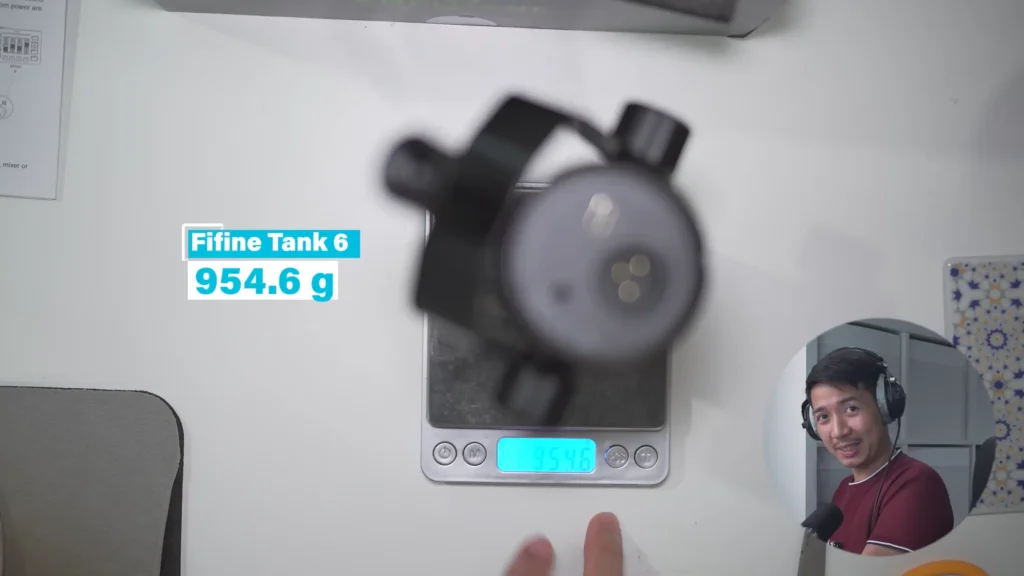
- Heavy (955 g) — needs a solid boom arm
- Noticeable handling noise and resonance
- The mute button makes an audible click
- No stand included
- On-body controls disabled in XLR mode
Sound Quality
Score: 9.0 / 10
This is where the TANK6 makes its strongest case. The mic produces warm, full audio with a smooth low-mid presence that sounds ready for a podcast feed or live stream straight out of the box.
The frequency response runs from 100 Hz to 18 kHz. That 100 Hz floor acts as a built-in high-pass filter, cutting low-end rumble before it ever reaches your recording. The 18 kHz ceiling is notably higher than the 15 kHz you get on the FIFINE AM8 and TANK1. That means the Tank6 captures extra clarity and presence in the upper register.
In USB mode, the sound lands warm and broadcast-ready. Switching to XLR with a decent audio interface adds a subtle but noticeable bump in warmth and a cleaner noise floor. That’s a meaningful win for a mic with built-in digital conversion.
Worth noting: At extreme volumes in USB mode, @Dave Soltura – Voice Actor detected mild distortion when shouting directly into the capsule. XLR mode handles loud sources far better.
Build Quality
Score: 9.5 / 10
At 955g (just over 2 lbs), the TANK6 microphone is heavier than a Shure SM7B by roughly 100–200g. Every reviewer mentioned the weight within seconds of unboxing — half amazement, half warning.
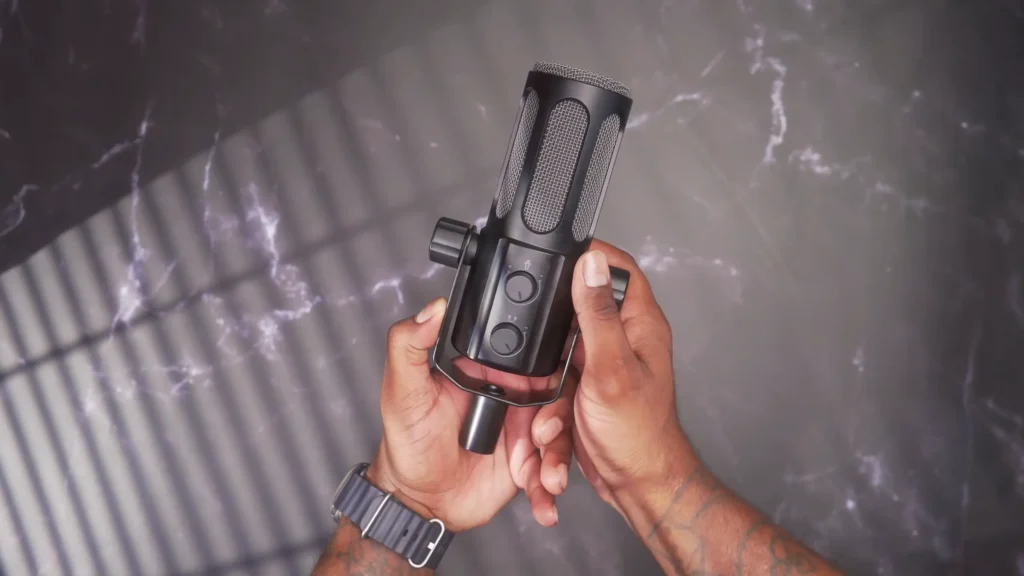
The body is a single block of metal with a matte finish. There are no visible seams, no flex points, and no rattling internals. The yoke-style mount sits neatly around the mic body with two adjustable knobs for angle control, and the whole unit threads onto standard 5/8-inch or 3/8-inch mounts using the included adapter.
The knobs for headphone volume and mic gain sit on the underside, while the mute button is on the other side. When the mic faces you, these buttons are tucked out of camera view, a thoughtful design touch for streamers who want a clean on-screen look.
One caveat: that heft demands a capable boom arm like BM88. Lightweight desk stands can struggle with the weight.
Features & Connectivity
Score: 8.5 / 10
The dual USB/XLR setup is the headline feature for FIFINE TANK6. Plug in via USB-C, and you get a true plug-and-play experience: the mic registers as a 24-bit/192 kHz audio interface with two inputs (both carrying the same mic signal) and a headphone output.
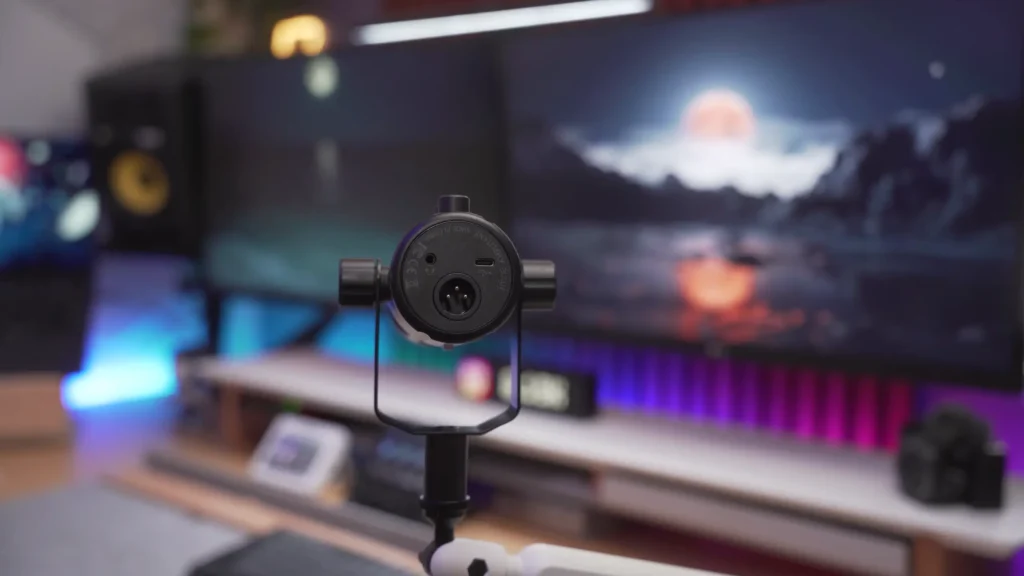
Plug in via XLR, and you’re running it as a standard dynamic mic through your own interface or mixer. You can even connect both USB and XLR simultaneously to record to two destinations at once. As @Inventive Gear puts it, it’s useful if you’re feeding a live stream and capturing a separate backup track.
The headphone monitoring is a significant upgrade. The TANK6 pushes clean, clear audio through low-impedance headphones with enough volume for comfortable real-time monitoring. A slight hiss creeps in at maximum volume, but at normal listening levels it’s not an issue.
One trade-off to know: in XLR mode, all on-body controls (gain knob, headphone knob, mute button) stop functioning. Your audio interface becomes the sole controller.
Noise Rejection
Score: 8.0 / 10
The cardioid polar pattern in the FIFINE TANK6 mic does its job well. Sound from directly in front of the capsule comes through full and clear, while off-axis audio (sides and rear) drops off sharply.
In testing by @The Clay Alan Review on YouTube, Clay Allen found that the mic rejected background noise from air conditioners, fans, and room ambiance effectively — voices cut through even with AC units running at full blast.
The noise floor in a quiet room lands around 60 dB, which is solid for a dynamic mic at this price. With the signal comfortably sitting between –6 and –12 dB, there’s plenty of usable dynamic range for clean recordings.
Worth Noting: Handling noise and resonance isn’t good enough. Tapping the boom arm, bumping the desk, or pressing the mute button all transmit noticeable vibration into the recording. The fix is simple: use a boom arm, keep your hands off the mic body while recording.
Ease of Use
Score: 8.5 / 10
The learning curve is minimal, even for first-time creators. That simplicity is a genuine advantage in the FIFINE TANK6 microphone.
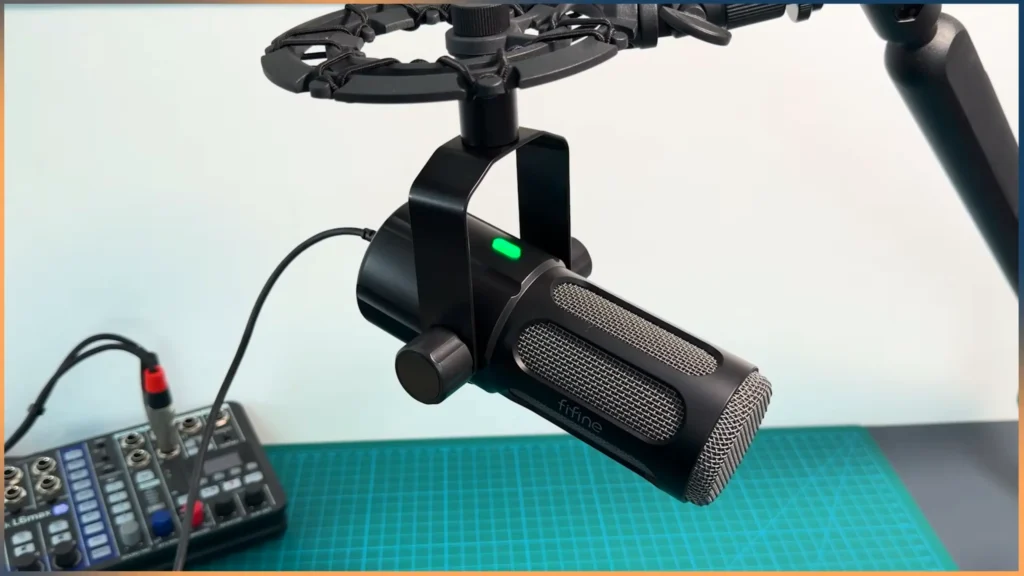
In USB mode, this is about as simple as it gets. Connect the USB-C cable, select the mic as your input in whatever app you’re using, and you’re recording. The gain knob lets you dial in levels on the fly, the headphone jack gives you zero-latency monitoring, and the mute button works exactly as expected.
XLR mode requires more gear knowledge — you’ll need an audio interface or mixer, an XLR cable, and a basic understanding of gain staging. But for creators who already own that gear, the XLR connection delivers a marginal quality bump that rewards the extra setup.
Value for Money
Score: 8.5 / 10
At $100 MSRP, the TANK6 occupies an interesting middle ground. The 24-bit/192 kHz internal interface alone justifies a chunk of that price difference — buying a standalone interface with comparable specs would run you $50–$100 on top of a mic purchase. Factor in the build quality, the improved headphone amp, and the extended frequency response, and the per-dollar value is hard to beat in this category.
Where it falls short: no boom arm or stand in the box. Also, the XLR cable isn’t included in the box. Budget an extra $25–$50 for a mount that can handle the weight.
Who Is the FIFINE TANK6 For?
| Use Case | Fit | Why |
|---|---|---|
| Podcasters | ✔ Ideal | Warm spoken-word tone, broadcast-ready output, great for two-person setups |
| Streamers | ✔ Ideal | Plug-and-play USB, real-time monitoring, cuts through game audio |
| YouTubers/Voiceover | ✔Strong | Clean, detailed audio; works in untreated rooms thanks to noise rejection |
| Musicians/Instruments | ⚠️Moderate | Designed for voice; it works for acoustic instruments in a pinch, but not optimized |
| Voice Actors (Pro) | ⚠️Moderate | Detailed enough to work, but a large-diaphragm condenser in a treated room is a better pick |
FIFINE TANK6 Alternatives
FIFINE AmpliTank TANK3
Score 7.5/10
FIFINE TANK3 microphone is another budget pick. Same Tank-series build philosophy at half the price, but limited to 16-bit recording and a weaker headphone amp. A solid starter mic if you’re under $80.
✅Pros
- Under $80
- USB-C + XLR
- Lighter weight
- SM7B windscreen fits
❗Cons
- 16-bit audio only
- Weak headphone output
- Less detailed sound
FIFINE AM8
Score 7.8/10
FIFINE AM8 microphone is the style pick. Comes with its own stand and RGB lighting — a streamer favorite. Sound is slightly V-shaped (boosted lows and highs), which sounds lively but less natural than the TANK6’s flatter profile.
✅Pros
- Includes stand
- RGB lighting
- Built-in pop filter
- Under $60
❗Cons
- Frequency tops at 15 kHz
- Less natural mid-range
- Lighter build
FIFINE AmpliTank TANK1
Score 8.0/10
The XLR purist. The TANK1 shares the TANK6’s premium build and warm dynamic sound, but it’s strictly XLR — no USB, no built-in interface. If you already own a quality audio interface and want FIFINE’s heaviest-hitting capsule without paying for USB features you won’t use, the TANK1 delivers.
✅Pros
- Premium all-metal build (894 g)
- Warm, full, dynamic sound
- Switchable high-pass filter
- Lower price than TANK6
❗Cons
- XLR only — no USB option
- Frequency tops at 15 kHz
- Needs a high-gain interface or booster
Final Verdict on FIFINE TANK6
The FIFINE TANK6 delivers what most $150-ish mics don’t: genuinely professional audio, dual connectivity, and a build that could survive a drop from your desk without flinching. The handling noise and weight are real trade-offs, but they’re manageable with a proper boom arm and some mic discipline. If you’re upgrading from a budget USB mic or you want SM7B-adjacent quality without the SM7B-adjacent price, the TANK6 earns the recommendation.
FAQs
Does the FIFINE TANK6 need a Cloudlifter or an inline booster?
No. The TANK6 is more sensitive than most broadcast dynamics, so it doesn’t need as much gain. Most modern interfaces with 56–60 dB of gain will drive it comfortably. A Cloudlifter or Triton Audio FetHead will give you extra headroom if you want it, but it’s not required.
Does the mute button work in XLR mode?
No. When using the XLR connection, all on-body controls (gain, headphone volume, mute) are disabled. Your audio interface or mixer handles those functions instead.
What boom arm can hold the TANK6?
Any boom arm rated for the Shure SM7B or heavier should work. The FIFINE BM88 is a solid match. Budget arms rated for lighter condenser mics may droop under the TANK6’s 955 g weight.
Is the TANK6 worth it over the TANK3?
If your budget allows it, yes. The jump from 16-bit to 24-bit recording, the extended frequency response, the stronger headphone amp, and the warmer overall tone add up to a meaningful upgrade — especially if you plan to grow into XLR gear down the line.
Does it come with a stand?
No. The TANK6 ships with the mic, a USB-C cable (with USB-A adapter), a 3/8-to-5/8-inch thread adapter, and a user manual. You’ll need to buy a boom arm or desk stand separately.
