

FIFINE TANK3 Review: Exceptional Value for A Dynamic Mic

At $89.99, the TANK3 sits in a crowded field. This recording microphone packs XLR output, USB-C input, a headphone jack, gain controls, and a mute button into a mic that feels like it could survive a drop onto concrete. After digging into three FIFINE TANK3 reviews, we have built a complete picture of what this mic can and can’t do.
Head to Head
Overall 8.7
What We Liked
- Exceptional all-metal build quality at this price
- Best-in-class noise rejection for a budget dynamic mic
- Dual XLR/USB connectivity for maximum flexibility
- Side-mounted gain and headphone knobs for easy mid-session adjustments
- Strong plosive rejection with internal windscreen
- Minimal branding and sleek, professional look
What Could Be Better
- 16-bit audio
- Narrow sweet spot — requires close mic technique
- No included stand or base plate
- The mute button has a noticeable wobble and can introduce faint noise
- Half-yoke mount limits third-party shock mount compatibility
Build Quality
Score: 9.2 / 10
Many reviewers reached the same conclusion: the TANK3 earns its name. The body is almost entirely metal — not the hollow, resonant kind you find on cheaper mics, but dense, inert, tap-it-and-hear-nothing metal. @Somebody’s Opinion tapped the grille and noted it barely flexes. “Unlike less expensive microphones. They tend to collapse a little bit on the grill”, he said.
At 526 grams (with mount), the TANK3 is more than double the weight of the K688 (229 grams with shock mount). That heft has a practical benefit beyond feel: it resists handling noise impressively well. @Somebody’s Opinion compared its handling rejection directly to the Shure MV7 and Røde Procaster, calling the TANK3’s performance comparable.

The only plastic components are the side knobs and the mute button. Everything else — body, grille, back panel — is solid metal. The grille pattern extends nearly the full length of the mic, giving it a modern, elongated profile.
Sound Quality
Score: 8.4 / 10
The TANK3 lands in neutral territory. Where the K688 skews warm (some listeners described it as “muffled”) and the AM8 pushes the high-end frequencies, the TANK3 sits squarely in the middle. Dave Soltura, a voice actor, described the highs as “clear but not harsh” and the lows as “present but not prominent.” It’s a mid-forward signature that keeps vocals articulate without introducing sibilance or boxiness.
Also, Dave Soltura holds a blind listening test between TANK3, AM8, and K688. The differences are subtle enough that mic technique and room treatment will matter more than the capsule itself.
The proximity effect works as expected. Get close (two fingers from the grille) and you’ll get noticeably more warmth and body. Pull back to five fingers, and the volume drops off fast — a natural consequence of the TANK3’s aggressive noise rejection.
A falls short: it’s 16-bit. This is a genuine omission. The practical impact is limited — the signal-to-noise ratio is still excellent for the price.
Noise Rejection
Score: 9.5 / 10
This is where the TANK3 separates itself from every other budget dynamic mic we’ve evaluated. The noise rejection is, to put it plainly, exceptional.
Dave Soltura ran a comprehensive gauntlet about FIFINE TANK3: AC noise (from silent mode to full blast), a keyboard clacking directly behind the mic, a lawnmower running outside, studio light fans, and a person bouncing a basketball upstairs. The TANK3 shrugged off virtually all of it. When pointed at a running fan, it barely registered.
That tight pickup pattern is the TANK3’s secret weapon and its primary trade-off. The cardioid pattern is narrower than most competitors, so the background noise has very little chance of reaching the capsule. But your sweet spot is also small. Step back even slightly, and you lose significant volume.
Plosive rejection also impressed. The TANK3 uses an internal windscreen rather than an external foam cover. You can still force a plosive if you try hard enough, but in normal use, the internal filter handles “p” and “b” sounds without drama.
USB Performance
Score: 8.2 / 10
The USB mode is where the TANK3 justifies its price for beginners. Plug a USB-C cable into your laptop, and you’re recording. @Caleb I. Tille tested this workflow by tracking vocals directly into GarageBand on an iPad and said, “So easy I started to think I don’t necessarily have to give this mic away.”
The headphone amplifier in USB mode has improved over FIFINE’s previous mics. The TANK3 output at max volume is comfortably loud with standard headphones, though high-impedance headphones still struggled. Sticking with low-impedance cans will be fine.
@Caleb I. Tille also compared the headphone output quality between the TANK3 and an Audient iD22 (a $300 dedicated interface) and noticed a slight dip in mid-range detail on the TANK3. But for a travel or backup setup, the USB output is more than adequate.
Features and Controls
Score: 8.6 / 10
The TANK3’s control layout is a smart evolution from FIFINE’s earlier designs. The mic gain and headphone volume knobs sit on the side of the mic, thanks to the half-yoke mount opening up that real estate. This is an upgrade over the AM8 (front-mounted controls that require tilting the mic up to adjust) and the K688 (rear-mounted controls that need to spin the mic around mid-recording).

The physical mute button on top lights red when muted and green when active. It provides a tactile click, which is great for knowing you’ve actually engaged it. The downside: the button has noticeable wobble and can introduce a faint click into your recording when pressed.
One important caveat: the onboard controls only function in USB mode. If you’re running XLR into an external interface, the knobs and mute button do nothing.
Design and Aesthetics
Score: 9.0 / 10
The TANK3 is slimmer than the K688, with a long grille that gives it a modern, elongated silhouette. The matte finish avoids the glossy-cheap look that plagues many budget mics. Also, the FIFINE logo is tiny and tucked away, letting the design speak for itself.
Unlike the K688 or the AM8, the TANK3 doesn’t look like it’s copying a more expensive mic. Dave Soltura noted a vague resemblance to the Earthworks ICON but called it “a stretch.”

The half-yoke mount contributes to the clean look, but it does come with a trade-off: because the grille extends so far down and the knobs sit on the side, you can’t easily mount the TANK3 in a third-party shock mount. The included half-yoke mount isn’t a shock mount itself, so if handling noise through your boom arm is a concern, you’re somewhat stuck with the stock solution.
Versatility
Score: 8.5 / 10
Dual connectivity is the TANK3’s versatility cornerstone. Start with a USB when you’re on a budget or traveling light. Upgrade to XLR when you invest in an audio interface.
@Caleb I. Tilley tested this exact scenario by recording a full demo — vocals and production — using just the TANK3 microphone, a USB cable, headphones, and GarageBand on an iPad. The result sounded polished enough to share.
Where the TANK3 loses points on versatility is in instrument recording. The tight cardioid pattern and aggressive noise rejection make it difficult to capture both vocals and an acoustic guitar simultaneously. You could pair the TANK3 with the FIFINE SC1 audio interface (which has a dedicated instrument input) to do it.
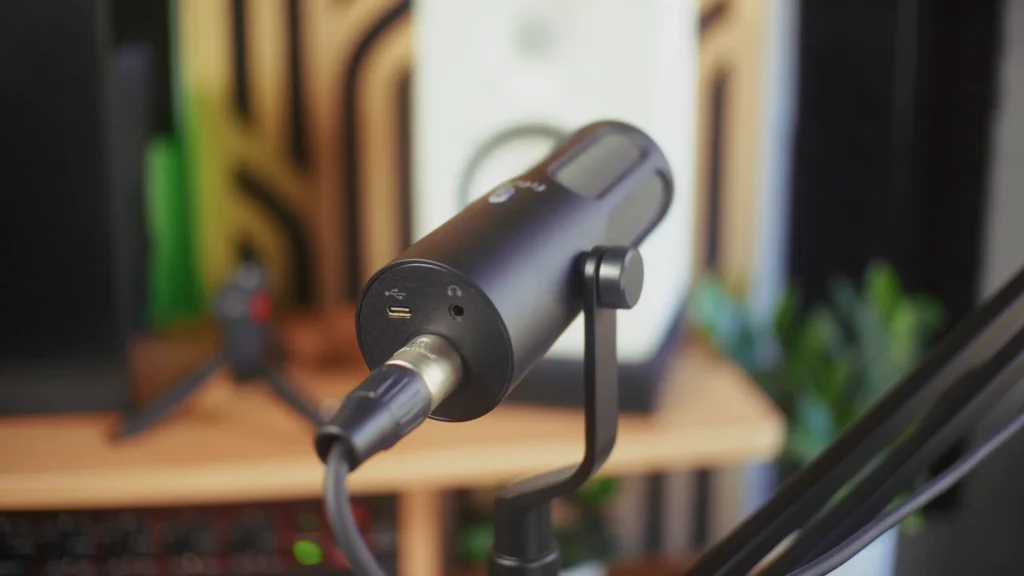
The rear panel offers XLR output, USB-C, and a 3.5mm headphone jack. The included USB-C to USB-A cable is long enough to span a small studio. A complete setup that saves you a separate purchase.
Who Is the FIFINE TANK3 For?
| Use Type | Fit | Why |
|---|---|---|
| Beginner podcaster / streamer | ⭐ Excellent | Plug-and-play USB, no interface needed, handles noisy rooms well |
| Home studio producer | ⭐ Excellent | XLR output scales with your gear, doubles as a portable backup mic |
| Remote worker / Zoom user | ⭐ Excellent | Superior noise rejection kills background distractions |
| Gamer / streamer (no RGB) | ✅ Good | Great audio, but no RGB lighting — if that matters, look at the AM8 |
| Singer / musician | ⚠️ Conditional | Vocals-only works well; capturing vocals + guitar simultaneously is difficult |
| Field / location recorder | ✅ Good | Portable USB setup works, but the 526g weight adds to your bag |
FIFINE TANK3 Alternatives
FIFINE K688
$79.99 · Overall: 7.8/10
- Warmer, bassier tone
- Included shock mount
- Compatible with third-party mounts
- Hollow-feeling build
- Can sound muffled to some ears
- Rear-mounted controls are inconvenient
FIFINE K688 is a solid pick if you want a warmer sound signature and don’t mind the bulkier body. The shock mount inclusion is a nice bonus.
FIFINE AM8
$54.99 · Overall: 7.5/10
- Most affordable option
- RGB lighting for streamers
- Included base plate/stand
- Plastic build feels less durable
- Worse handling of noise rejection
- Higher sibilance in recordings
FIFINE AM8 is the budget-friendliest option in FIFINE’s dynamic line. Best for streamers who want RGB and are willing to accept trade-offs in build and noise performance.
Shure SM58
~$99.00 · Overall: 8.0/10
- Industry-standard durability
- Legendary reliability and resale value
- Proven live and studio performance
- XLR only — no USB
- No onboard controls
- Requires an external interface or preamp
The mic that refuses to die. If you already own an audio interface and want a proven workhorse, the SM58 is hard to beat — but it lacks the TANK3’s plug-and-play convenience.
Final Verdict on FIFINE TANK3 Review
The FIFINE TANK3 shows FIFINE is learning from its past releases and building something that competes on its own merits. With solid build quality, dual XLR/USB connectivity, and powerful noise rejection at a budget price, the TANK3 microphone totally deserves your pick.
That said, the 16-bit limitation and narrow sweet spot will be a limit. For right now, the TANK3 is our top pick in the sub-$100 dynamic microphone category — and it’s not particularly close.
FAQs
Does the FIFINE TANK3 need an audio interface?
No. The TANK3 connects directly to your computer via USB-C for plug-and-play recording. If you already own an audio interface, you can use the XLR output for a more traditional setup.
Is the TANK3 good for noisy rooms?
Yes — this is one of its strongest features. The TANK3’s tight cardioid pattern and aggressive noise rejection make it one of the best budget mics for untreated rooms. It won’t eliminate background noise, but it handles fans, keyboards, and ambient room sound better than nearly anything else at this price.
Can I use third-party shock mounts with the TANK3?
Not easily. The extended grille and side-mounted knobs make the TANK3 incompatible with most third-party shock mounts. You’ll need to use the included half-yoke mount.
What’s the difference between the TANK3, K688, and AM8?
The TANK3 ($89.99) offers the best build quality, noise rejection, and a neutral sound. The K688 ($79.99) has a warmer tone and includes a shock mount. The AM8 ($54.99) is the most affordable option with RGB lighting, but it has a plastic build and weaker noise rejection. All three support XLR and USB.
Does the TANK3 support 24-bit audio?
No. The TANK3 records at 16-bit via USB. While the signal-to-noise ratio is still impressive for the price, 24-bit support would bring it in line with modern standards.
