

How to Become a Voice Actor: 8-Step Guide in 2026

Voice-over is a massive industry that most people interact with daily. Break in this industry seems you’re walking a difficult path. But for a newcomer, it doesn’t need to be so hard. Here, you’ll explore a step-by-step guide on how to become a voice actor. Whether you’re exploring a side hustle or plotting a full-time career pivot, every step here is built around one principle: start lean, learn fast, and let your skills do the talking.
Step 1: Set Up Your Recording Space
Recording voice-overs is your beginning. Your recording environment is the single most important factor in your audio quality. A $1,000 microphone in an untreated room will sound worse than a $200 mic in a well-treated closet. Clients and casting directors can spot poor room acoustics instantly, and they’ll pass on your audition before they even evaluate your performance.
Find the smallest, most enclosed space you have access to. A walk-in closet packed with clothes is the go-to starter booth for most voice actors. Sound bounces off flat, hard surfaces — so your job is to fill the space with soft, absorptive materials.
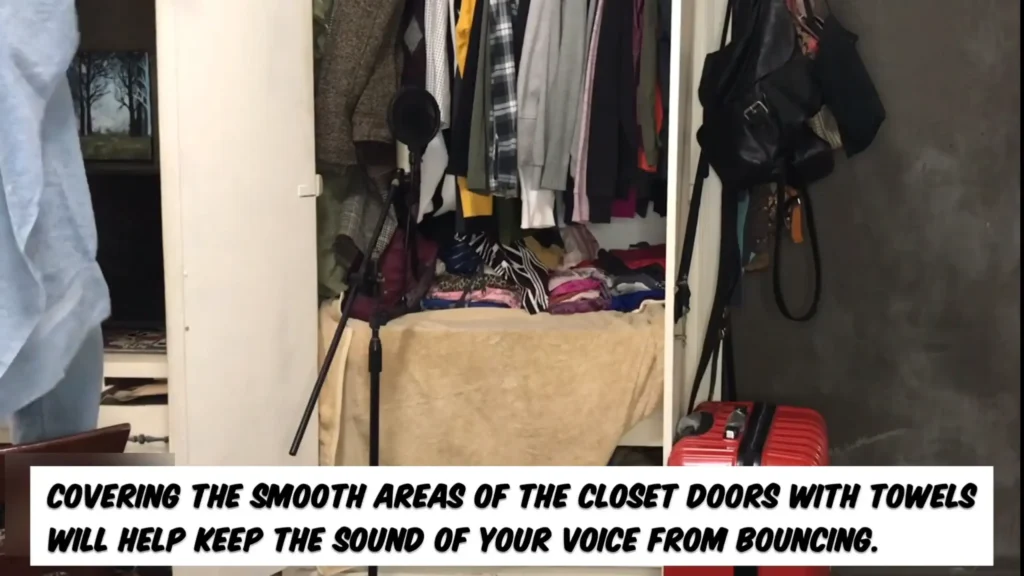
Pro tips:
- If your closet has open ceiling space, run bungee cords from one rack to the other and drape a heavy blanket over them to create a canopy. This kills overhead reflections.
- Egg crate foam on the ceiling (if you’re using a room) helps, but soft furnishings like clothes and blankets are more cost-effective for beginners.
- If you’re recording on a laptop, place it outside the booth. Laptop fans create noise that your condenser mic will pick up. Use “clamshell mode” with an external monitor to keep the fan noise out of your space.
Step 2: Choose the Right Equipment
| Equipment | What to Look For | Budget Range |
| Microphone for Voice Over | Look for a recording microphone like FIFINE K669, a large-diaphragm, and low self-noise. Also, Audio-Technica microphones work well for voice-over. | $80–$400 |
| Audio Interface | Converts your mic’s analog signal to digital. Focusrite Scarlett Solo is the industry standard for solo setups. | $100–$200 |
| Monitoring Headphones | Flat frequency response (not consumer headphones like AirPods). Sennheiser HD 280 Pro is a reliable pick. | $80–$150 |
| Computer | Any modern computer runs a DAW. If using a laptop, keep it outside your booth to avoid fan noise. | Use what you have |
| DAW Software | Audacity (free) or Adobe Audition (~$23/month). Both handle recording, editing, and basic processing. | Free–$23/mo |
| Accessories | Pop filter, mic stand or boom arm, XLR cable, shock mount. | $30–$80 |

Pro tips:
- Prioritize the XLR condenser microphone rather than the USB mic. An XLR condenser mic paired with an interface gives you far more control over your sound.
- Don’t use consumer headphones (AirPods, Beats) for monitoring. Their frequency curves are tuned for music enjoyment, not accuracy. You need flat-response headphones so you can hear mouth clicks, breaths, and room noise that clients will definitely notice.
Step 3: Pick Your DAW and Learn the Basics
Your DAW (Digital Audio Workstation) is where you record, edit, and export every audition and delivered file. If you’re budget-conscious, download Audacity — it’s free, open-source, and handles everything a beginner needs. If you’re ready to invest, Adobe Audition offers a more polished workflow with built-in noise reduction and multitrack editing. Pick one and commit to learning it well.
Pro tips:
- Learn these basics first: recording a clean take, trimming silence, removing mouth clicks, applying noise reduction, and exporting in WAV and MP3 formats.
- Watch free tutorials on YouTube. There are voice-actor-specific DAW walkthroughs that teach you exactly the processing chain you need for auditions.
- Set up a template with your standard settings (sample rate, bit depth, noise gate) so every new recording session starts clean.
Step 4: Develop Your Voice Acting Skills
Voice acting is acting. Reading words off a page is not the same as delivering a performance. If your voice connects, persuades, and brings scripts to life, your clients will appreciate you more.
Start by identifying which branch of voice-over fits your natural strengths. Then practice daily. For character work, create original voices and experiment with accents, pitch, and rhythm. For commercial reads, practice shifting tone: conversational, authoritative, warm, playful, urgent.
Vocal flexibility is one of the most appealing factors for a voice actor going after character work. If you get hired for a TV show, they’re probably going to ask you to play more than one character.
Pro tips:
- Don’t just mimic existing cartoon characters. Studios already have voice actors for those roles. Focus on creating original voices that showcase your range.
- Practice cold reads — grab a script you’ve never seen and perform it on the spot. This trains the skill you’ll need during real auditions.
- For commercial work, learn to read fast without sounding rushed. Many spots cram a lot of information into 15 or 30 seconds.
Step 5: Create Your Demo Reel
Your demo is your calling card. It’s the first thing clients, casting directors, and agents hear. A weak demo closes doors before your talent gets a chance to open them.
Create a 60–90 second compilation of 5 to 7 spots (short performance clips of 10–15 seconds each). Each spot should showcase a different style, tone, or genre. Your commercial demo is the most important one to start with.
Demo structure basics:
- Lead with your strongest spot — the one that best represents your signature sound.
- Vary the categories: conversational, authoritative, warm/heartfelt, playful/comedic, and understated.
- Add background music to each spot to make it sound like a real commercial or promo.
- Keep it under 90 seconds total. Casting directors won’t listen past that.
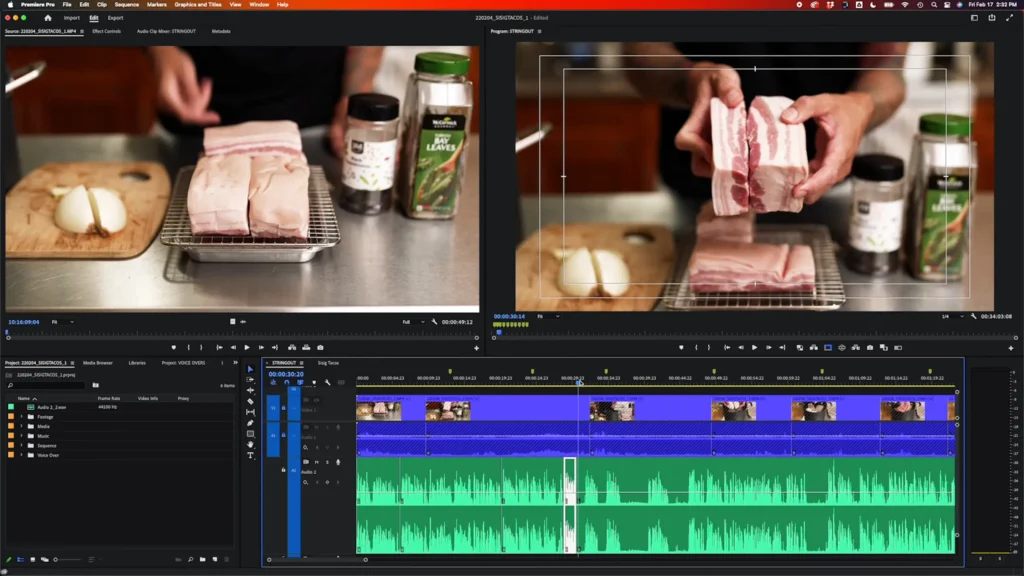
Pro tips:
- DIY your first demo. Find real commercials, transcribe them, record your own versions in your DAW, and add music.
- Don’t pay for a professional demo until you’re consistently booking work and coaching regularly. It’s not worth spending $2,500 on a pro demo in your first three months when your skills outgrow it within weeks.
- Watch out for “demo mills” — companies that pressure you into buying package deals of 3–5 demos for thousands of dollars.
Step 6: Find Work on Platforms and Freelance Sites
You’ve got the space, the gear, and the demo. Now you need paying clients. The way you find work will shape your early career trajectory and income. Start on accessible platforms where you can build credits and reviews without needing representation. Then expand as your skills and reputation grow.
Where to find voice-over work:
| Platform | Best For | Pros | Cons |
| Fiverr | Beginners building credits | Set your own rates; fast to set up; democratic marketplace | Increasingly saturated; takes 20% commission |
| Upwork | Beginners seeking variety | Access to diverse project types | Competitive bidding; lower rates are common |
| Voice123 | Mid-level voice actors | Tiered membership with better opportunities; clients use shorter usage terms | Paid tiers ($888–$2,200/yr) needed for competitive access |
| Voices.com | Experienced actors | $500/yr flat membership; large job volume | Very fast-moving auditions; many perpetuity usage requests |
| Casting Call Club / Backstage | Character & animation roles | Paid and unpaid opportunities for games and animation | Mixed reviews; less commercial work |
| Bodalgo | Mid-to-senior careers | Higher quality auditions; $49/month | Smaller volume; competitive field |
Pro tips:
- Use social media to build relationships. LinkedIn is strong for connecting with producers and production companies. X is useful for indie video game and animation casting calls.
- Get on production rosters. Search for audio production companies in your region and submit your demo. These companies keep internal talent lists and reach out when roles match your profile.
- Self-marketing through cold outreach works, but only once you have a solid demo. Target marketing agencies, video production houses, and radio stations. The average success rate is around 2%, but a focused approach can push that to 10%+.
Step 7: Build Your Brand with a Website and Social Media
A professional online presence separates hobbyists from working voice actors. Take your social media or build a website as your free portfolio. You can host your demos, showcase past work, or list the types of voice-over you specialize in. Once a client Googles you, your social profiles or website are what seal the deal.
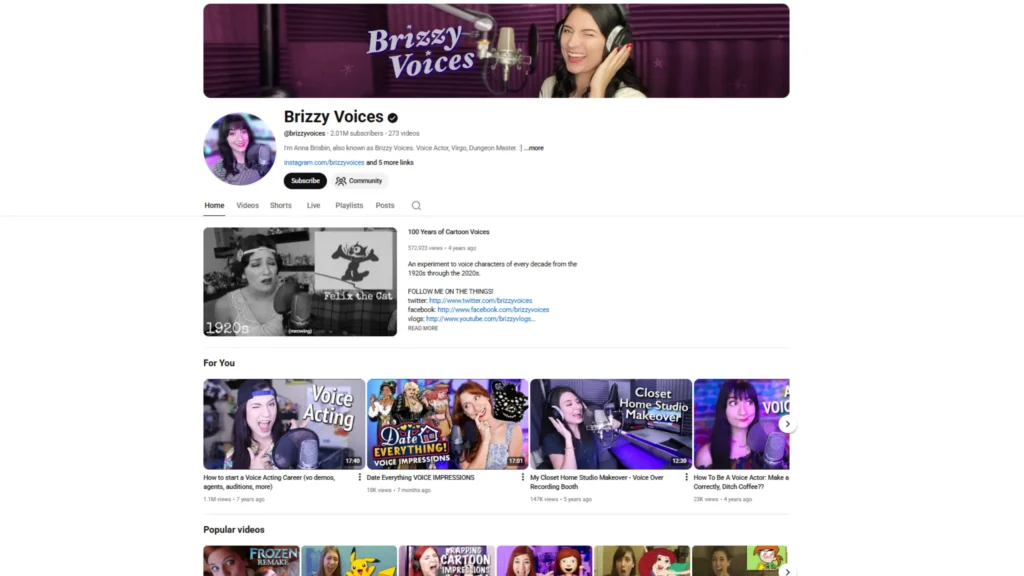
Pro tips:
- Your website is your full portfolio. Host all your demos there, build separate pages for each specialty (commercial, audiobook, character), and list notable clients as you book them.
- If a website isn’t in the budget yet, your Fiverr or Voice123 profile acts as a starter portfolio. But plan to build a standalone site once you’re earning consistently.
- Stay active on social media with content focused on what you do. In today’s market, if your business isn’t visible online, it essentially doesn’t exist.
Step 8: Level Up with Coaching, Workshops, and Representation
Free resources get you started. Coaching and workshops get you competitive. Representation gets you access to higher-paying opportunities. Exhaust every free resource first, then invest in workshops where you read for real casting directors and agents. Only pursue one-on-one coaching once your skills are past the rough-diamond stage.
Free resources to start with:
- YouTube channels dedicated to voice-over career building offer hundreds of hours of free education on everything from mic technique to marketing strategy.
- Industry podcasts feature interviews with casting directors, agents, and working voice actors. These give you insight into what buyers actually want.
- Online communities like The Voiceover Roundtable host live reads for casting directors — a rare chance to get real-time feedback.
When to get an agent:
You don’t need an agent when you’re starting. Build your credits, develop your skills, and establish your identity as a voice actor first. When you are ready, start with regional agents (Atlanta, Dallas, Chicago, Austin, Toronto) rather than coastal agencies in LA or New York. Regional agents are more willing to take on less experienced talent and give you room to grow.
Agents don’t lead to work — they lead to opportunities. Their job is to send you auditions. Your job is to book them.
Next Step: How to Become A Voice Actor
Voice acting is not a get-rich-quick gig. It’s a craft, a business, and a long game. The voice actors making real money today treat their career like a business. They diversify across platforms, invest in ongoing coaching, and never stop auditioning. The gap between “asking about voice acting” and “earning from voice acting” is bridged by one thing: consistent practice paired with smart execution.
The next step? Follow this guide and try to finish your first voice-over, be it good or bad. The momentum builds from there. Share your progress, ask for feedback, and keep leveling up.
Q&A
Can I use a USB microphone for voice acting?
It’s not recommended. USB microphones lack the audio fidelity needed to compete for professional voice-over jobs. An XLR condenser microphone paired with an audio interface gives you cleaner, more detailed recordings and far more control over your sound.
How much does it cost to get started in voice acting?
A realistic starting budget is $400–$800. That covers a mid-range condenser microphone ($150–$300), an audio interface ($100–$170), monitoring headphones ($80–$100), basic accessories ($30–$80), and free DAW software like Audacity. Sound treatment can be done with items you already own (clothes, blankets, yoga mats).
Should I pay for a professional demo right away?
No. Create a DIY demo first. Professional demos from top producers cost $2,500–$3,300, and your skills will outgrow an early demo quickly. Save the investment for when you’re consistently booking work and coaching regularly.
Do I need an agent or a manager?
Agents procure audition opportunities, while managers guide your overall career direction.
If you’ve established your identity and exhausted the opportunities available, an agent becomes useful. Also, if you’re a working voice actor who has struggled to manage your whole workload, a manager will be helpful.
Is voice acting a realistic career or just a side hustle?
Both. Some voice actors treat it as a profitable side income alongside a day job. Others build it into a full-time career with six-figure earnings. The ceiling is high, but so is the effort required. Treat it like a business from day one — handle your own accounting, invoicing, marketing, and continuous training — and the ceiling keeps rising.
