
Best USB Microphones for Voice-Over: Complete Buyer’s Guide

For voice-over, your microphone is part of your instrument. You could have Morgan Freeman’s golden pipes, but run that voice through a cheap microphone, and you’ll sound like you’re ordering at a drive-thru window.
It doesn’t mean that more expensive is better. Your voice-over microphone is the one that’ll hold you back. Want to know the best USB microphones for voice-over work? After analyzing the performance and function, we’re breaking down the top 5 microphones in this guide. Let’s dive into the picks.
The Best USB Microphones for Voice Over
- Best Budget Pick: FIFINE K688 — Best for value-conscious beginners
- Best Overall: Rode NT-USB — Best for plug-and-play reliability
- Best for Versatility: Audio-Technica AT2020USB+ — Best for detailed recordings
- Best for Flexibility: Blue Yeti — Best for multiple recording situations
- Best Hybrid Budget: Samson Q2U — Best for future-proofing on a budget
FIFINE K688: Best Budget Pick
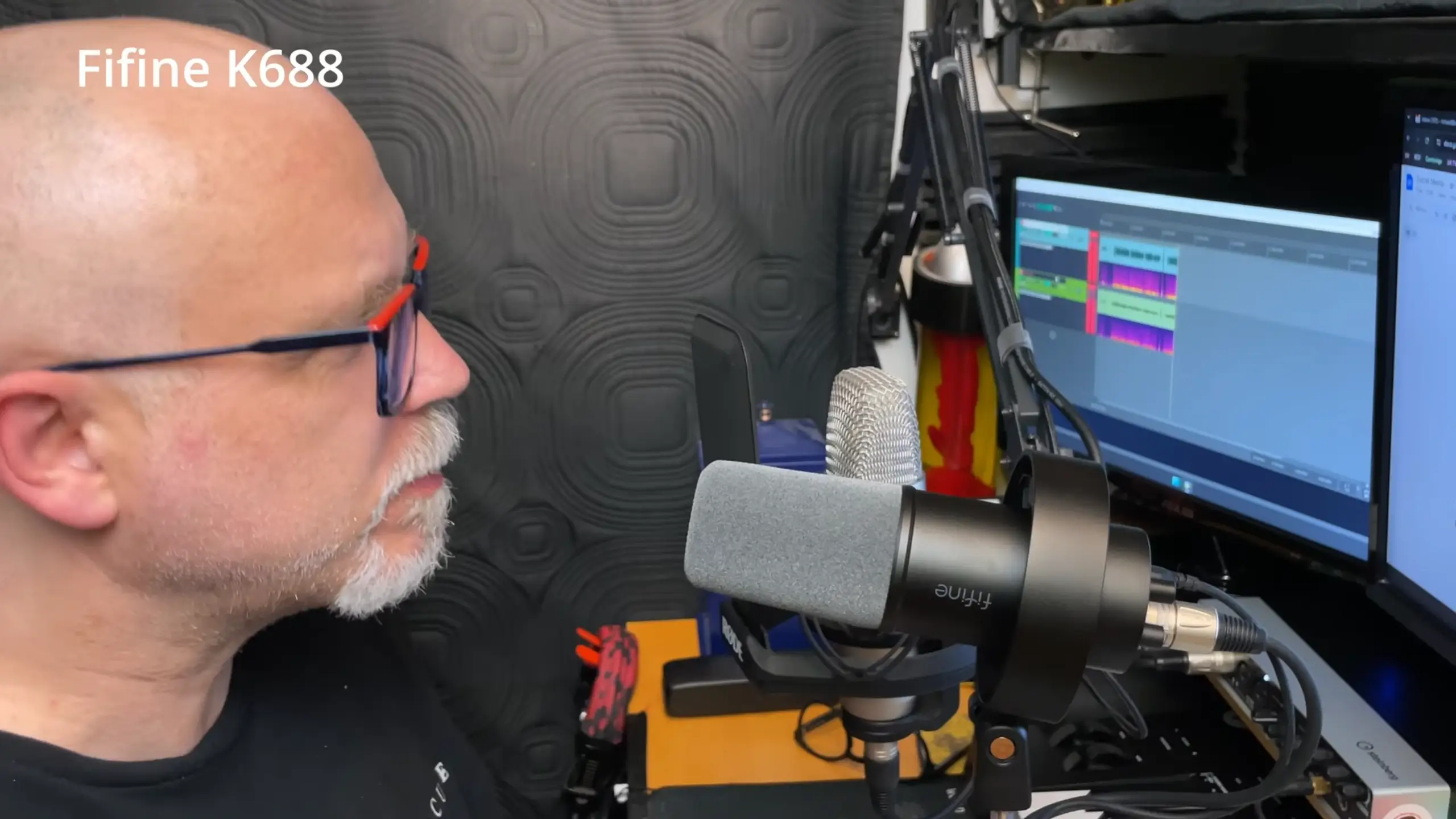
The FIFINE K688 microphone grabbed our attention for one simple reason: it offers professional-adjacent features at a price that won’t make you wince.
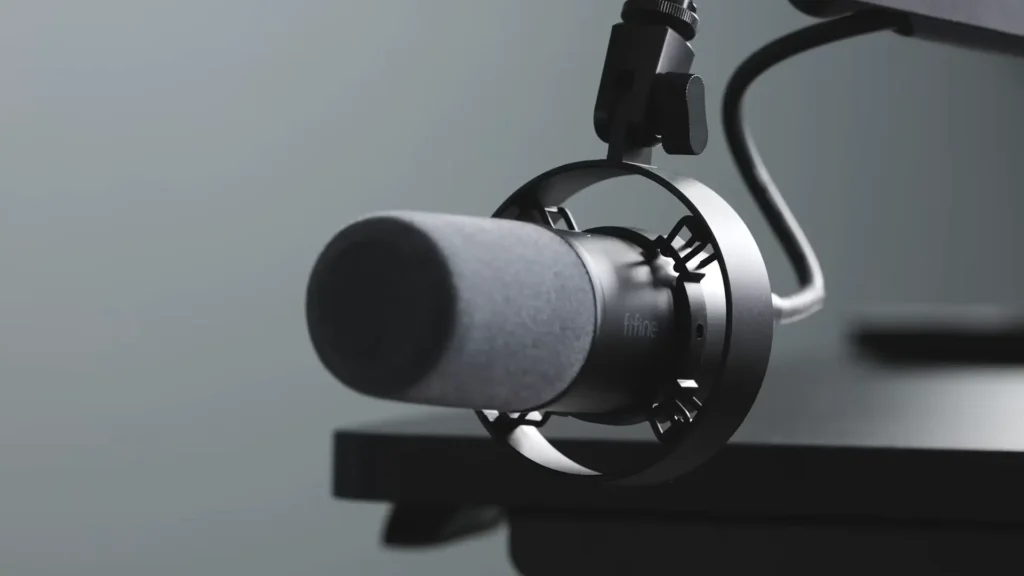
Weighing just 326 grams, it’s impressively light but still feels sturdy, even with a plastic build. Around back, you get mic and headphone volume knobs, a 3.5mm jack for zero-latency monitoring. With both XLR and USB-C outputs, you can easily upgrade your sound. Also, a touch mute button stops any embarrassment, though its placement makes accidental muting a bit too easy.
In testing across different environments, the K688’s dynamic capsule showed solid room rejection. Recording in a bedroom or living room? Perfectly acceptable results. Even with a tumble dryer running in a nearby kitchen, the K688 kept background noise manageable.
It won’t replace a high-end studio mic in a treated booth, but for 30% of what you’d spend on premium options, it earns its place in any voice actor’s gear bag for corporate narration and podcast recording.
Pros:
- Unbeatable price-to-performance ratio
- USB and XLR dual connectivity
- Decent room rejection for untreated spaces
- Lightweight and portable
- Built-in monitoring controls
Cons:
- Mute button placement causes accidental activations
- Not broadcast-quality for premium commercial work
- Plastic construction may concern some users
- A dynamic mic means less detail than condensers
| Aspect | Scores |
| Audio Quality | 7.5/10 |
| Build Quality | 7/10 |
| Value | 10/10 |
| Ease of Use | 9/10 |
| Room Rejection | 8.5/10 |
| Overall | 8.5/10 |
Rode NT-USB: Overall Best USB Microphone for Voice Over
Rode’s pro audio roots show clearly in the NT USB. It is a simple plug-and-play condenser mic that still delivers studio-level sound, no extra gear needed.
Vocals come through clean and detailed, catching small inflections that cheaper mics tend to lose. Voice actors especially love that clarity. The flip side is sensitivity; it hears everything, so a reasonably quiet or treated space makes a big difference in getting the best results.
In Rode NT-USB, setup is quick and painless. USB port, pop filter, headphone monitoring, and mix dial are all for your long sessions. Build quality feels solid too, with an all-metal body, sturdy desk stand, and a standard thread that fits any mic stand or boom arm.
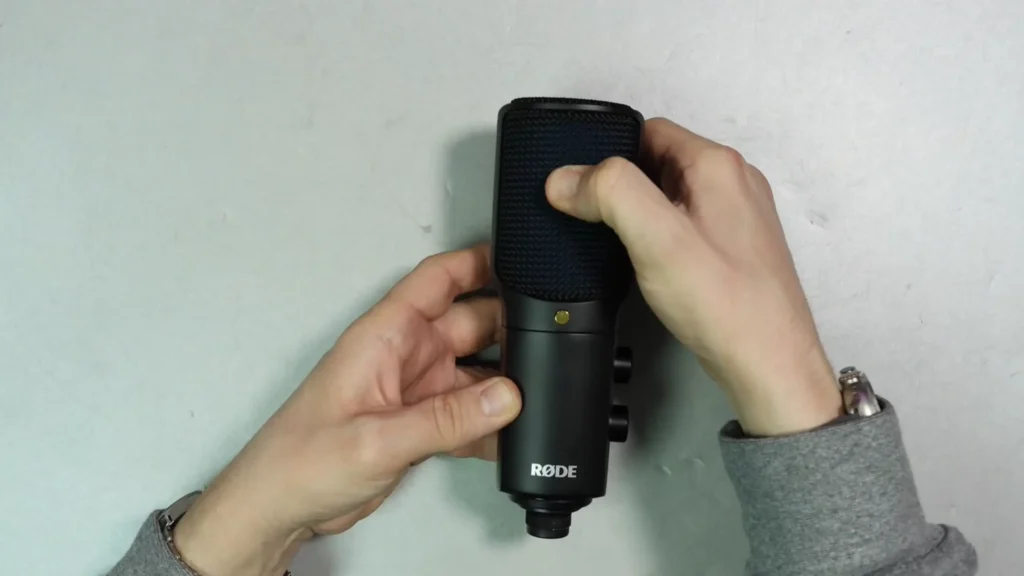
If you want professional sound without the complexity of interfaces and cables, the Rode NT-USB delivers. It’s the microphone many professionals started with—and some still use—because it consistently produces quality results without fuss.
Pros:
- True plug-and-play operation
- Professional condenser sound quality
- Zero-latency monitoring with mix control
- Included pop filter and desk stand
- Rode’s legendary build quality
Cons:
- Condenser sensitivity requires treated space
- No XLR option for future expansion
- Higher price than budget alternatives
- A desktop stand may not suit all setups
| Aspect | Scores |
| Audio Quality | 9/10 |
| Build Quality | 9/10 |
| Value | 8/10 |
| Ease of Use | 10/10 |
| Room Rejection | 6/10 |
| Overall | 8.8/10 |
Audio-Technica AT2020USB+: Best Versatile Microphone for Voice Over
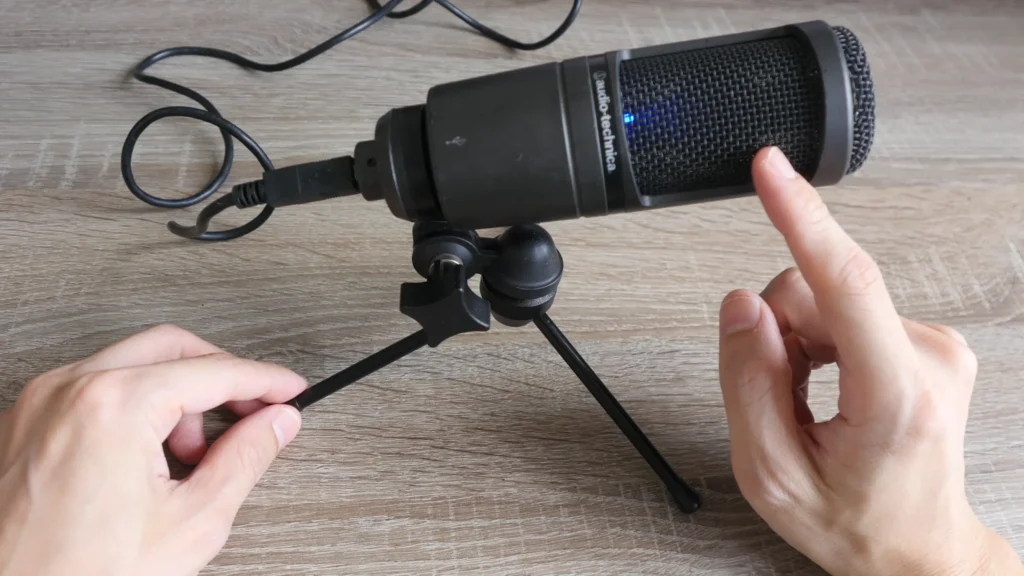
Audio-Technica built the AT2020USB+ with voice front and center. You hear everything. Tiny breaths, shifts in tone, those little emotional flickers you don’t always realize you’re putting out there. And for voice-over work, especially narration or close, character-driven reads, that kind of sensitivity helps. It catches the quiet stuff that makes a read feel real.
The mix control knob lets you blend direct monitoring with computer playback—essential for maintaining performance flow without distracting latency. Plus, a headphone jack with dedicated volume control provides real-time feedback without returning to your computer.
YouTuber The Voice Over Blueprint™ with Mike Hathcote shares that “Tons of voice actors started with this one, and some of them still use it”. Voice actors report years of daily use without issues. The build quality reflects Audio-Technica’s professional heritage, with a metal body that handles the demands of regular studio work.
One important note: like all sensitive condenser mics, the AT2020USB+ easiply capture the background noise, room reflections, and environmental sounds. Proper acoustic treatment makes a significant difference.
Pros:
- Exceptional vocal detail and clarity
- Built-in headphone monitoring with mix control
- Trusted Audio-Technica build quality
- Wide software compatibility
- Professional sound without complexity
Cons:
- Requires an acoustically treated space
- USB-only limits future expansion
- Picks up everything in the room
- Larger form factor than some alternatives
| Aspect | Scores |
| Audio Quality | 9/10 |
| Build Quality | 9/10 |
| Value | 8.5/10 |
| Ease of Use | 9/10 |
| Room Rejection | 5.5/10 |
| Overall | 8.7/10 |
Blue Yeti: Best Voice Over Microphone for Flexibility
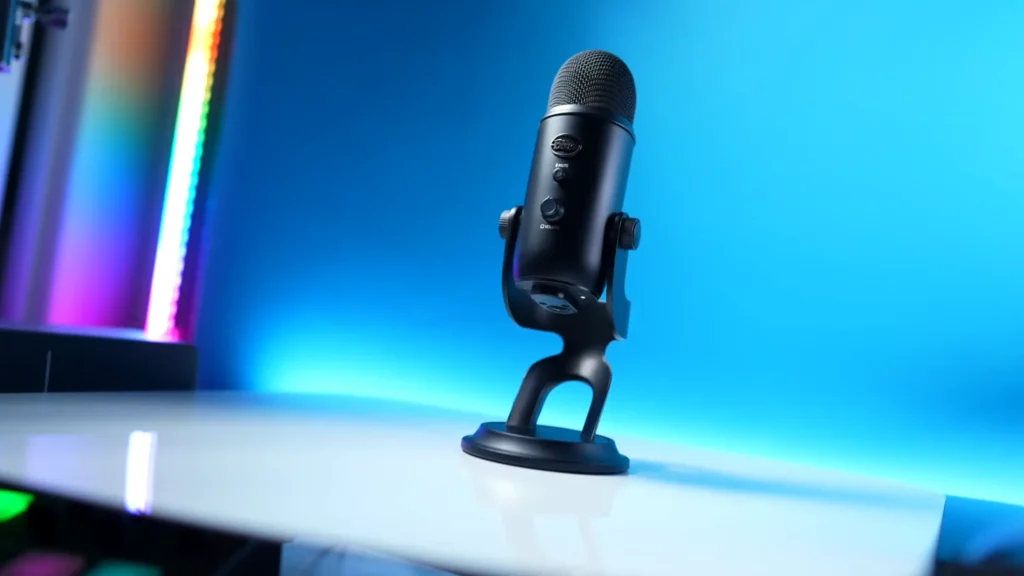
The Blue Yeti didn’t get popular by accident. It’s one of those mics that’s good at a lot of things. Four polar patterns, cardioid, bidirectional, omnidirectional, and stereo, give you room to experiment. Voice over today, a podcast interview for the next, no swapping gears.
For straight voice-over work, cardioid is the go-to. It stays locked on your voice and does a decent job ignoring whatever noise is hanging out behind or beside you. Tonally, it leans a little warm, which tends to be forgiving. Especially if your voice needs a bit of smoothing rather than extra bite.
Front-panel controls give you instant access to gain adjustment, pattern selection, mute, and headphone volume. The substantial build inspires confidence, though the included stand takes up considerable desk space. You can mount it on a boom arm for better positioning and a clearer workspace.
Pros:
- Four polar patterns for versatility
- Onboard gain, mute, and monitoring controls
- Warm, flattering sound signature
- Proven reliability over the years
- Strong community support and resources
Cons:
- Large footprint on the desktop
- Stock stand limits positioning
- Condenser sensitivity to room noise
- No XLR option
| Aspect | Scores |
| Audio Quality | 8/10 |
| Build Quality | 8.5/10 |
| Value | 8/10 |
| Ease of USE | 9/10 |
| Room Rejection | 6/10 |
| Overall | 8.2/10 |
Samson Q2U: Best Voice Over Microphone for Hybrid Budget
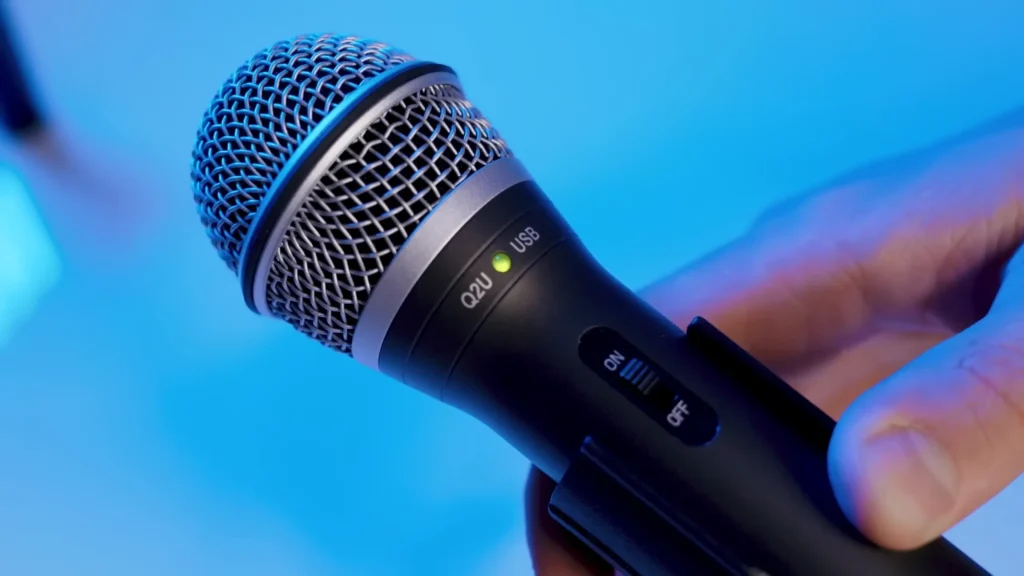
Samson designed the Q2U as the perfect “get started now, upgrade later” microphone. Both USB and XLR outputs mean you can plug directly into your computer today, then connect through a proper audio interface tomorrow.
As a dynamic microphone, the Q2U naturally rejects room noise better than condenser alternatives. Recording in a less-than-ideal space? A home office near street traffic? The Q2U handles these situations more gracefully than sensitive condensers. For voice-over demos, it captures familiar broadcast sound—clear, present, and focused on your voice.
Samson includes useful accessories: a desktop stand, mic clip, USB cable, and XLR cable, all of which come in the box. You’re ready to record immediately without hunting down extras. For voice over beginner, the Samson Q2U eliminates financial risk. If it does take off, the XLR output lets you grow into professional gear immediately.
Pros:
- USB and XLR dual connectivity
- The dynamic capsule rejects room noise
- Complete accessory package included
- Extremely affordable entry point
- Upgrade path built in
Cons:
- Sound quality below condenser mics
- Less detail in vocal reproduction
- Plastic construction feels budget
- Not suited for premium commercial work
| Aspect | Scores |
| Audio Quality | 7.10 |
| Build Quality | 6.5/10 |
| Value | 9.5/10 |
| Ease of Use | 9/10 |
| Room Rejection | 8.5/10 |
| Overall | 8.0/10 |
Buying Guide: What to Look for in a USB Microphone for Voice Over
A good microphone can help you learn how to do a voice-over, especially if you’re new. Here’s what you should look for in a USB microphone when it comes to voice-over.
Audio Quality
Your microphone’s audio quality directly impacts how clients perceive your work. Look for specifications like frequency response range (ideally 20Hz–20kHz for full vocal reproduction) and low self-noise levels (the quieter, the better).
Beyond specs, trust your ears. Many retailers allow returns, so test microphones in your actual recording space. A mic that sounds perfect in a soundproofed studio might perform differently in your home setup.
Build Quality
Voice-over work means daily microphone use. Cheap plastic bodies crack. Wobbly stands fall. Fragile connectors fail at the worst times.
Metal construction, solid mounting hardware, and quality connectors justify higher prices through longevity. Consider build quality an investment in reliability.
Room Rejection
Unless you’ve invested in acoustic treatment, room noise matters. Dynamic microphones naturally reject background sound better than condensers. If you’re recording in an untreated bedroom or home office, a dynamic mic like the FIFINE AmpliGame K688 or Samson Q2U might serve you better than a super-sensitive condenser.
Condenser microphones capture more detail and nuance, but also capture everything happening around you. Your fridge hums, traffic outside, the neighbor’s lawnmower—condensers hear it all.
Monitoring Options
Real-time monitoring through headphones helps you catch problems immediately. Look for microphones with built-in headphone jacks offering zero-latency monitoring. Mix controls that blend your mic signal with computer playback prevent the disorienting delay that disrupts performance flow.
Connectivity Options
USB-only microphones offer maximum simplicity. USB/XLR hybrids provide upgrade paths. Consider where you want your voice-over journey to go.
Starting with a hybrid like the FIFINE K688 or Samson Q2U means your microphone grows with you. When you’re ready for an audio interface with better preamps and more control, your microphone adapts.
Price-to-Performance Ratio
Expensive doesn’t automatically mean better for your situation. A Neumann U87 won’t make you a better voice actor—skill and practice do that. Start with equipment matching your current skill level and booking rate.
Entry-level gear for learning and auditions, mid-range equipment when booking consistent work, premium gear when your income justifies the investment. This progression makes financial sense.
Conclusion: Choosing Your Voice Over Microphone
The best USB microphone for voice over is based on you. For the overall winner, the Rode NT-USB earns top honors. For the best budget and dual-output one, the FIFINE K688 or Samson Q2U won’t let you down. When it comes to Audio-Technica AT2020USB+, you can get the detail and nuance, while the Blue Yeti is the most versatile one.
Here, your microphone choice matters less than your performance skills, your acoustic treatment, and your commitment to improvement. Start with equipment that fits your current budget, focus on developing your craft, and upgrade as your career grows.
FAQs
What’s the difference between dynamic and condenser USB microphones?
Dynamic microphones use a moving coil to capture sound, resulting in better rejection of background noise but slightly less vocal detail. Condenser microphones use a charged diaphragm for higher sensitivity and more nuanced recordings, but require quieter recording environments. For untreated spaces, dynamics often perform better.
Should I get a USB microphone or invest in an XLR with an interface?
For beginners, USB microphones eliminate complexity and cost. You can start recording immediately. As your career develops, XLR systems with dedicated audio interfaces offer more control, better preamps, and professional flexibility. Many voice actors start with USB and graduate to XLR over time.
Why does room treatment matter more than microphone price?
Your microphone captures everything in its environment. An expensive microphone in a reverberant room with background noise records all those problems clearly. A modest microphone in a properly treated, quiet space records clean audio. Acoustic panels, bass traps, and sound isolation make bigger differences than microphone upgrades alone.
How much should I spend on my first voice-over microphone?
Budget $75–$200 for a capable starting microphone. This range includes proven options like the Fifine K688, Rode NT-USB, Audio-Technica AT2020USB+, and similar quality mics. Spending more won’t improve your bookings as a beginner. Spending less risks audio quality that holds you back.
Do I need a pop filter with my USB microphone?
Pop filters control plosives (the harsh puffs of air from “P” and “B” sounds) that can ruin recordings. Some USB microphones include built-in pop filters. Others benefit from external screens. If your microphone lacks built-in protection, a basic pop filter for $15–30 makes a noticeable improvement.
