Best Studio Headphones for Podcasting: From a $37 Steal to Studio Standard

Do you really need a studio headphone for your podcast recording? The real value of studio headphones lies in their ability to let you catch issues as they occur. For a studio headphone that suits the job, four things matter most: neutral sound, a wired connection, closed-back isolation, and comfort.
We’ve rounded up 6 of the best studio headphones for podcasting, covering everything from vocal clarity and accurate sound reproduction to overall value for money. Each has its own strengths, depending on what matters most to you.
Best Studio Headphones for Podcasting Showcase
| Studio Headphones | Best for | price(2026 Updated) |
|---|---|---|
| fifine H8 | Best overall value | $35.99~$36 |
| RØDE NTH-100 | Best for long editing sessions | $159 |
| beyerdynamic DT 770 PRO | Best studio all-rounder | $199.99 (80Ohms) |
| Sony MDR-7506 | Best classic studio-level | $113-115 |
| Shure SRH440A | Best for travel and isolation | $109 |
| Audio-Technica BPHS1 | Best headset with a built-in mic | $239 |
6 Best Studio Headphones for Podcasting Discussion
1. fifine H8 — Best overall value
The best studio headphone for podcasting with clear mids, a closed-back design, and a 265-gram frame for long-term recording.
What You’ll Love
- Lightweight and comfortable for long sessions
- Clear, stable mids that make vocals easy to judge
- Decent passive isolation from the closed-back cups
- Long coiled cable gives you room to move at your desk
- Storage pouch included
What You Might Not
- No 3.5 mm to 6.35 mm adapter in the box
- Highs can sound a little bright to sensitive ears
- Snug fit and some warmth if you have larger ears
The fifine H8 studio headphones run 50 mm dynamic drivers with a 20 Hz to 20 kHz frequency response. Its sound is natural with a small bass lift, so keep that in mind before you cut the low end in an edit. Mids are where it shines: voices, podcast dialogue, and voiceovers come through clean.
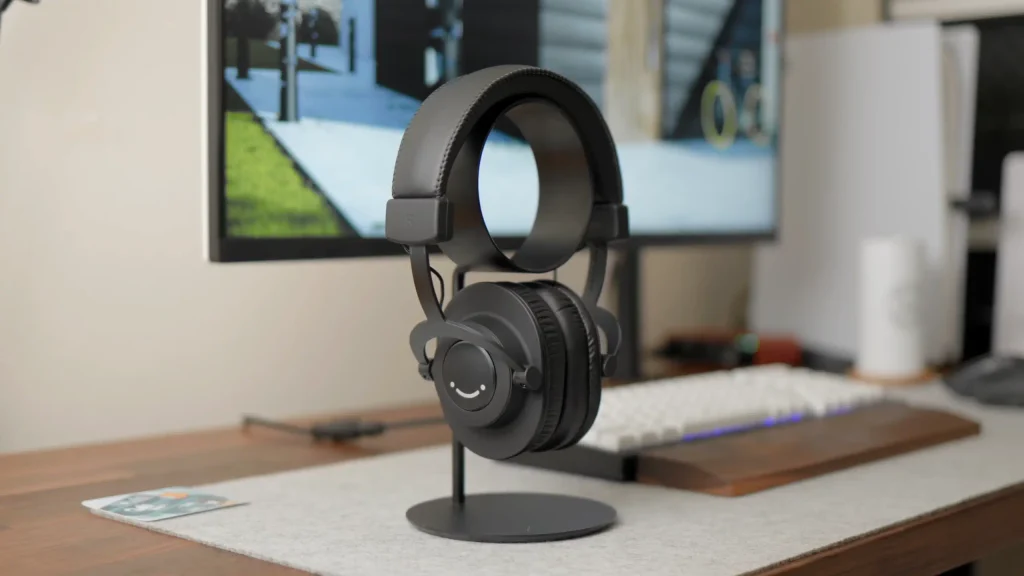
The bass has a nice clean sound to it, not for Bass heads but it does gives a little rumble and punch, a well rounded bass with some good detail. Then I was expecting the mids would be all shouty and they are not. Clean detailed vocals and instruments and not too congested.
Amazon review of fifine H8 headphone
In hands-on testing by @JamesPrinceEN, the fifine H8 headphone showed no dropouts and no hum. The soft protein-leather pads and adjustable headband feel better than the price suggests. One heads-up: if your audio interface only takes a 6.35 mm jack, grab an adapter when you order.
2. RØDE NTH-100 — Best for long editing sessions
The most neutral, most comfortable pick here for marathon edits. It costs nearly four times as much as the fifine H8 headphones, but the quality-of-life touches add up.
What You’ll Love
- Very neutral sound that doesn’t flatter your audio
- Cooling Alcantara pads stay comfortable for hours
- Cable connects to either ear cup with a locking connector
- Clear left/right markings, including a red dot on the right cup
- Optional NTH-Mic turns it into a headset
What You Might Not
- Some early units had cracking headband lock clips
- Replacement pads come directly from RØDE only
- Less isolation than the Shure or beyerdynamic
Creator @tombuck has used the NTH-100 daily for over two years; call it a litmus test: if a mix sounds good here, it’ll sound good anywhere. @tombuck wears his for hours at a time and forgets he has them on, even after the edit ends. The dual-sided cable is a small but real win: plug into the right cup when your RØDECaster sits on your right, then the left cup when you edit on a laptop.
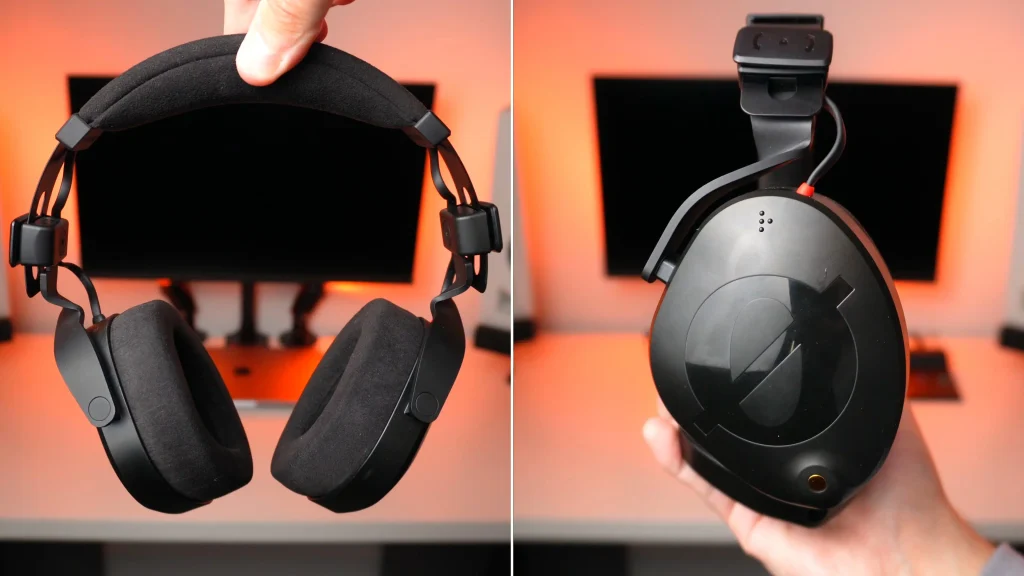
The lockable headband keeps both sides even, though early clips cracked on some units. Newer pairs seem to have fixed that, and RØDE covers it under warranty. Want a mic too? The NTH-Mic clips on for $59, and it holds up well once you run it through processing.
3. beyerdynamic DT 770 PRO — Best studio all-rounder
A studio staple with soft velour pads, honest sound and parts you can replace. Just check you have the power to drive it.
What You’ll Love
- Plush velour pads and padded headband
- Clear, mostly neutral sound with a controlled bass bump
- Strong isolation from fans and air conditioning
- Sturdy build with replaceable parts
- Plays well with glasses
What You Might Not
- Treble turns sharp at high volume
- Doesn’t fold, so travel is awkward
- The popular 250-ohm version needs a high-impedance output or interface
For the professional level, the beyerdynamic DT 770 PRO earns its place as the best studio headphone for podcasting. Voices sound crisp, and the slight bass lift adds warmth without drowning out dialogue. The soft pads and padded headband make it easy to forget you’re wearing them during long listen-backs.
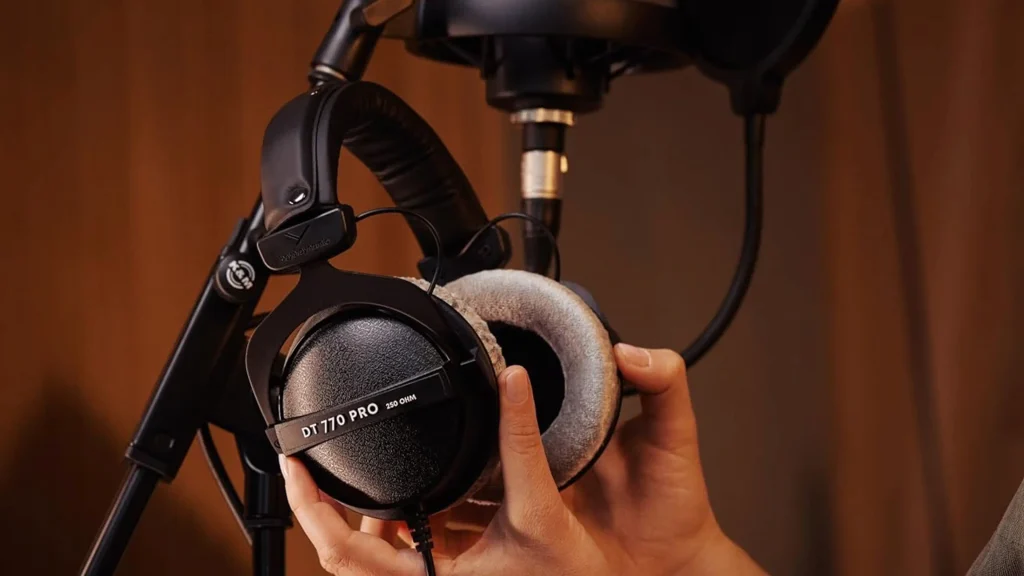
they have a very V shaped sound signature. lows and highs are emphasized, with more shallow mids.highs are bright, no way around it…… they can be piercing at times with bright song tracks……if you’re sensitive to highs, these might not be for you.
AMAZON rEVIEW ON bEYERDYNAMIC DT 770 PRO
Keep the volume moderate to avoid harsh S and T sounds. The isolation blocks fan and air-conditioning noise, so you hear only what your mic captured. If you plug straight into a laptop, the 250-ohm model may sound quiet, so pair it with an audio interface. It doesn’t fold either, so treat it as a desk pair for your studio.
4. Sony MDR-7506 — Best classic pro-level
A pro favorite since 1991, built for detail work. Great for catching flaws, less great for comfort.
What You’ll Love
- Detailed sound with forward mids and highs that make vocals pop
- Tight, controlled bass
- Tough build that folds for travel
- Trusted in professional settings for decades
What You Might Not
- Small ear cups can get warm and press on your ears
- Basic headband padding
- Coiled cable is heavy, tangles and isn’t user-replaceable
- Treble can fatigue you over long sessions
The Sony MDR-7506 makes it easy to hear every click, breath and pop. Its forward mids and highs put voices front and center, which helps when you’re cleaning up dialogue. Its staying power speaks for itself: it’s been a fixture in professional studios and edit bays since 1991.
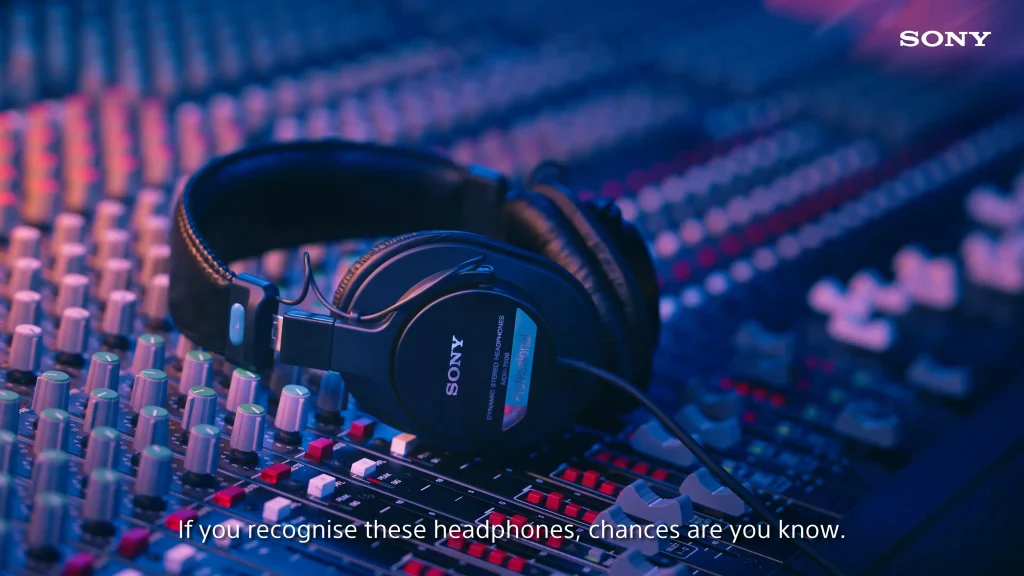
That precision comes with a narrow soundstage and bright treble, so take breaks. Also, comfort isn’t a particular strength across the best studio headphones for podcasting here. Content creator @tombuck and @Riversidefm simply feel uncomfortable with long wear. Try a pair on if you can, and treat it as a tool for focused work rather than casual listening.
5. Shure SRH440A — Best for travel and isolation
A $99 pair with solid build quality, flat-folding cups and the strongest isolation in its price range.
What You’ll Love
- Folds flat for easy packing
- Measured headband markings for an even fit
- Detachable locking cable
- Replacement pads are easy to find
- Very comfortable pads for short sessions
What You Might Not
- Slightly more bass coloration than the RØDE
- Thin headband puts pressure on your head over hours
- Black-on-black L/R markings are almost impossible to read
The Shure SRH440A blocks a lot of room noise, which helps in untreated spaces. @tombuck said his own voice sounded strange while wearing them because they shut out so much of the room. That makes them a strong pick if you record next to a busy street or a humming computer.
It colors low end a little more than the RØDE, so double-check bass-heavy edits. Under an hour, it may feel comfier than anything here. All day, the thin headband starts to bite. A practical tip: put a strip of tape on the right cup so you stop guessing which side is which.
6. Audio-Technica BPHS1 — Best headset with a built-in mic
A broadcast headset for interviews and live shows. The cardioid dynamic boom mic is the real star.
What You’ll Love
- Cardioid dynamic mic on a flexible boom
- Strong off-axis rejection for noisy rooms
- Closed-back cups block outside noise
- Padded, adjustable fit
What You Might Not
- XLR and 1/4-inch plugs require an interface or mixer
- Cable weight can tug at your neck
- Not detailed enough for serious mixing
If you record in a busy space or move around while hosting, a headset keeps the mic a fixed distance from your mouth. The Audio-Technica BPHS1 focuses on your voice and ignores the room. That consistency means fewer level jumps to fix in post when you lean back or turn your head.
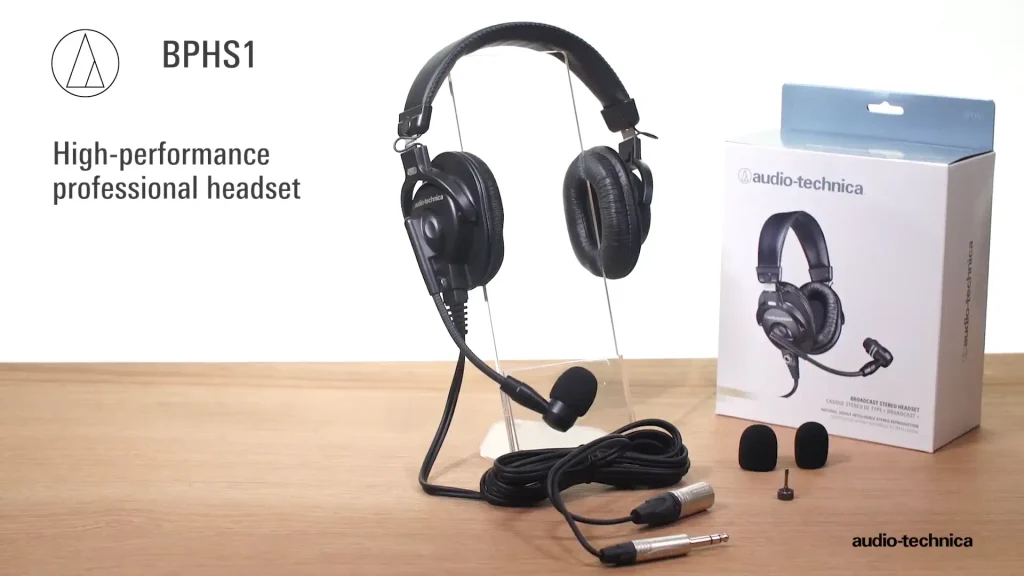
The trade-off is setup. You’ll need an audio interface or mixer for the XLR and 1/4-inch connectors, and the cable’s weight can strain your neck over a long show, so stretch between segments. For podcasting, Audio-Technica BPHS1 works great. For pro mixing, it’s not detailed enough.
some folks say the sound is decent for podcasts and streaming, but not the best for superdetailed music listening or studio mixing.
@YourNextPick10 FROM YouTube
Are These Studio Headphones Right for You?
Find your situation in the middle column. If the right-hand column sounds like you, move on to the next pair.
| Headphones | Right for you if… | Skip it if… |
|---|---|---|
| fifine H8 | You need clean voice monitoring for podcast under $40 and wear headphones for hours | You need a 6.35 mm plug out of the box or you’re sensitive to bright highs |
| RØDE NTH-100 | You edit for hours daily, want the most neutral sound or might add a headset mic later | You need maximum isolation or easy-to-find replacement pads |
| beyerdynamic DT 770 PRO | You have an audio interface and want a comfortable, isolating studio pair | You plug straight into a phone or laptop or travel often |
| Sony MDR-7506 | You want a proven, detailed pair under $100 that folds for travel | Comfort matters most or you hate coiled cables |
| Shure SRH440A | You record in noisy spaces, travel and want easy repairs | You edit all day or need perfectly flat bass |
| Audio-Technica BPHS1 | You host live shows or interviews in busy rooms and want a mic attached | You don’t own an interface or mixer, or you need a mixing reference |
What to Look For in Studio Headphones for Podcasting
1. Neutral sound
The best podcast headphone should reproduce your audio as it is. Edit on bass-heavy consumer cans and you’ll cut low end that isn’t really there, leaving your show thin and harsh on everyone else’s speakers. Look for a flat frequency response across 20 Hz to 20 kHz.
2. Wired, zero-latency connection
Bluetooth always adds some delay. When you’re syncing audio to video or monitoring your own voice live, even a frame of lag throws you off. Stick with a cable. A detachable, locking cable is a bonus: if it gets yanked, you replace the cord instead of the headphones.
3. Closed-back isolation (not noise canceling)
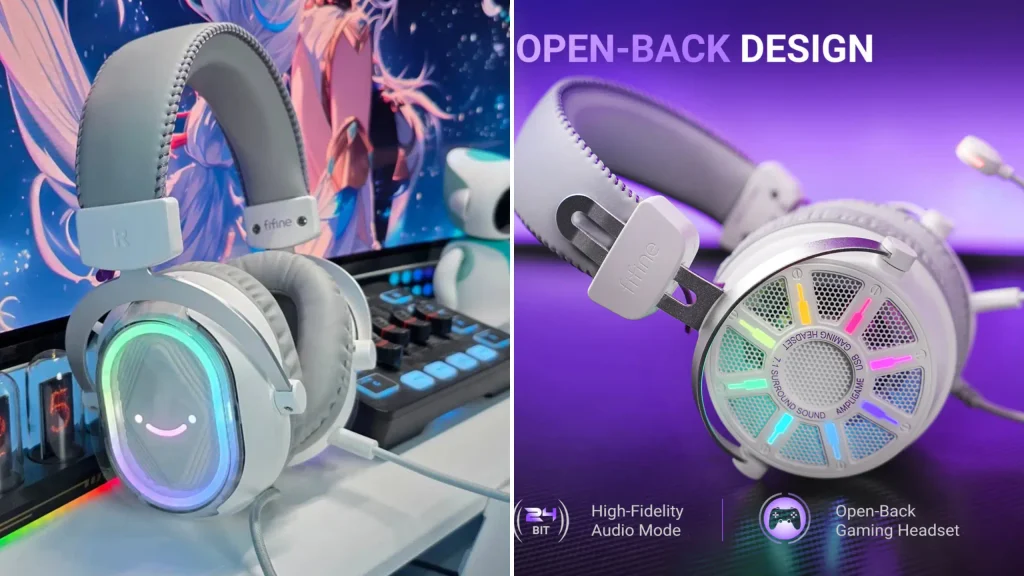
Closed-back cups keep your monitor mix from leaking into the mic and block fans, traffic and air conditioning. Skip active noise canceling. It processes the sound you’re hearing, so you can’t trust it to show you what you recorded. Learn more with our closed-back vs. open-back headphone guide.
4. Comfort for long sessions
A two-hour record plus a four-hour edit is a long time on your head. Check:
- Weight: Lighter pairs, like the 265-gram fifine H8, cause less fatigue
- Pads: Velour and cooling fabrics breathe; leatherette isolates more but runs warm
- Clamp and headband: Tight clamp and thin padding cause pressure points after an hour
- Isolation level: Some creators prefer slightly less isolation for all-day wear so they don’t feel cut off
5. Impedance and sensitivity
Impedance decides what can drive your headphones. Sensitivity tells you how loud they get from a given signal; aim for roughly 80 to 125 dB.
| Impedance | Works best with | Example |
|---|---|---|
| 32–80 ohms (low) | Laptops, phones, USB mics with headphone jacks | Most creator headphones |
| 250 ohms (high) | Audio interfaces, mixers or high-output jacks | beyerdynamic DT 770 PRO 250-ohm |
If you plug straight into a laptop or a USB mic, low impedance is the safe bet.
6. Build, cable and replaceable parts
Pads wear out and cables get tugged. Choose headphones with swappable pads and a detachable cable, and check whether spares are easy to buy. Also confirm the plug matches your gear: a 3.5 mm jack may need a 6.35 mm adapter for many interfaces and mixers.
Final Pick
For most podcasters, the fifine H8 is the best studio headphone for podcasting. At $36.99, it covers clear mids, closed-back isolation, a wired connection and a light frame for comfort.
That said, your workflow might point elsewhere. RØDE NTH-100 for long-term wear. beyerdynamic DT 770 PRO is ideal with an interface and a dedicated studio. Sony MDR-7506 is a pro classic-level headphone. Shure SRH440A works best on the road or in noisy rooms. Audio-Technica BPHS1 is best for live interviews.
Whichever you pick, wear them every time you hit record. Your listeners will hear the difference.
FAQs
Do I really need headphones to record a podcast?
Yes. Without them, your mic picks up audio from your speakers, causing echo and bleed. Headphones also let you catch plosives, distance problems and background noise while you record, which saves hours in editing.
Can I use AirPods for podcasting?
You can, but wireless lag makes live monitoring and syncing tricky. Wired EarPods or AirPods Max with a cable work better in a pinch. For regular recording, use wired studio headphones.
Open-back or closed-back headphone for podcasting?
Closed-back. Open-back designs leak sound into your microphone, while closed-back cups keep your monitor mix private and block room noise.
Does the fifine H8 headphone work with an audio interface?
Yes. It uses a 3.5 mm plug, so you’ll need a 3.5 mm to 6.35 mm adapter for interfaces and mixers with a full-size headphone jack. It plugs straight into laptops and most USB mics.
Are expensive headphones worth it for podcasting?
Only if you’ll use what you pay for. Pricier pairs add comfort for long edits, replaceable parts and a slightly more neutral sound. If you’re starting out, a budget pair like the fifine H8 headphones plus a good microphone will improve your show more than premium headphones alone.
