
Best Condenser Microphone In 2026: 6 Picks From Budget USB to Pro XLR

Condenser mics hear everything. That’s their superpower and their catch. They capture the breath, texture, and crisp top end. But they may catch some noise, like a keyboard or a desk fan, that you don’t like.
So the best condenser mic for you depends less on which one “sounds best” and more on where and how you record. Here’s we have list 6 condenser microphones and test each mic on sound quality, features and controls, ease of setup, versatility and value. Let’s see how each mic serves its target user for the money, not raw sound quality alone.
6 Best Condenser Microphones At a Glance
| Microphone | Best for | Connection | Price | Ideal for |
|---|---|---|---|---|
| fifine A8 Microphone | Best overall for home creators | USB-C | ~$45 | Streamers and gamers who want everything in the box |
| fifine K669B Microphone | Best budget condenser microphone | USB-A (fixed cable) | ~$33 | First-time podcasters, YouTubers and video calls |
| fifine A6V Microphone | Best for multi-platform streaming | USB-C | ~$34 | New streamers on PC, Mac or PlayStation |
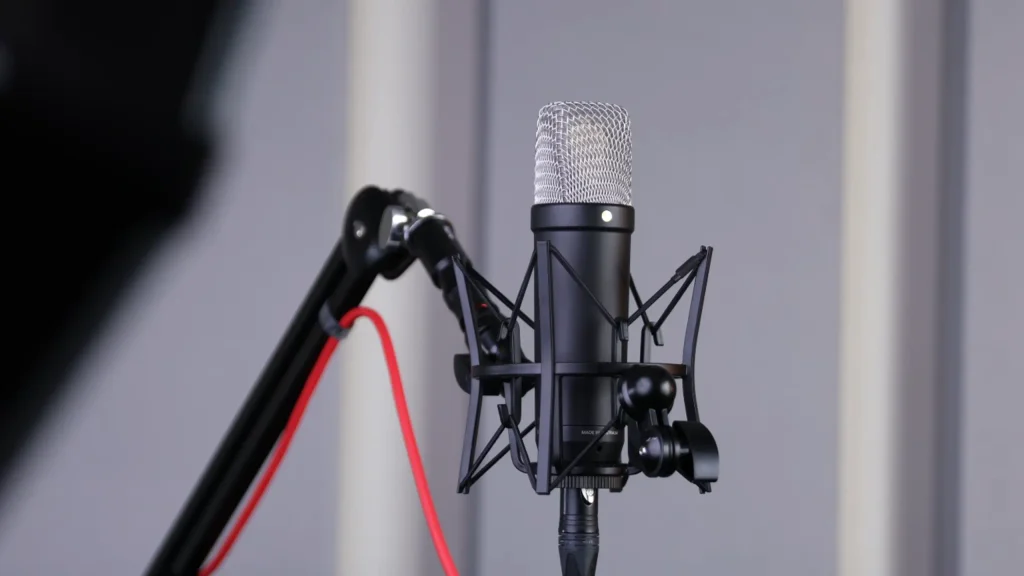
| RØDE NT1 5th Generation | Best hybrid USB/XLR condenser | USB + XLR | ~$250 | Podcasters and voice actors who plan to grow |
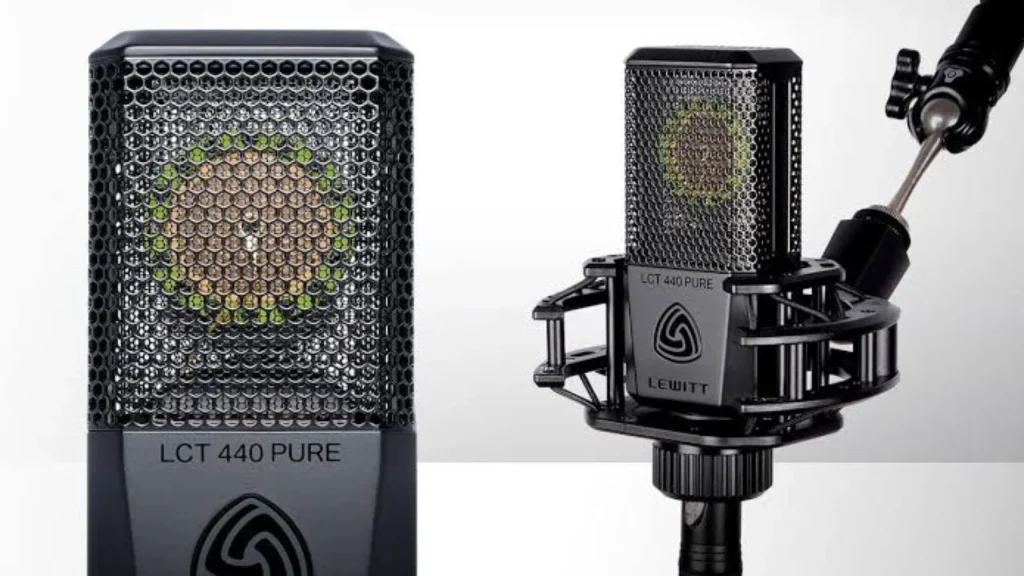
| Lewitt LCT 440 PURE | Best condenser microphone for vocals | XLR | ~$289 ($199 on sale) | Singers, choirs and musicians |
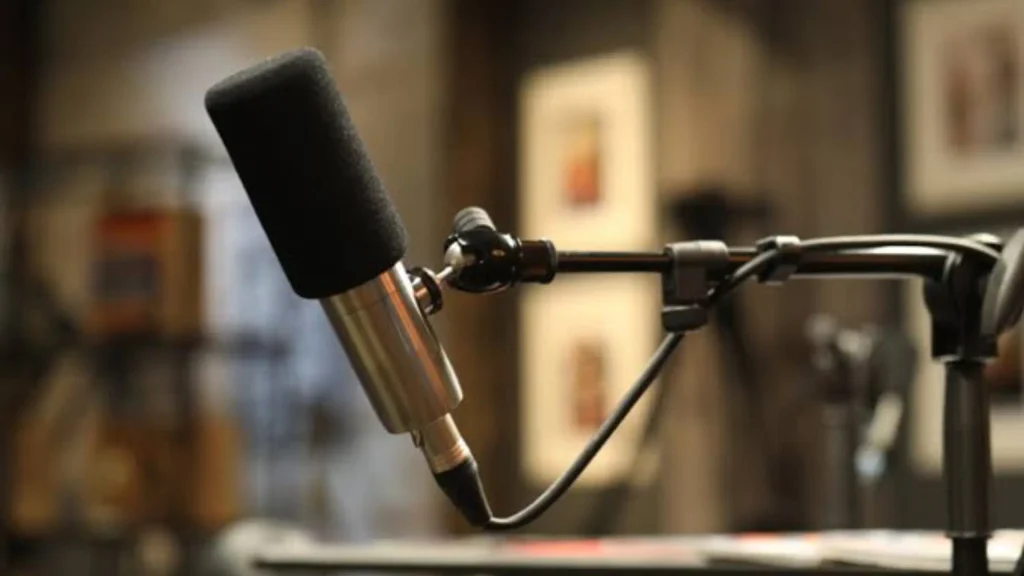
| Earthworks Ethos | Best premium broadcast mic | XLR | $399-$450 | Broadcasters who also sing |
6 Best Condenser Microphones: Reviews & Top Picks
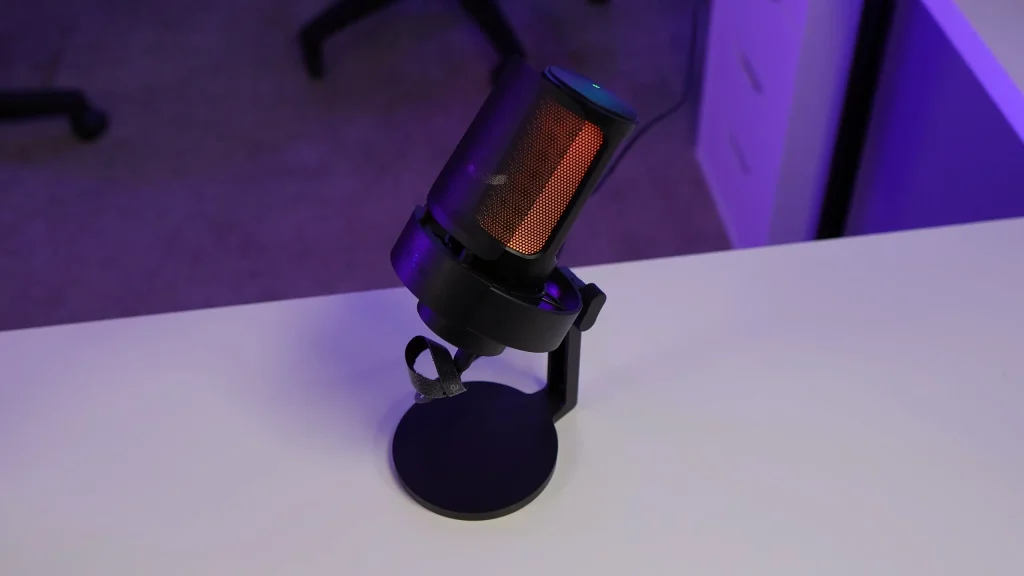
1. fifine A8 Microphone – Best overall for home creators
What you may like
- Boom arm adapter included, so it fits a standard arm with no extra purchase
- Headphone jack for real-time monitoring
- Touch mute on top glows green when live and red when muted
- RGB you can actually control: tap the back panel to cycle solid colors and two gradient modes
- Heavy stand that stays put on a desk
What can be better
- Echo becomes audible at 5 to 6 inches and beyond in an untreated room
- USB only, so it won’t grow with you into an audio interface
- RGB adds nothing for audio-only podcasters
The fifine A8 microphone is the most complete plug-and-play package on this list. Gain sits on the back near the bottom, the headphone jack sits beside the USB port and mute sits on top. You can adjust levels, hear yourself and go silent without tabbing out of a game.
It arrives already seated in its shock mount on the stand. Clip in the pop filter, run the USB-C to USB-A cable and you’re recording. With gain at 12 o’clock and zero filters, @CpawsMusic found it sounded good right out of the box with his mouth 1 to 2 inches from the pop filter.
As he moved back to arm’s length, his room started to show. That’s standard condenser behavior, and it’s why the included boom arm adapter matters. Putting the fifine A8 mic on the boom arm will give you better performance.
2. fifine K669B Microphone – Best budget condenser microphone
What you may like
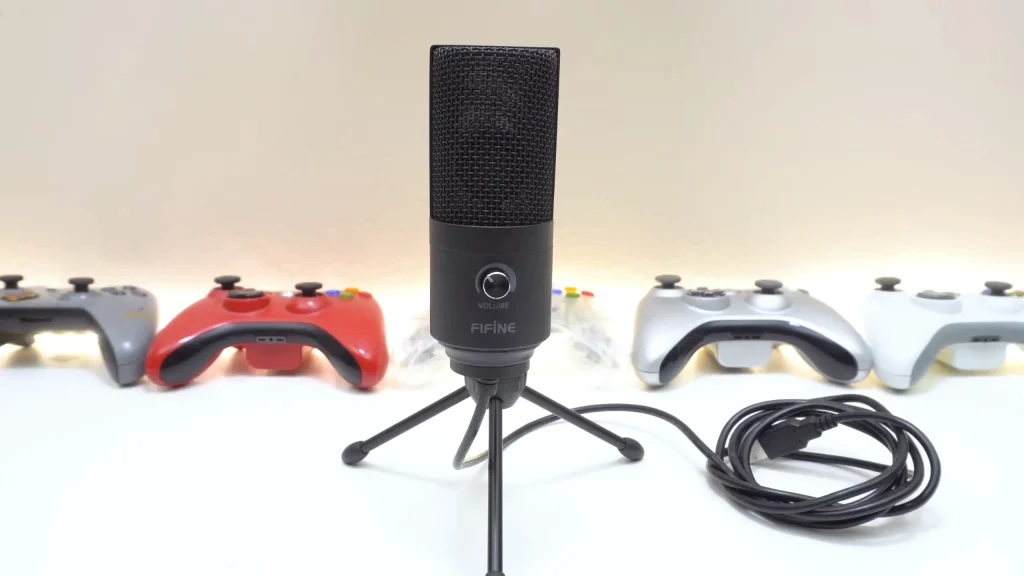
- All-metal build that feels heavier than its size suggests
- Compact body that stays out of your camera frame
- Loads of gain headroom: the reviewer only needed 9 to 10 o’clock
- True plug-and-play on Mac, PC and tablets with the right port
What can be better
- Attached USB-A cable: if it fails, you replace the whole mic
- No mute button, no power light, no headphone jack
- Picks up more room echo than the Yeti
- No pop filter, and plosives come through at close range
For about $35, the fifine K669B microphone gets you an all-metal condenser mic, a desk tripod and a built-in cable. In a direct comparison, @tombuck called it “pretty darn close” to the $100 Blue Yeti. The Yeti isolated his voice slightly better, but you won’t hear a $200-plus difference against the Shure MV7.
It skips a mute button and a detachable cable, but for one voice on one computer, it’s hard to beat on price. Also, the USB-only connectivity limits the potential. That said, with a few minutes of EQ and echo reduction, though, @tombuck got it sounding polished enough to wrap his whole video on it.
Two setup tips. First, this is a cardioid mic, so speak into the front of the body. Second, start with gain around 9 to 10 o’clock at about a foot away, then lower it as you move closer.
3. fifine A6V Microphone – Best for multi-platform streaming
What you may like
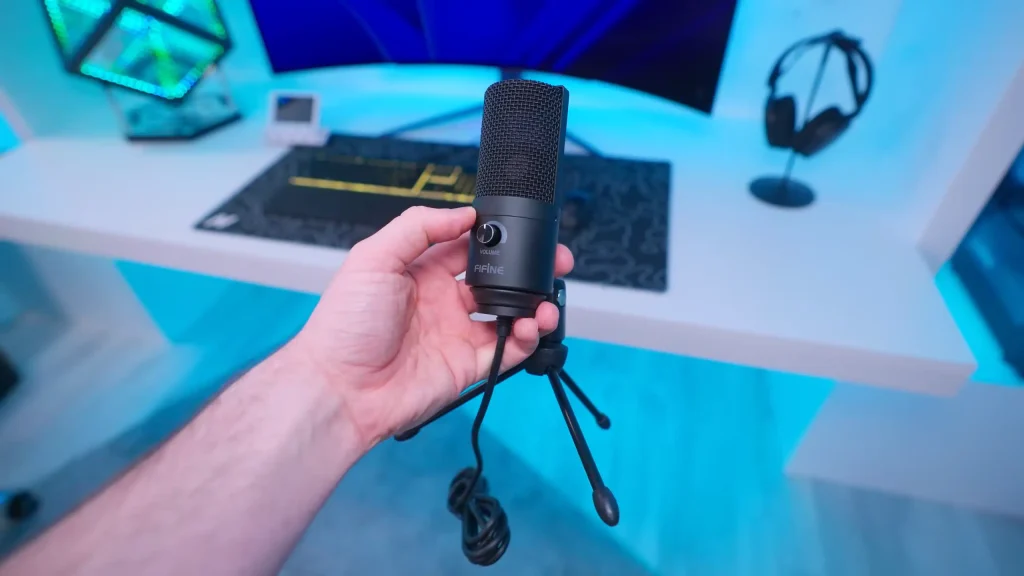
- Detachable USB-C cable, so you can swap in a longer or shorter one
- Shock mount and pop filter included
- Touch mute kills the RGB, a hard-to-miss visual cue on stream
- Mute button made no audible pop in the reviewer’s tests
- Cardioid pattern that favors your voice over a keyboard behind the mic
- On-mic gain knob for quick adjustments
What can be better
- Stand thread is too thick for boom arms, so you’ll need a separate adapter
- RGB cycles through four presets with no customization
- The pop filter looks thin
- Very light body, which can be an issue on some mounts
At around $50, the A6V bundles a shock mount, pop filter and detachable USB-C cable, plus a touch mute that turns the RGB off when you’re muted.
The A6V’s best feature is honestly the mute. Every new streamer has talked to an empty chat while muted. Here, the RGB shuts off the moment you tap mute and comes back when you’re live, so you know your status without checking software.
@Jacqie ran plosive tests, rotated the mic to hear its cardioid pattern and hammered a loud mechanical keyboard right behind it. The sound quality really impressed him. Just plan ahead on mounting. The included tripod screw doesn’t fit standard boom arms, so order the thread adapter with your arm.
4. RØDE NT1 5th Generation – Best hybrid USB/XLR condenser
What you may like
- USB and XLR in one mic
- 32-bit float keeps loud moments usable instead of distorted
- Suited to voiceover, voice acting and podcasting
- Knocked a longtime favorite out of the reviewer’s top five
What can be better
- The XLR route needs an interface or mixer
- The tone presets the reviewer demoed come from his RØDECaster Duo, not the mic itself
- It landed fifth among his favorite condensers, so dedicated XLR mics can beat it for pure tone
The NT1’s pitch is simple: one mic that grows with you. Start on USB, then move to XLR when you add a second host or an interface.
The 32-bit float is the feature that matters most for podcasts. Normally, when a guest gets animated and your meter hits red, that section is gone. With 32-bit float, the reviewer explained, the recording stays in a usable range.
He demoed it through a RØDECaster Duo with neutral, podcast studio and broadcast profiles, the last giving a deep, warm radio tone for long-form content. It’s a genuine step into professional voiceover and podcast work.
5. Lewitt LCT 440 PURE – Best condenser microphone for vocals
What you may like
- Handles vocals, spoken word, instruments and choirs
- The package the reviewer bought included a magnetic metal pop filter and a shock mount
- Lively tone that adds presence to a voice
- Regular sales bring it close to $200
What can be better
- XLR only, so you need an interface
- Accessories and colors vary by edition, so check what’s included
- Its brighter top end may not suit every voice
If you’re searching for the best condenser microphone for vocals under $300, the LCT 440 PURE is the one to shortlist. It covers spoken word, vocals, instruments and even choirs.
@levelupwithmikenewman, who also runs sound for a church and school, used it as a choir mic for live spring programs and said it delivered every time.
That versatility is the whole story. It beat the $350 sE4100 not on sound alone but because it could cover more jobs. Patience pays, too: he picked his up at $199 during a holiday sale.
6. Earthworks Ethos – Best premium broadcast mic
What you may like
- Sounds excellent out of the box, no EQ needed
- Orbital ball mount lets you angle it any way on any arm or stand
- Remove the pop filter for a more open, airy top end
- Strong noise rejection for a condenser
- Doubles as a vocal mic once you open up the EQ
What can be better
- Premium price
- Without the pop filter, you need careful mic placement to avoid plosives
- The Lauten Audio LS-208 rejects noise even better
- The matte black finish costs $50 more
The Ethos won the reviewer’s top spot for two reasons. First, the orbital ball mount makes positioning painless on any stand. Second, it surprised him as a singing mic. After EQing out some of its broadcast character, he recorded a worship song on it and said he’d never have expected that result.
He had a near-tie with the $538 Lauten Audio LS-208, which handled fans, air conditioners and lawnmowers even better. The difference? He can sing on the Ethos but not the LS-208. One extra use case earned it the bump.
How Does a Condenser Microphone Work
A condenser microphone uses a thin, lightweight diaphragm placed very close to a fixed metal backplate. Together, they act like a capacitor. When sound waves hit the diaphragm, it moves, changing the distance to the backplate. That change creates a small electrical signal that mirrors your voice.
Because the diaphragm is so light, it reacts to fast, quiet detail that heavier designs can miss. That’s why condensers sound crisp and airy. It’s also why they pick up your room. The K669B microphone reviewer noticed more echo than on his Yeti, and the fifine A8 microphone reviewer heard his room once he moved to arm’s length.
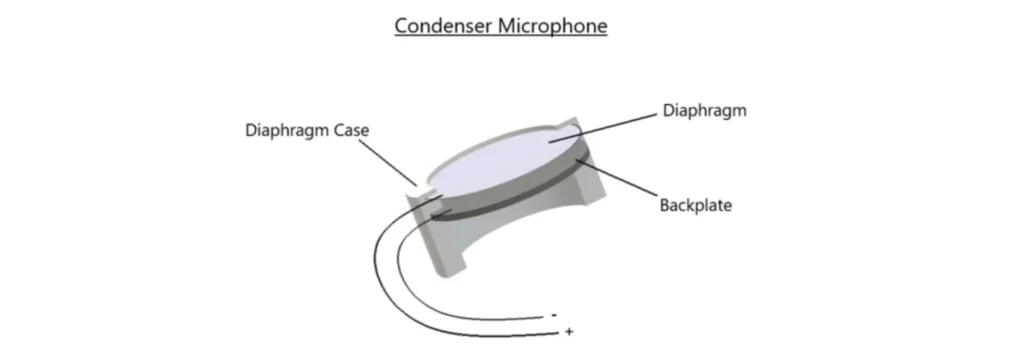
Condensers need power to work. USB condensers draw it from your computer. XLR condensers need 48-volt phantom power, which most audio interfaces and mixers supply.
Dynamic mics work differently: sound moves a coil through a magnetic field. They’re less sensitive, so they tend to ignore more background noise. Choose a condenser when detail matters and you can control your room. See our condenser vs dynamic microphone guide to learn more.
What to Look for in a Condenser Microphone
| Criteria | Quick check |
| Connection (USB vs XLR microphone) | USB for solo plug-and-play; XLR or hybrid for multiple mics |
| Polar pattern and address | Cardioid for solo use; side-address vs. end-address |
| Controls | On-mic gain, mute and headphone jack |
| Accessories and mounting | Shock mount, pop filter, boom arm thread |
| Room fit | Can you record 1 to 6 inches away? |
Connection
USB is the fastest way to better audio, but the upgrade path is limited. XLR solves both, but you need an interface or mixer. Hybrids like the NT1 5th Generation give you both.
Pickup pattern and address
A cardioid pattern picks up mostly from the front and rejects the back, which is ideal when your keyboard sits behind the mic. Also check the address type. Speak into the front of side-address mics like the K669B microphone, and into the top of end-address mics like the Ethos.
Controls
On-mic gain and mute let you fix levels without leaving your game. Look for a clear mute indicator, like the fifine A8 mic’s red light or the A6V mic’s RGB cutting out. A headphone jack lets you hear exactly what your audience hears.
Accessories and mounting
A shock mount cuts desk bumps, and a pop filter tames plosives. Check the mounting thread before you buy a boom arm: the A8 mic includes an adapter, while the A6V mic needs one bought separately.
Room fit
The closer you get, the less room you capture. If you can’t record within a few inches, or you share space with fans and traffic, look for strong noise rejection or consider a dynamic mic instead.
Conclusion: Which Condenser Mic Should You Buy?
For most home creators, the fifine AmpliGame A8 is the best condenser microphone. It gives you plug-and-play and a powerful control layout.
Your situation might point elsewhere:
- Tightest budget: The fifine K669B mic is the best budget condenser microphone for a single voice on a single computer.
- Console streaming: The fifine A6V mic works on PC, Mac and PlayStation with a mute you can see.
- Room to grow: The RØDE NT1 5th Generation gives you USB now and XLR later.
- Vocals and instruments: The Lewitt LCT 440 PURE is the best affordable condenser microphone for music.
- Premium broadcast: The Earthworks Ethos sounds finished out of the box and doubles as a singing mic.
- Noisy home studio: Consider the Lauten Audio LS-208 ($538), which rejects fans and traffic better than anything here, though it’s not built for vocals.
FAQs
What is the best condenser microphone for vocals?
From this list, the Lewitt LCT 440 PURE handles vocals, choirs and instruments for under $300. The Earthworks Ethos also works for singing once you open up its EQ.
What is the best budget condenser microphone?
The fifine K669B microphone. At about $35, it came close to a $100 Blue Yeti in a direct comparison.
Do condenser microphones need phantom power?
XLR condensers need 48-volt phantom power from an interface or mixer. USB condensers get power from your computer.
Can I use two USB microphones at once?
Usually not. Most recording software lets you choose one USB input at a time. For multi-person podcasts, use XLR mics with a mixer or interface.
Is a condenser or dynamic mic better for a noisy room?
Dynamic mics generally reject more background noise. If you prefer a condenser, record close to the mic, treat your room where you can or pick a model known for noise rejection.
