
Soundstage vs. Imaging: How Do They Matter in Your Headphones?

Even reviewers use soundstage and imaging interchangeably. However, they pull in different directions. A headphone can throw a huge, room-filling sound around you and still smear the details. Another can place every instrument with surgical precision while keeping everything close to your head.
Soundstage vs. imaging? This guide breaks down what they are and how they really work. Finally, help you pick the suitable headphones for gaming, movies, or music.
Quick Comparison
| Dimension | Soundstage | Imaging |
|---|---|---|
| Definition | The perceived size of the space around you: width, depth and, in some cases, height | The accuracy with which you can place each individual sound inside that space |
| Core characteristics | Openness, a sense of distance, sound that extends beyond your head | Pinpoint placement, left/right and front/back precision, tight focus |
| Best used for | Immersive movies, story-driven games, live and orchestral recordings | Competitive FPS, locating footsteps and gunfire, tracking single instruments |
| Common applications | Cinematic audio, classical, ambient and spacious mixes | Esports, studio monitoring, picking one voice out of a crowd |
What is Soundstage in Headphones?
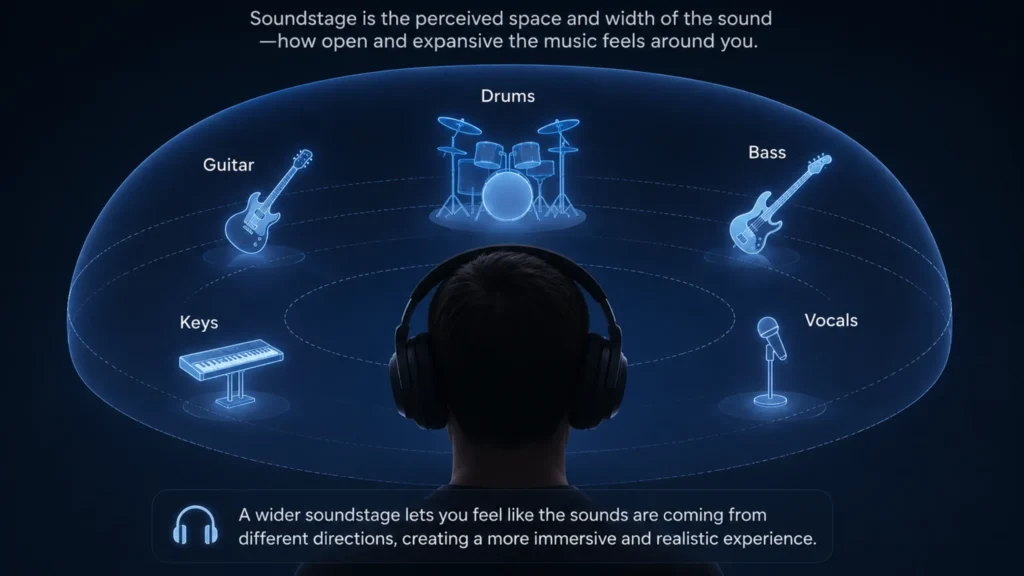
Soundstage is the perceived space of what you’re hearing: how wide it is, how deep it goes, and how far it reaches beyond your head. Picture sitting in a concert hall. The violins don’t sound like they’re pressed against your ears. They sound like they’re out in the room, with air and distance between you and them.
Unlike speakers, headphones don’t naturally create a real acoustic space.
- Speakers project sound into a room, where it reflects off walls and surfaces before reaching your ears. The sound also arrives from in front of you at different angles, helping your brain perceive distance and space.
- Headphones, on the other hand, deliver sound directly to your ears from just a few inches away, typically at around a 90-degree angle. There are no room reflections or natural spatial cues.
So, headphones rely on acoustic design and tuning to create the illusion of space, convincing your brain that sounds are coming from different distances and directions. The more successfully a headphone creates this illusion, the more open, spacious, and speaker-like it sounds.
What makes a good soundstage
Width and depth are the two most noticeable characteristics of soundstage, and the difference between headphones can be significant. Some headphones create a compact but natural sense of space, while others produce a much wider and deeper presentation that extends beyond your head.
However, a bigger soundstage isn’t always better. The best soundstage is one that matches the recording. An intimate acoustic performance should sound close and personal, while a live concert or orchestral piece benefits from a larger, more expansive presentation. In other words, a realistic soundstage is more important than simply having the widest one possible.
What is Imaging in Headphones?
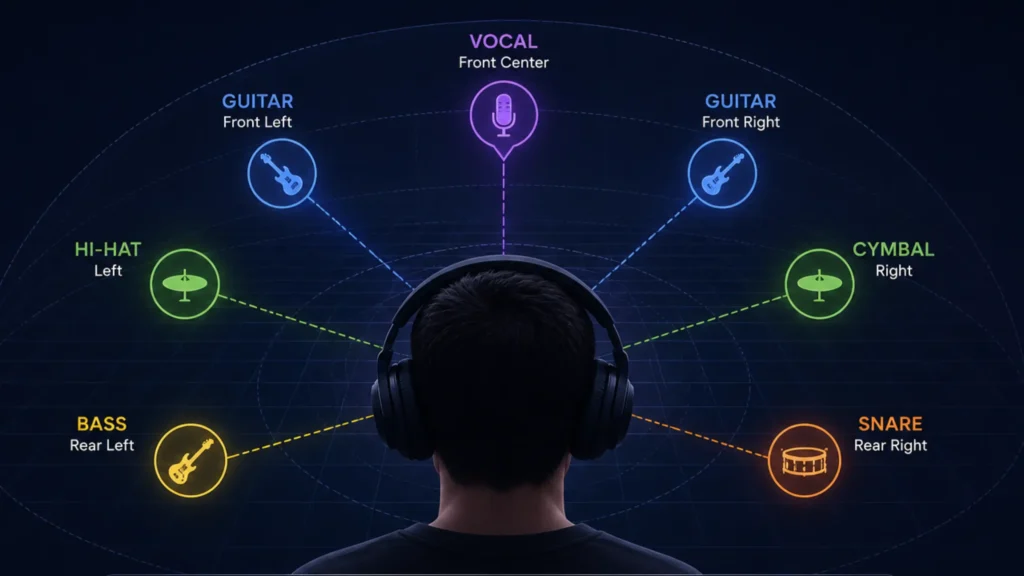
Imaging is the accuracy of placement: how precisely you can locate each sound within the soundstage, left to right, front to back, and near to far. If the soundstage is the stage, imaging is knowing exactly where each performer is standing on it.
Unlike soundstage, imaging cues are already baked into the recording. The mix carries information about how far left or right each instrument should sit, how wide it should be, and how far forward or back it belongs.
A headphone’s job is to reproduce those cues faithfully. That comes down to the left and right drivers behaving identically, so they don’t distort what’s already in the music. When they match well, placement stays locked and precise.
Why imaging matters
Imaging determines how accurately you can locate individual sounds within the soundstage. Think of soundstage as the size of the room and imaging as the precise position of every sound inside it.
- For music: Clear imaging separates vocals and instruments, making the mix sound more detailed and realistic.
- For gaming: Accurate imaging helps you pinpoint footsteps, gunfire, and other directional cues, giving you a competitive advantage in fast-paced games.
Soundstage vs. Imaging: The Key Differences
Here’s the contrast at a glance.
| Soundstage | Imaging |
|---|---|
| Size of the sound space | Accuracy of sound placement |
| Wide vs. narrow | Precise vs. blurry |
| Creates immersion | Improves positional awareness |
| Important for movies and orchestras | Important for FPS games |
| Doesn’t guarantee accurate positioning | Doesn’t require a huge soundstage |
What’s the difference between soundstage & imaging?
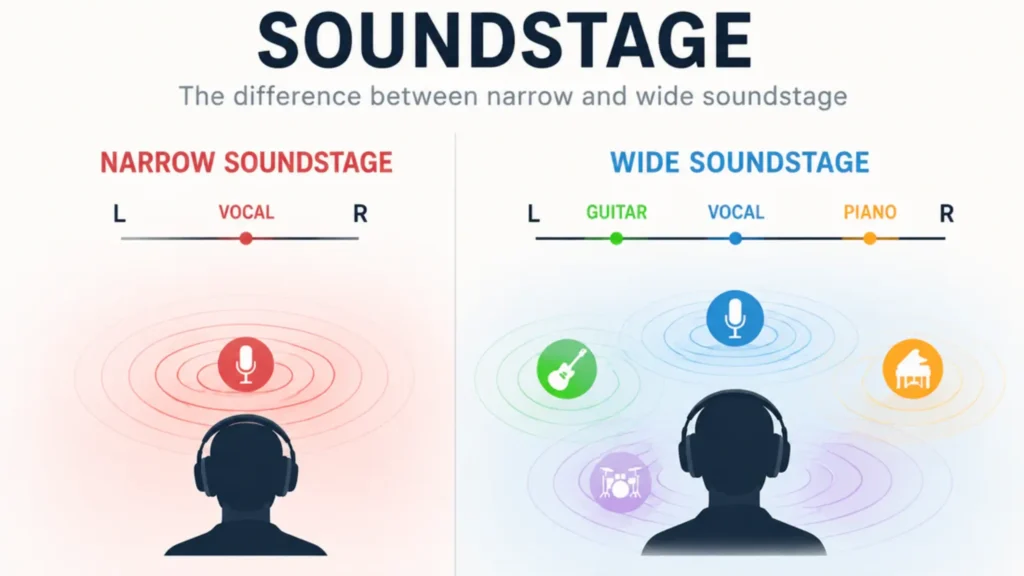
The split starts with what each one measures. Soundstage is size — how wide, deep and open the space around you feels. Imaging is accuracy — how precisely you can place each sound inside that space. One describes the room; the other describes where everyone is standing in it.
The vocabulary follows from there. A soundstage is wide or narrow; imaging is precise or blurry. A headphone can throw a wide stage around you and still smear the details, so you can’t quite tell where a sound sits. Another can lock every element in place while keeping the whole picture close to your head. Width and precision are separate traits, and one doesn’t buy you the other.
Each also does a different job. Soundstage creates immersion, the feeling of being somewhere — a concert hall, a film’s world. Imaging improves positional awareness, the information that tells you a sound is coming from your left, from behind you, or from across the room. Soundstage is about feeling; imaging is about knowing.
Where do soundstage & imaging work?
A wide soundstage carries movies and orchestral recordings, where scale and openness pull you in. Sharp imaging wins FPS games, where hearing exactly where a footstep or gunshot comes from decides the fight.
Can soundstage and imaging guarantee each other?
No. A big soundstage doesn’t promise accurate positioning — stretch the space too far, especially with DSP, and placement can go soft. Great imaging doesn’t need a huge soundstage either — some of the most accurate headphones keep everything fairly close to your head and still pinpoint every element cleanly. Judge them separately, then match the one you need to the way you listen.
Soundstage vs. Imaging: Which is More Important?
Competitive gaming
Prioritize imaging. A good headphone in an FPS should convert sound into position instantly — footstep direction, reload location, gunfire distance. A stage so wide that it softens placement actively hurts you here. Tight, accurate imaging is the competitive edge.
Story-driven games and movies
Lean toward the soundstage. Cinematic content is built to surround you and pull you into a world, and a wider, more open presentation sells that immersion. Precise placement still helps, but scale is what carries the experience.
Music listening
You want both in balance. Imaging keeps each instrument distinct and holds the vocal in place; soundstage gives the recording room to breathe at the size it was meant to be heard. Neither alone is enough.
What Affects Soundstage and Imaging in Your Headphones?
Open-back vs. closed-back design
When it comes to open-back vs closed-back design, how open a headphone is has a real effect on the soundstage. Leakier, more open designs let the presentation shift depending on your environment, which tends to read as more space. But open-back doesn’t guarantee a big stage. In @RTINGS‘ testing, a popular open-back model measured with a noticeably smaller, less accurate soundstage than pricier open-backs in the same family.
Driver tuning and ear cup design
Two headphones can use nearly identical drivers and still image and stage differently because of physical design. Cup size, baffle depth, and ear pad dimensions all change how sound interacts with your outer ear before it reaches the eardrum. A thin baffle with small pads keeps the stage tighter and closer; a larger, deeper cup opens it up.
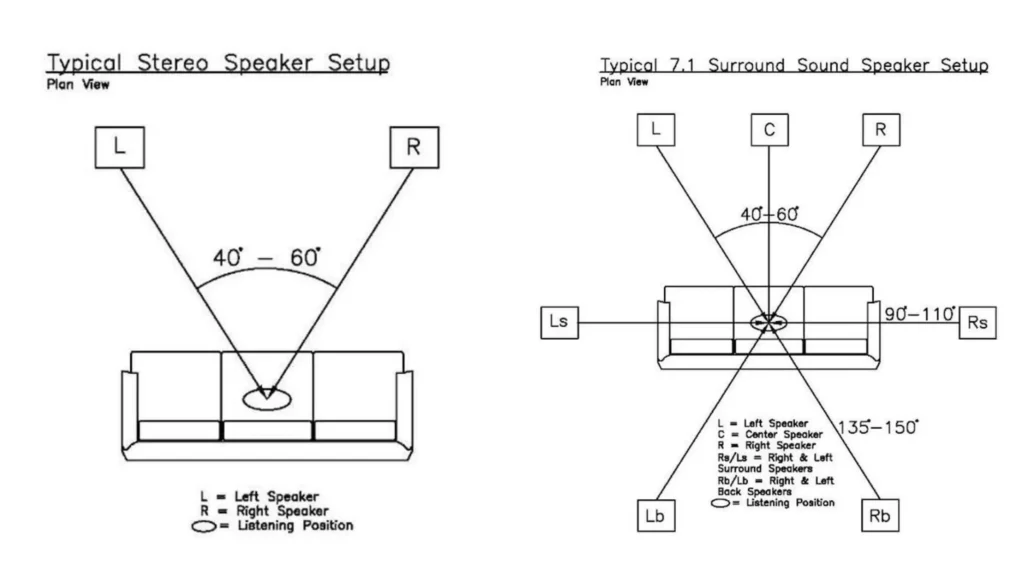
Stereo vs. virtual surround sound
You can manufacture a bigger sense of space with DSP: artificial reverb, phase shifts, and other tricks that fool the ear into hearing more room. It works, but it usually costs you something in imaging.
Push it too far and placement goes soft — sounds blur, and you can’t tell where things are coming from as precisely. Virtual 7.1 is best treated as a modest spatial expansion that adds environmental awareness, not a replacement for a headphone that images well on its own. Just check out our stereo sound vs surround sound guide.
Audio source and recording quality
The quality of the recording sets the foundation for both soundstage and imaging. A well-recorded track preserves natural space and directional cues, while excessive processing or poor mastering can make the sound feel congested or artificial.
Your audio source also matters. A quality DAC or amplifier can reveal subtle details that enhance the perception of space and positioning, whereas a noisy or low-quality signal chain may reduce clarity and spatial accuracy.
Choosing the Right Headphones
For FPS gamers
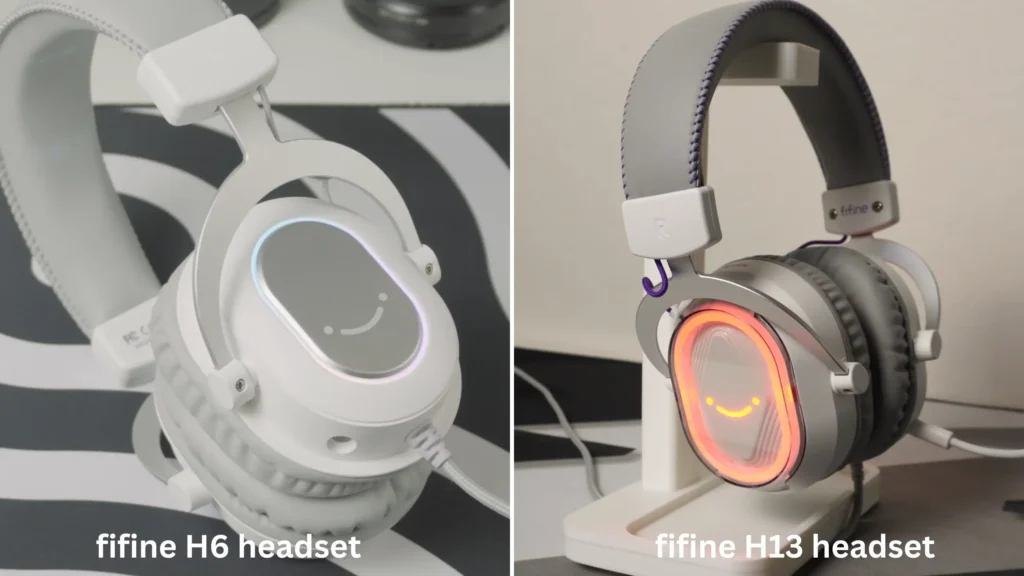
Prioritize placement and directional clarity. The fifine AmpliGame H6 has a Gaming Mode that boosts mid-range frequencies to sharpen footsteps and environmental cues, which is exactly what you want when position is everything. The fifine H13 headset adds four EQ presets and game/chat balance, so you can tune for detail and still hear your team.
For immersive gaming and movies
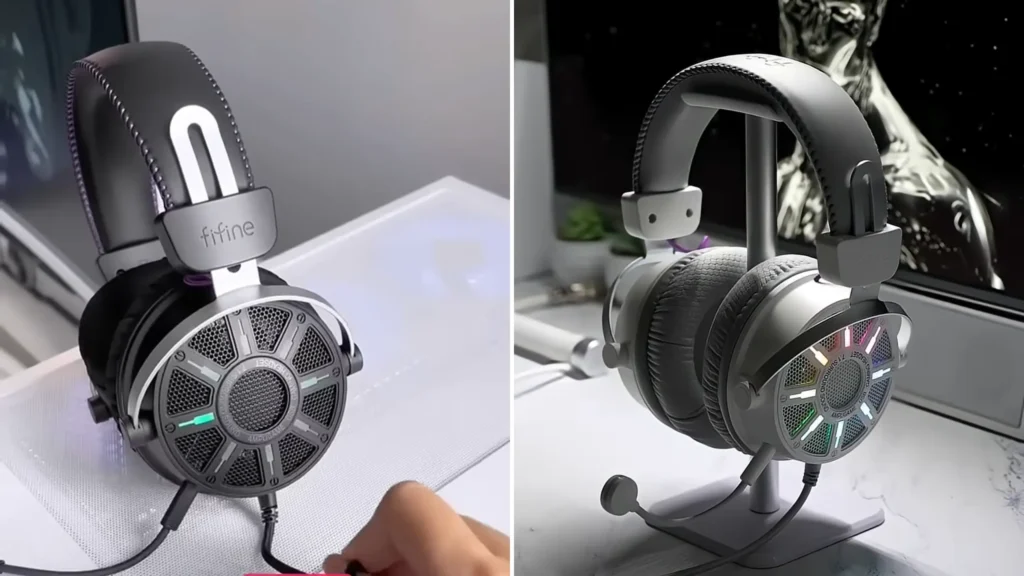
Reach for a more open, spacious presentation. The fifine H19 gaming headset is an open-back design with virtual 7.1 surround, which suits story-driven games and cinematic audio where scale and immersion matter more than split-second location.
For music enthusiasts
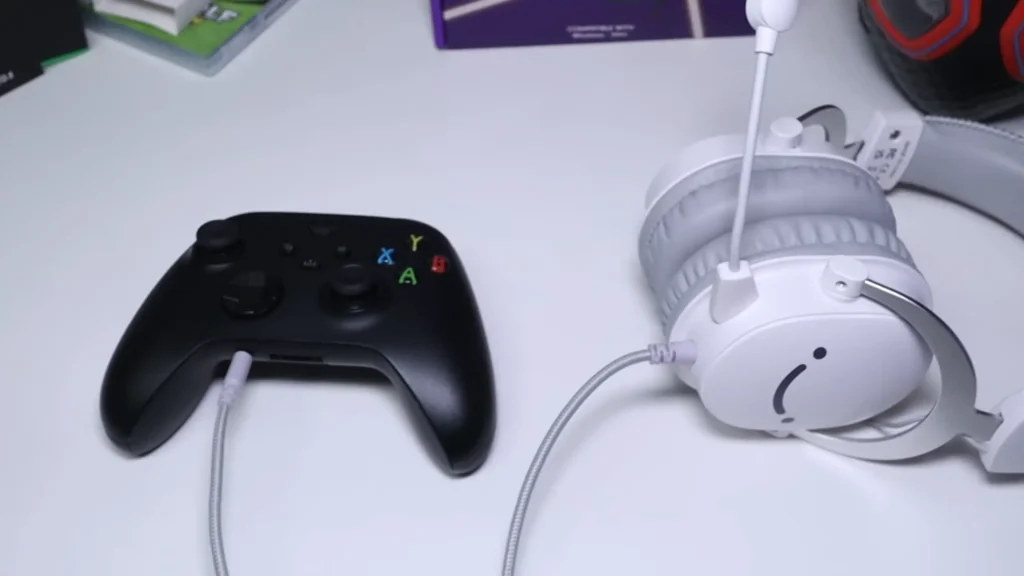
Look for a headphone that keeps placement tight while still giving the recording room. The fifine AmpliGame H9 closed-back headset uses sealed ear cushions to deliver a focused stage without the muddiness common in cheaper sets, with 50mm drivers that hold detail across highs and lows.
Final Words
Soundstage and imaging aren’t rivals, and there’s no single winner. Soundstage is the space; imaging is the map of what’s in it.
The right balance depends on how you use your headphones—competitive gamers should prioritize imaging, while movie lovers and immersive gamers may prefer a wider soundstage. For music, both qualities are equally important.
Match the quality to the use, and you’ll stop buying headphones that impress in the store and disappoint at your desk.
FAQ
Is a bigger soundstage always better?
No. A good soundstage is a realistic one. An intimate acoustic recording should sound intimate, not like it’s echoing across a cavern. Overblown space is as much a flaw as no space at all.
Can a headphone have great imaging but a small soundstage?
Yes, and it’s common. Some intimate-sounding headphones place details with real accuracy while keeping everything close to your head, then struggle to convey a large recorded space. Stage size and placement precision are separate traits.
Does virtual 7.1 surround improve imaging or soundstage?
Mostly, it adds a subtle spatial expansion that can boost in-game awareness of footsteps and gunfire direction. It leans toward soundstage, and pushed too hard, DSP-based space can actually soften imaging. Treat it as a helpful extra, not a fix for weak placement.
Do open-back headphones always have a wider soundstage?
Not automatically. Open construction helps, but tuning and cup design decide the outcome — some open-back models measure with a smaller stage than others in the same range. Design, not just the open back, is what counts.
Does my DAC, amp, or cable really affect soundstage?
It can. A noisier chain masks the low-level detail that carries a sense of space, so cleaner sources tend to sound more open and better separated. The effect varies by setup, but the source chain is part of the equation, not just the headphones.
