
Best Gaming Headsets for FPS Games in 2026: Hear Every Hue

Fast reactions win FPS matches, but so do your ears. A rotate you hear early, a reload two rooms away, a single footstep — these cues decide rounds before anyone fires. This guide rounds up the best gaming headsets for FPS games in 2026 and, more importantly, explains which features actually help you play better — from hearing footsteps to staying comfortable through a five-hour ranked session.
5 Best Gaming Headsets for FPS Games
| Headset | Best For | Connection | Driver | Mic | Why We Recommend It |
|---|---|---|---|---|---|
| Sennheiser HD 560S | Overall imaging | Wired (3.5mm) | Dynamic, open-back | No (add a mod mic) | Neutral tuning and a wide soundstage for footsteps and gunfire |
| fifine AmpliGame H13 | Budget PS5/PC play | Wired (USB + 3.5mm) | Dynamic, closed-back | Detachable boom | Clean sound, inline game/chat controls, and a boom mic |
| Drop PC38X | Hearing footsteps | Wired (3.5mm) | Dynamic, open-back | Flip-to-mute boom | Sharp imaging plus a built-in mic |
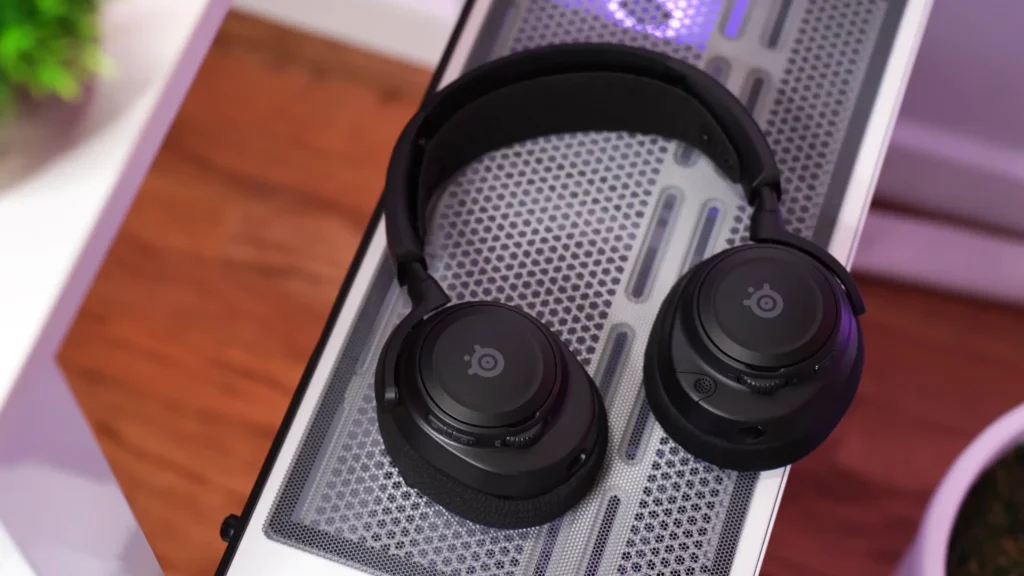
| SteelSeries Arctis Nova 7 | Wireless play | Wireless (2.4GHz dongle) + Bluetooth | Dynamic, closed-back | Retractable | Low-latency dongle, saveable EQ, and 35+ hours of battery |
| fifine AmpliGame H19 | Lightweight long sessions | Wired (USB-A) | Dynamic, open-back | Detachable boom | Airy open-back design that stays light and cool |
Best Overall FPS Gaming Headset: Sennheiser HD 560S
Pros:
- Reference-grade imaging and separation
- Neutral tuning that keeps footsteps forward
- Plush ear cups and headband that stay comfortable for hours
- Doubles as a music and editing headphone.
Cons:
- No mic in the box
- The open-back means it needs a quiet room
- Reaching full volume from a basic motherboard jack requires a modest amp or DAC.
The Sennheiser HD 560S is open-back and tuned neutral, so bass never smears over the details that matter.
Joe from @GadgetryTech has tested a series of gaming headsets for Counter-Strike 2, Apex Legends, and VALORANT. He tested the Sennheiser HD 560S against other popular gaming headsets, and nothing came close for pure directional audio.
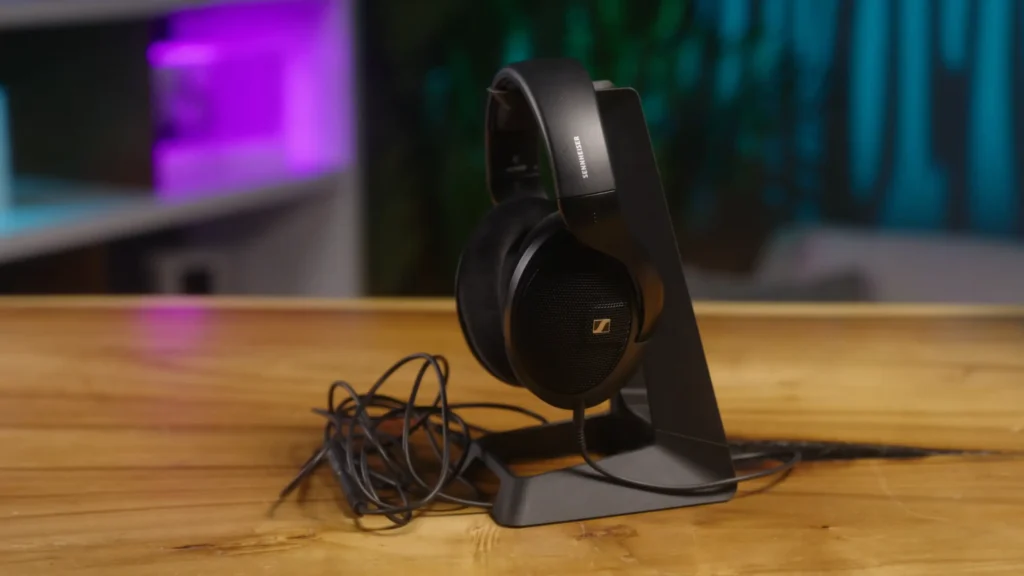
In a firefight, he could place someone on his left, someone on his right, someone above, and someone below all at once, with gunfire cracking in the distance. The soundstage is wide, the imaging is clean, and it separates overlapping sounds at a greater range than the gaming headsets he’d been using.
Best Budget FPS Gaming Headset: fifine AmpliGame H13
Pros:
- Boom mic and full inline controls at a budget price
- Comfortable over long sessions
- Closed-back design makes the sound stay sealed in
Cons:
- Modest maximum volume
- The built-in EQ and 7.1 modes are not so outstanding
- Not work with Xbox, just for PC and PlayStation
fifine H13 gaming headset lands at entry-level money yet ships with a detachable boom mic, a long cable, and an inline controller with volume, a game/chat balance wheel, mic noise cancellation, and a mute button that glows red in your peripheral vision so you always know you’re muted.
The headband and ear cushions are genuinely plush. On PS5, it leans on the console’s Tempest 3D audio and sounds clean and controlled — close to headphones several times the price.
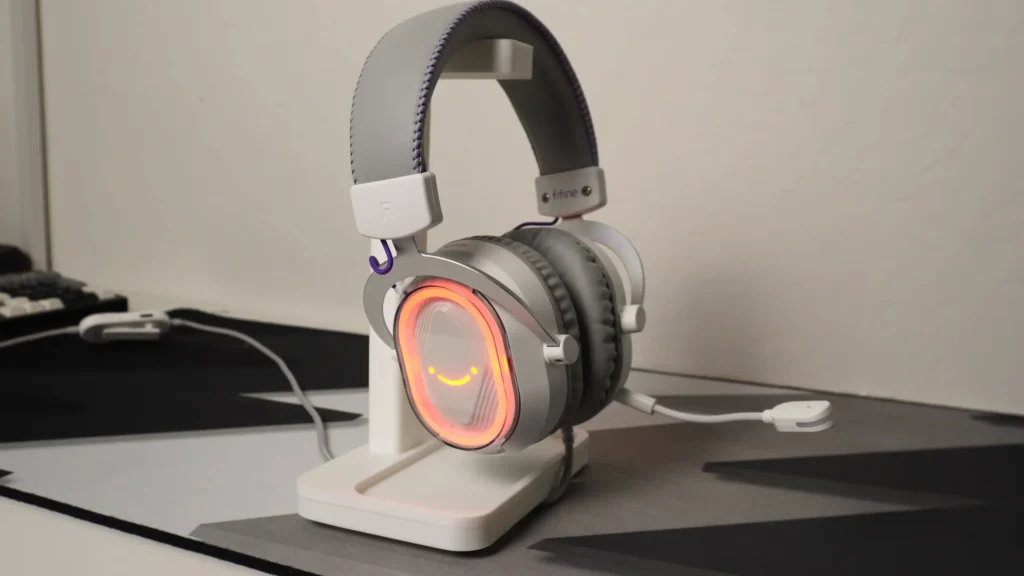
The honest catch: Some reviewers point out that the “game” EQ over-bakes the bass, and the 7.1 button muddies everything. Hold the EQ button until the lights go out and run it flat. That’s when it sounds its best and keeps footsteps clear.
Best Headset for Hearing Footsteps: Drop PC38X
Pros:
- Neutral, footstep-forward tuning;
- Included flip-to-mute mic
- Sturdy, comfortable build.
Cons:
- Slightly stronger clamp than the HD 560S
- Open-back leaks
- Loses a touch of depth in chaotic close-range fights.
If your priority is separating a footstep from a reload from distant fire, the Drop PC38X is built for it. It’s open-back and neutral, with the mid and high clarity that makes footsteps pop instead of drowning under bass.
Reviewers @FreshReviewsYT rate its directional audio highly. Unlike the Sennheiser HD 560S, it comes with a flip-to-mute boom mic that teammates hear clearly on Discord — so you get footstep tracking and comms in one box.
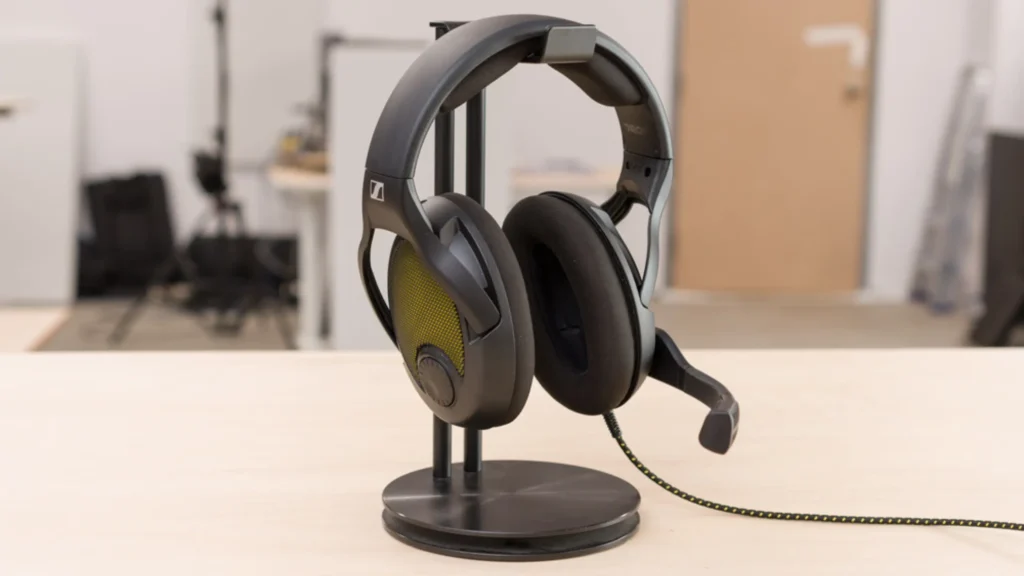
At very close range, and when many sounds stack at once, it gives up a little depth versus the HD 560S, and above/below cues aren’t quite as pinpoint. The Drop PC38X doesn’t need an amp or a DAC, which combo drives your headset, but it needs proper power to image its best.
Best Wireless FPS Gaming Headset: SteelSeries Arctis Nova 7
Pros:
- Low-latency dongle
- Saveable EQ
- Deep feature set
- Multi-day battery
Cons:
- Mic is good, not great
- The forward upper mids can feel a little sharp to sensitive ears.
SteelSeries Arctis Nova 7 sidesteps muddy bass and smeared detail. It runs on a low-latency 2.4GHz USB dongle rather than laggy Bluetooth for gameplay.
You get onboard EQ, simultaneous Bluetooth for your phone, game/chat mix, USB-C fast charging, and roughly 35 to 45 hours per charge. It images well for FPS, with a slightly forward upper midrange that stays clean where it counts.
If battery is your deciding factor, the HyperX Cloud 3 Wireless stretches to about 120 hours with a relaxed, easy-on-the-ears tune and an excellent mic.
Best Lightweight Headset for Long-Time Gaming: fifine AmpliGame H19
Pros:
- Light, breathable, and low clamp
- Removable mic
- On-the-fly EQ and 7.1 toggles.
Cons:
- Open design leaks and won’t block room noise
- PC-focused, with no Xbox support.
Long sessions punish heavy, clampy headsets. The fifine H19 gaming headset is open-back, and that’s the point. It sits flush and light on your ears, lets air move so heat doesn’t build, and skips the tight, suction-like squeeze of sealed cans.
Carper Carver @coppercarver, new to open-backs, reached for it mid-session specifically to give his ears breathing room while keeping solid audio for both gaming and editing. It has a removable boom mic, which tested clean even with a fan running, a retractable USB-A cable, on/off 7.1 and EQ modes (music, game, and film), plus RGB if you stream.
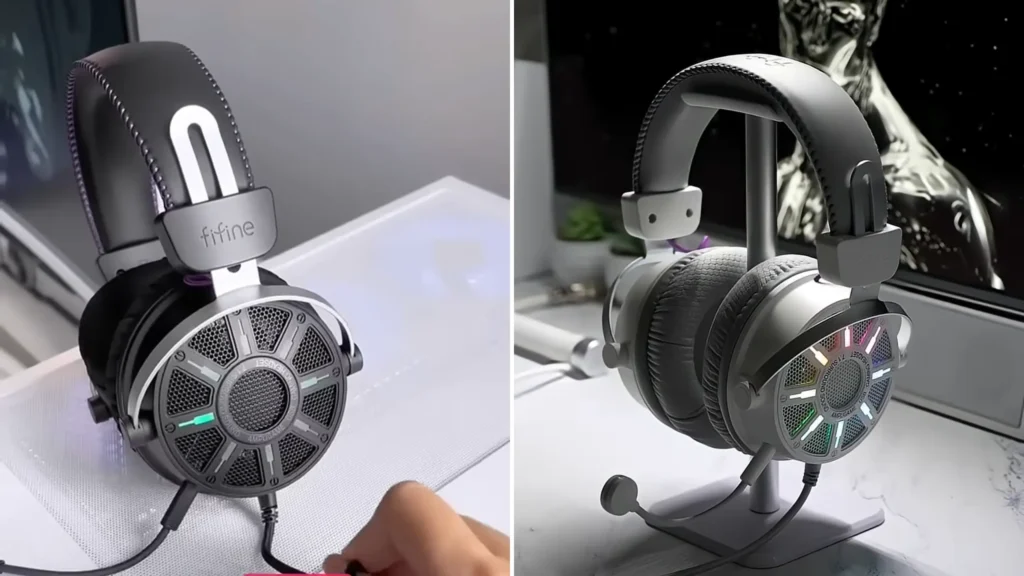
Because it’s open, it won’t isolate you in a noisy room, and it’s built for PC rather than Xbox. Treat it as the headset you reach for when comfort and airflow matter most.
Which FPS Headset Is Right for You?
| If You… | Choose… |
|---|---|
| Mainly play VALORANT | Excellent imaging and stereo accuracy |
| Mostly play CS2 | Precise, neutral positional audio |
| Play Call of Duty | Balanced bass with clear footsteps |
| Compete in ranked matches | Wired or low-latency wireless |
| Game for 5+ hours | A lightweight headset with breathable ear pads |
| Stream while gaming | A headset with a clear microphone |
The best gaming headsets don’t all work for all FPS games. FPS audio is about information. You want to hear the enemy’s footsteps before you see the enemy, place the enemy’s direction in a fraction of a second, and react first.
As a former professional Counter-Strike CAL-i 1.3-1.6 player @FreshReviewsYT describes, well-trained ears on a clean headset “was like having wall hacks”. That’s why your gaming headsets should have the real FPS checklist: precise positional audio, fast direction ID, and a mic your squad can actually understand.
How to Choose the Best Gaming Headset for FPS Games
Prioritize Accurate Positional Audio
The single most useful thing a headset can do for FPS is tell you exactly where a sound came from. Think about the footsteps audio in PFS games, like CS2 or Call of Duty: Black Ops 7. That’s imaging and directionality: the ability to place left/right, front/back, and, on the best sets, above/below.
Accuracy beats loudness every time. A neutral headset that separates overlapping sounds at a distance will win you more duels than a bass cannon.
Stereo vs Virtual 7.1 Surround
Virtual 7.1 surround sound looks like an upgrade, but for competitive FPS, it often isn’t. Real stereo on a well-tuned headset already carries the directional information your brain needs, and it carries it cleanly. Simulated surround takes that stereo signal and processes it to fake extra channels, and cheaper versions just pile on bass and haze.
On PS5, the console’s own spatial processing is designed for plain stereo headphones, so stacking a headset’s fake surround on top overcooks it. Try 7.1 if your headset has it, but if footsteps get muddier, trust stereo. Our stereo vs surround sound guide goes deeper.
Open-back vs Closed-back Headsets
Open-back headsets let air and sound pass through the ear cups. They tend to have a wider soundstage and sharper imaging, which is why they stay cooler and lighter over long sessions. The trade-off is leakage in both directions. People near you hear your game, and you hear the room.
Closed-back headsets isolate you, which is better for noisy rooms, shared spaces and Xbox compatibility, but they can trap heat and, if bass-heavy, mask detail. Match the design to your room. Our open-back vs closed-back headphones comparison can help you decide.
Wired vs Wireless Headsets
When it comes to wired or wireless headsets for FPS games, wired is still the safe pick for pure reliability: no latency, no charging, no dropouts. You’ll rarely see cables missing from a tournament stage.
Wireless has closed the gap, though. A good 2.4GHz USB dongle delivers latency you won’t feel in-game, and top sets now run from 35 to well over 100 hours per charge. But take care about the muddy bass and lost detail that wireless headsets bring.
A Clear Microphone for Team Communication
Callouts only help if your team hears them. Look for a mic with decent noise rejection so your fan and keyboard don’t drown out your voice, clear voice pickup, and easy muting — ideally a mute button on the mic like the detachable mic in the fifine H13 gaming headsets so you can mute instantly.
Don’t Ignore Comfort
Weight, ear cushion material, breathability, and headband pressure all add up over a long session. Plush velour or fabric pads breathe better than sweaty pleather, and a lighter frame with a gentle clamp keeps pressure off your temples and jaw. If you game for five hours at a stretch, comfort isn’t a luxury. It’s performance.
Which Is Your Best Gaming Headset for FPS Games?
The best FPS headset is the one that tells you exactly where the enemy is, carries your callouts clearly, keeps latency low, and stays comfortable long after your third hour.
Start with your titles, your room and your budget: an open-back like the Sennheiser HD 560S or Drop PC38X for pure imaging in a quiet space, a controllable and wallet-friendly fifine AmpliGame H13 for PS5 and PC, the SteelSeries Arctis Nova 7 for low-latency wireless, or the airy fifine AmpliGame H19 when comfort and long sessions come first.
Ready to hear every hue? Explore the fifine gaming headsets, then dig into our related buying guides for a better gaming time.
FAQ
What features should I look for in an FPS gaming headset?
Prioritize accurate positional audio (imaging and directionality), neutral tuning that keeps footsteps clear, a clear mic with easy mute, low latency and all-session comfort. Big bass, huge drivers, and RGB matter far less than those fundamentals.
Is stereo or surround sound better for FPS games?
For most competitive players, clean stereo on a well-tuned headset beats virtual 7.1. Simulated surround can add haze or bass that muddies footsteps. Test your headset’s 7.1 mode, and if directional cues get less precise, switch back to stereo.
Can a gaming headset help you hear footsteps better?
Yes. A headset with strong imaging and clear mids and highs separates footsteps from gunfire and lets you place direction fast. Pros compare well-trained ears on a neutral, accurate headset to running wall hacks.
Are open-back headsets better for FPS games?
Often, if your room is quiet. Open-backs usually offer a wider soundstage and sharper imaging, and they run cooler and lighter. But they leak sound both ways, so closed-back is the smarter choice in noisy or shared spaces and for Xbox.
Does driver size matter for FPS gaming?
Not much. A 50mm driver isn’t automatically better than a 40mm one — tuning and acoustic design decide FPS performance. Some tiny in-ear monitors out-track pricey headsets. Focus on clean, accurate imaging, not millimeters.
