
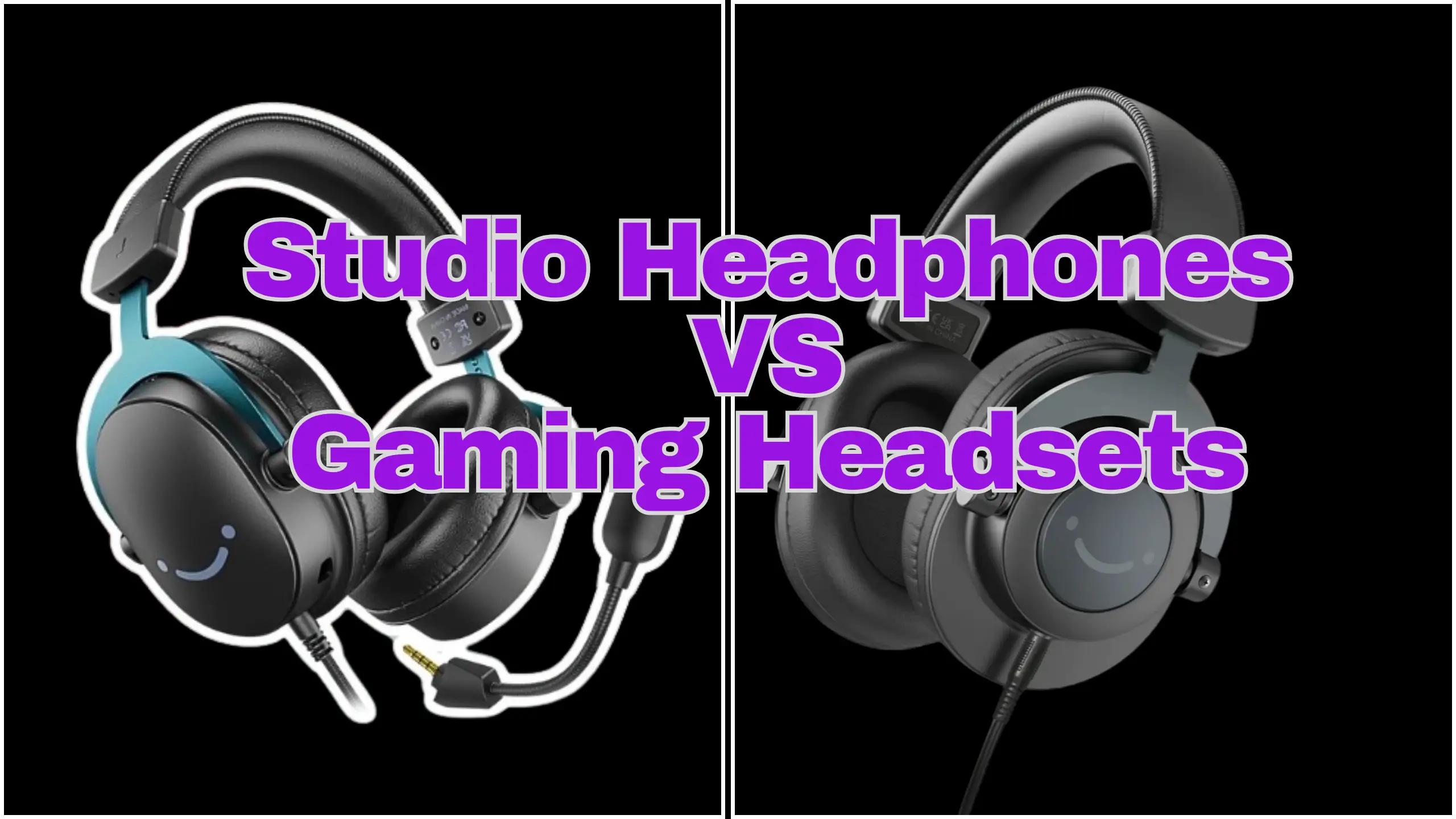
Studio Headphones vs. Gaming Headsets: The Best Choice for Work or Gaming

Studio headphones and gaming headsets look no different. Spend an hour with each, and you’ll know the difference. One is to show the audio mostly. The other is to make a game feel bigger and to get your video into a call.
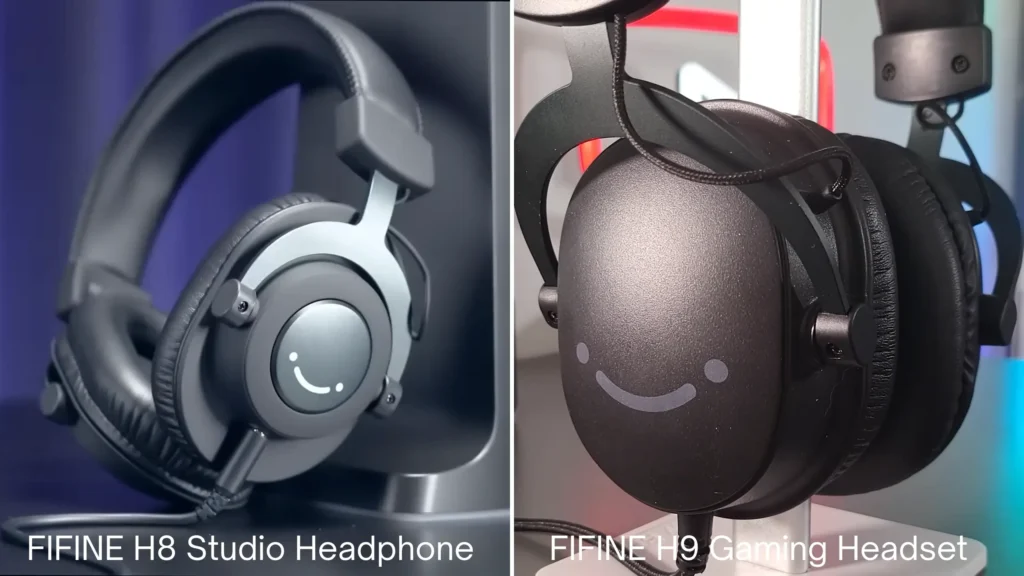
Beyond that, these two headphones can change your experience in many aspects. Studio headphones vs gaming headsets? We’ve discussed the studio headphone, like FIFINE H9, and the gaming headset, like FIFINE H9. From the key differences to the picking guide, here’s what we found.
Quick Comparison
| Dimension | Studio Headphones | Gaming Headsets |
|---|---|---|
| Definition | Headphones tuned to reproduce sound as accurately as possible, built for monitoring and mixing | Headphones with an attachable mic and gaming-focused features, tuned for immersion and chat |
| Core characteristics | Flat-leaning frequency response, detachable cables, no onboard mic, sometimes high impedance | Built-in/detachable mic, surround modes, volume and mute controls, low impedance, wired or wireless |
| Best used for | Music production, mixing, critical listening, monitoring | Game player, streaming, voice chat, casual listening |
| Common applications | Studios, podcast and film editing, reference listening | PC and console gaming, Twitch streams, Discord calls, content creation |
What Are Studio Headphones?
Studio headphones exist to be honest. The goal is a flat, uncolored frequency response, so when you boost a vocal at 8 kHz or check the weight of an 808 kick, you hear exactly what’s there, not a flattering version of it. That’s the whole point: a headphone that colors the sound deceives you. Boost the bass artificially, and you’ll under-mix your low end.
Key features
- Accuracy-first tuning aimed at a neutral, balanced response
- No onboard mic; you pair them with a separate mic when you need one
- Detachable, often standard cables that are cheap and easy to replace
- A clean, understated look rather than lights and bright colors
Pros
- The most reliable choice for mixing, mastering, and critical listening
- Lighter, simpler designs that hold up over long editing sessions
- Replaceable parts and cables extend their life
Cons
- No built-in mic, so communication needs extra gear
- Open-back models leak sound and let room noise in
- Truly flat headphones cost more than entry-level gaming headsets
FIFINE Studio Headphones
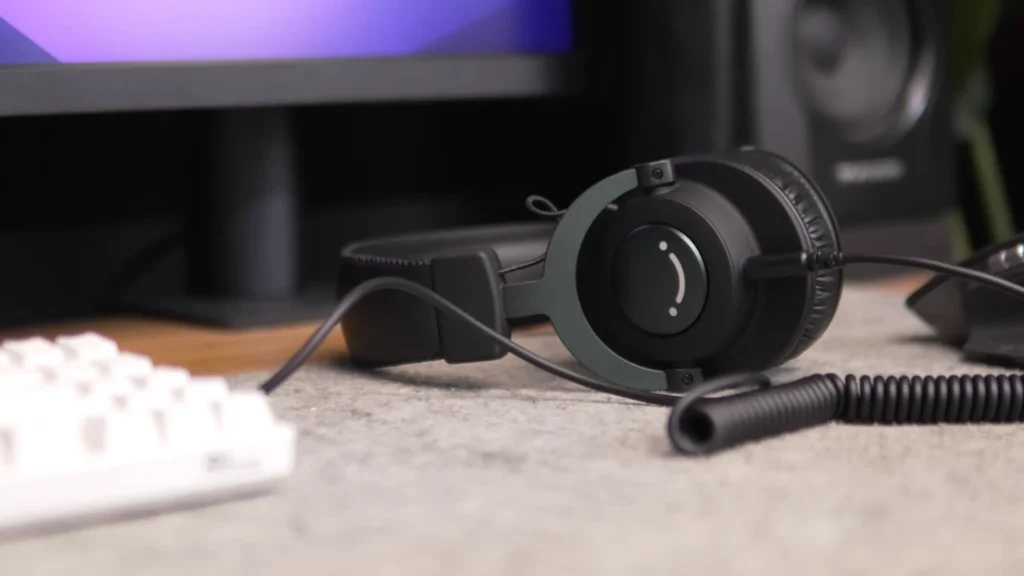
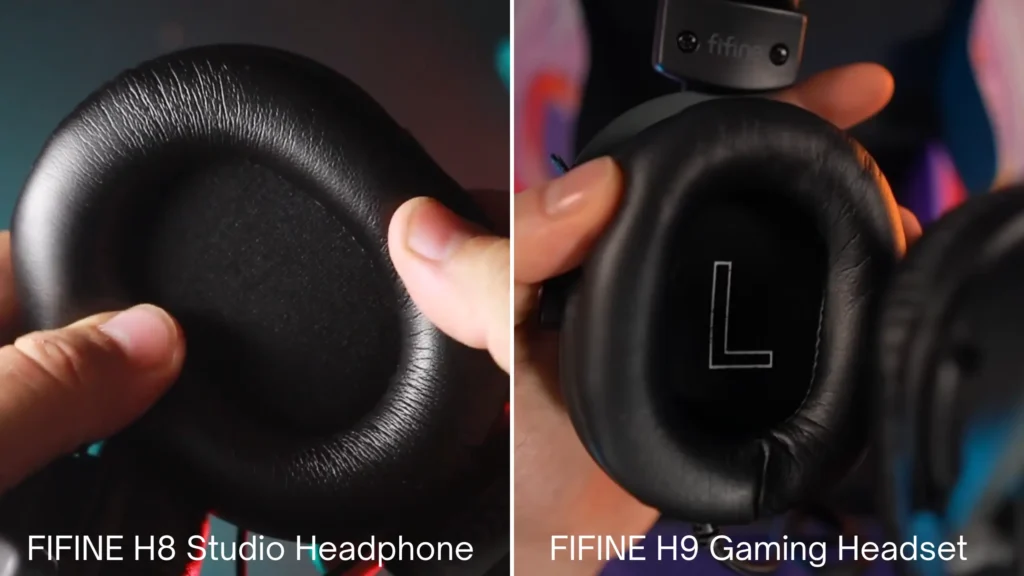
Let’s look at the FIFINE H8 studio headphones. It ticks, the studio boxes on paper: a 50mm dynamic driver, a 20 Hz to 20 kHz frequency range, passive noise isolation, and a light synthetic-leather build with soft pads that sit comfortably.
It’s also genuinely smart about cables, shipping with a detachable cord plus two adapters, a 3.5mm-to-quarter-inch for interfaces like a RØDECaster, and a 3.5mm-to-3.5mm for phones and other devices. If a cable fails, you swap it for any standard one instead of hunting down a proprietary part.
In terms of sound quality, the H8’s tonal character leans more toward a high-fidelity style rather than a strictly flat response. Its sound is clear, though slightly understated. Some distortion becomes apparent at higher frequencies; however, as these are monitoring headphones, they were designed with the specific intent of achieving a more neutral sonic performance.
What Are Gaming Headsets?
A gaming headset is an all-in-one communication and immersion tool. It bundles headphones and a microphone into one device. It adds features built around playing and talking: surround modes, volume and mute controls, and console compatibility. The tuning usually favors fun and spatial cues over neutrality, with an emphasis on directional audio so you can place footsteps in a match.
Key features
- Built-in or detachable microphone for voice chat and streaming
- Onboard controls for volume, mic level, and mute
- Wired or wireless connection, often via a low-latency 2.4 GHz dongle
- Low impedance (commonly around 32 ohms) that runs straight off a phone, controller, or console
Pros
- Plug-and-play simplicity across PC and consoles
- A capable mic with no extra purchase
- Strong directional audio for competitive play
Cons
- Tuning is rarely accurate enough for serious mixing
- Surround-sound modes can do more harm than good
- Materials and onboard hardware can feel cheaper at the budget end
FIFINE Gaming Headsets
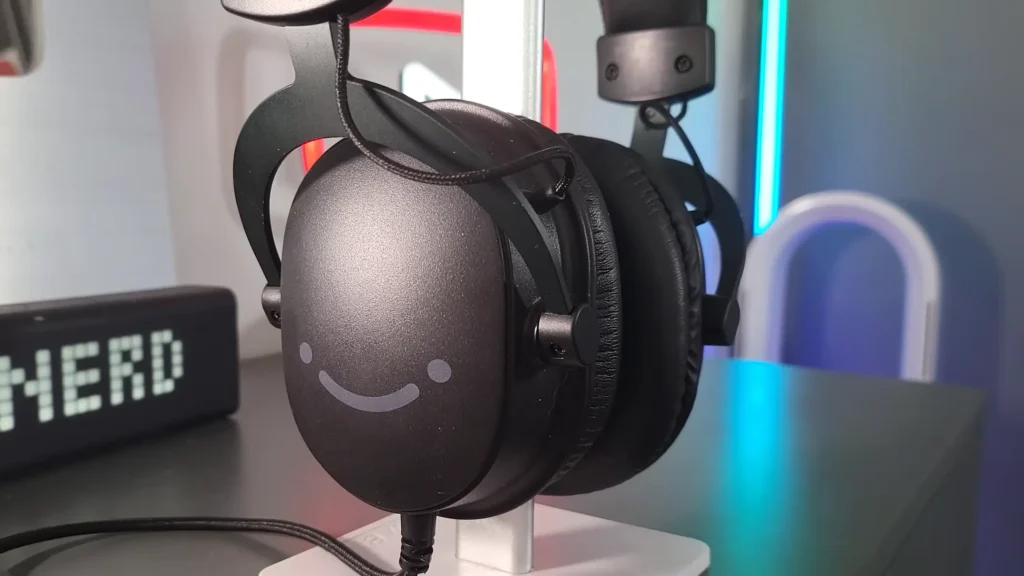
The FIFINE AmpliGame H9 is a budget and low-key gaming headset. It comes with a detachable 3.5mm mic and a USB sound card and audio controller, and has a soft faux-leather build with adjustable sliders. Without RGB lighting, it’s ideal for those who want a simple look.
For games, its mids and highs are crisp, sharp enough to make footsteps in Apex Legends easy to pick out, though the bass runs a little thin. Its real standout is the mic: even plugged straight into OBS with no EQ, it holds up against a dedicated mic costing several times more.
The Caveats: FIFINE H9 gaming headsets can’t be used on Xbox, where you’ll drop the inline controls and adjust volume on the console instead.
Studio Headphones vs. Gaming Headsets: The Key Differences
Sound and Tuning
This is the core split, across three things.
- Frequency response: studio headphones stay flat and neutral, so what you hear is what’s in the file, while gaming headsets tend to be bass-enhanced and warm to make games feel bigger.
- Detail and clarity: a flat pair of surfaces, fine detail like the exact frequency a vocal sits in; a headset trades some of that for atmosphere and immersion.
- Soundstage and imaging: accurate placement matters to gamers too; it’s what lets you hear which direction footsteps come from. That’s why some high-level players prefer neutral monitoring headphones that are bass-heavy.
Verdict: For mixing and reference work, studio headphones. For pure immersion, a warm headset is more fun, but if footsteps and direction are the priority, accurate imaging beats bass.
Microphone
Studio headphones don’t include a mic, by design. You add a dedicated mic, a clip-on mod mic, or an audio interface when you need to record or talk.
A gaming headset solves communication with the detachable mic. The quality used to be the catch, but FIFINE gaming headsets have closed that gap. The H9’s mic is the clearest proof here, clean enough for Discord, streaming, and early content creation.
Verdict: Need to talk while you play? The headset wins on convenience. Recording vocals or a podcast for release? Pair studio headphones with a real mic.
Comfort Over Long Sessions
Studio headphones tend to be lighter and built for hours of wear, which is why editors and producers live in them.
Gaming headsets are usually comfortable too, with plush cups and adjustable bands, but heavier or bulkier models can wear on you over a marathon session. For the FIFINE H9 gaming headset, its cups sit between over-ear and on-ear. So larger ears, or thick-framed glasses, can feel a pinch after 10-plus hours.
Verdict: For all-day editing, studio headphones edge ahead on long-haul comfort. For typical play sessions under six hours, a light headset is fine.
Build and Durability
Gaming headsets often use rugged plastics and metal to survive daily abuse, while studio headphones can use lighter, more fragile materials, offset by replaceable parts that make repairs easy.
At the budget level, watch the small stuff: the H8’s body is light and not especially tough, and the H9’s USB controller feels cheaper than the headset itself.
Verdict: Roughly even. Prioritize replaceable cables and pads over raw toughness, since that’s what usually breaks.
Connectivity, Controls, and Power
The headset pulls clearly ahead for convenience. Gaming headsets state console support on the box, run low impedance so they work off a phone or controller, and frequently add inline controls and wireless.
Studio headphones are simpler, just headphones. High-impedance models (think 250-ohm cans) need an external amp to reach full volume and detail. On wireless, a 2.4 GHz dongle gives a clean, low-latency link, while plain Bluetooth can introduce a small but noticeable delay in games and video.
Verdict: For grab-and-go use across devices, the headset’s controls and low-impedance design win. For a pure listening rig, studio headphones keep it simple, just check the impedance before you buy.
Noise Isolation
Open-back vs closed-back headphones? Closed-back designs block outside noise and keep your audio in, which is why most gaming headsets and many studio monitors use them. Open-back studio headphones sound more natural and spacious, but leak in both directions. Your mic catches your game audio, and a quiet room hears everything you do. For competitive play or a busy house, that’s a dealbreaker.
Verdict: Closed-back for gaming, streaming, and noisy spaces. Open back only if you mix in a quiet room and want the airier sound.
When to Choose Which
Match the tool to the task. Here’s how the two stack up across the most common scenarios, with where a budget pair like the FIFINE H8 or H9 fits in.
| Scenario | Pick | Why |
|---|---|---|
| Competitive gaming | Either tuned for accuracy | A closed-back headset with clean imaging works for clear footsteps and direction. The H9’s sharp mids and highs make cues easy to place, and many pros go further with monitoring headphones. |
| Casual gaming | Gaming headset | You want plug-and-play sound, voice, and controls in one. |
| Streaming | Gaming headset (or headset + studio cans) | A capable headset mic gets you on air fast. The H9’s mic punches well above its price with a touch of OBS EQ. |
| Podcasting | Studio headphones + mic | The H8 handles tracking and editing fine for clear monitoring, just pair it with a recording mic like FIFINE K688. |
| Music production | Studio headphones | A flatter studio headphone is better for critical mixing. |
| Everyday listening | Either | The H8’s pleasant and easy to enjoy; a headset adds a mic and onboard controls. Pick whether you also need to talk. |
Final Call on Studio Headphones vs Gaming Headsets
There’s no single winner here, only the right tool for your task. Studio headphones reproduce sound accurately and reward anyone making critical audio decisions. Gaming headsets bundle sound, voice, and controls into one convenient package and have gotten far better at sounding good while doing it.
If you’re a mixing engineer, buy for accuracy. If you’re a gamer, a well-tuned closed-back headset like the H9 covers everything you need. Whether you’re holding a podcast or preparing a stream with your mic, the right headphones should meet your needs.
FAQ
Can I use a gaming headset for music production?
For casual listening and rough edits, sure. For real mixing, no. Gaming headsets are tuned for immersion, and features like virtual surround actively distort the spatial cues you rely on. Use flat studio headphones for anything you plan to release.
Do studio headphones need an amp?
It depends on impedance. Low-impedance pairs like the FIFINE H8 run fine off a phone, laptop, or interface. High-impedance models around 250 ohms need an external amp to reach full volume and detail; plug them into a phone, and they’ll sound weak.
Are gaming headset mics good enough for streaming?
Increasingly, yes. A budget mic like the H9’s holds up against far pricier dedicated mics, especially with a little EQ in OBS. A standalone mic still sounds better, but a good headset mic is plenty to start streaming or making content.
Studio headphones or a gaming headset for everyday listening?
Either works. A budget studio pair like the H8 is nice for casual music, while a gaming headset adds a mic and onboard controls. Pick based on whether you also need to talk while you listen.
