
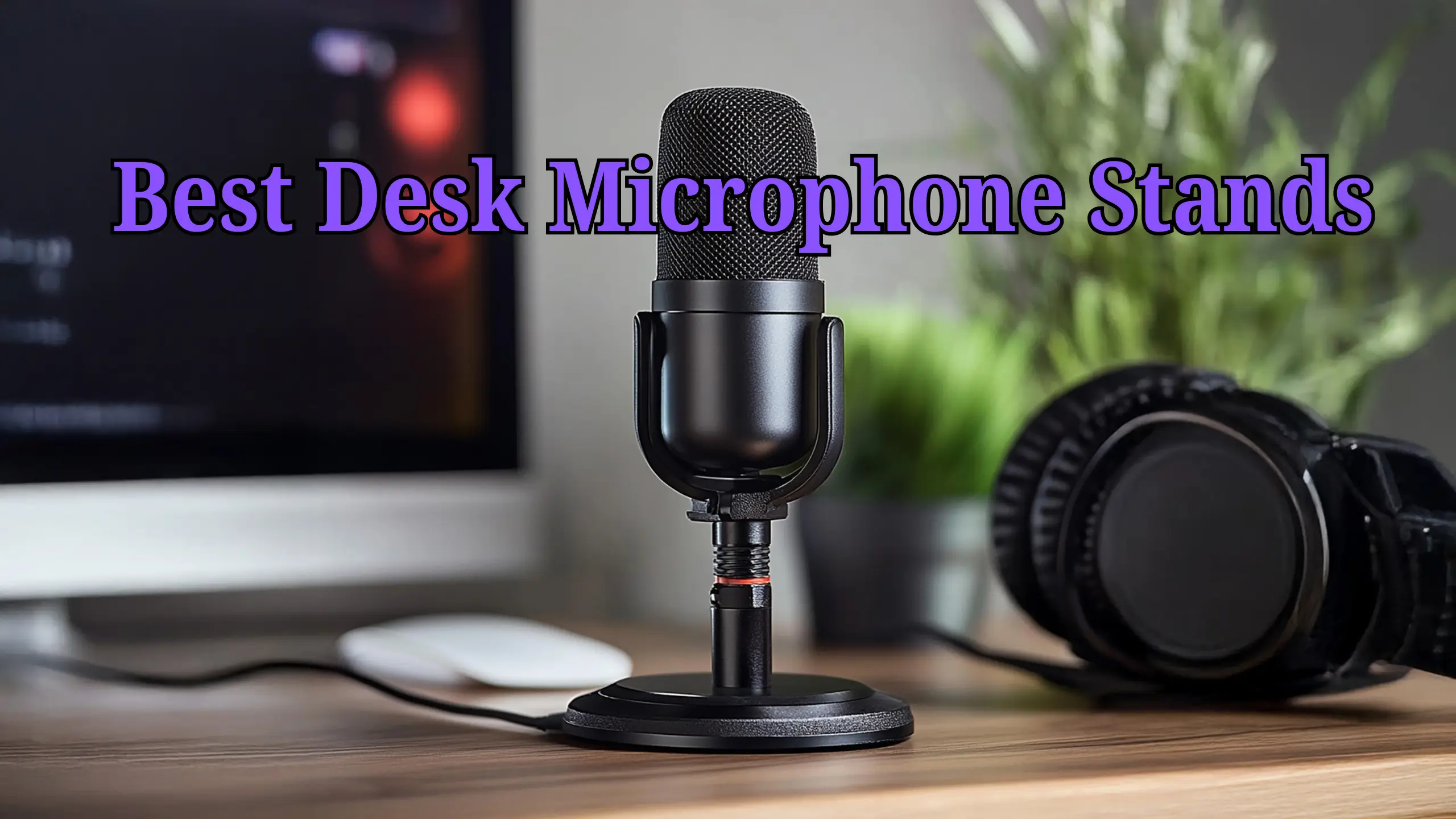
The 5 Best Desk Microphone Stands (Tested and Ranked)

Desk mic stands sit in a sweet spot. They give you a stable home for your mic when you can’t (or won’t) clamp a boom arm to your table; they can put your mic on the table firmly. The catch is that they live on your desk, so they’ll sometimes eat up your space.
For the best desktop microphone stands, build quality, stability, positioning, and cable management should be considered. After testing 5 desktop mic stands, we can say FIFINE BS2 will be the best overall. That said, other stands like Shure Desktop-2 or FIFINE BS1 are still worth considering. Here’s how they shook out.
At a Glance: The Top 5 Desk Mic Stands
- FIFINE BS2 – Best Overall
- Shure Desktop-2 – Best for Versatility
- Elgato Wave Desk Stand – Best for Streamers
- Rode DS2 – Best Build Quality
- FIIFNE BS1 – Best Budget
| Stand | Base & build | Positioning | Cable management | Thread | Best for |
|---|---|---|---|---|---|
| FIFINE BS2 | Cast metal, ~750g, rubber feet | Height-adjustable riser, straight | None | 3/8″, 5/8″ adapter | Heavy mics, everyday use |
| Shure Desktop–2 | Heavy metal foot, large | Telescoping post + boom arm (tilt, rotate, extend) | Built-in clips | 3/8″ and 5/8″ compatible | Maximum versatility |
| Elgato Wave Desk Stand | Metal base plate, some plastic | Multi-angle mount | Rubber cable ties | 1/4″, with 3/8″ and 5/8″ adapters | Streamers tweaking angles |
| Rode DS2 | All metal, premium finish | Two pivot points + locking nut | None | 3/8″, 1/4″ adapter included | Premium build, small footprint |
| FIFINE BS1 | Lightweight, padded feet | Height-adjustable post, straight | None | 3/8″, 5/8″ adapter | Portable, couch, and quick setups |
The heavier the base, the more stable the stand, so the FIFINE BS2 and Shure Desktop–2 lead for heavy mics. If you reposition constantly, the boom arm on the Shure Desktop-2 and the multi-angle mount on the Elgato Wave Desk Stand pull ahead. Only the Shure Desktop-2 builds the cable management in.
5 Desktop Microphone Stands Detailed Review
FIFINE BS2
Verdict: The most well-rounded desk stand you can buy right now.
Pros
- Heavy 750g cast-metal base for serious stability
- Comfortably supports heavy, all-metal microphones
- Smooth, height-adjustable riser with a slip clutch
- High-quality 3/8″ to 5/8″ adapter included
- Assembles in seconds from three pieces
Cons
- Straight riser only, with no tilt or boom
- No built-in cable management
- Costs more than entry-level stands
The FIFINE BS2 desk microphone stand makes its case the moment you pick it up. The base is solid cast metal with rubber feet, just like the heavy old-school stands. That mass does two jobs: it keeps the stand planted, and it helps damp small vibrations from your desk before they reach the mic.
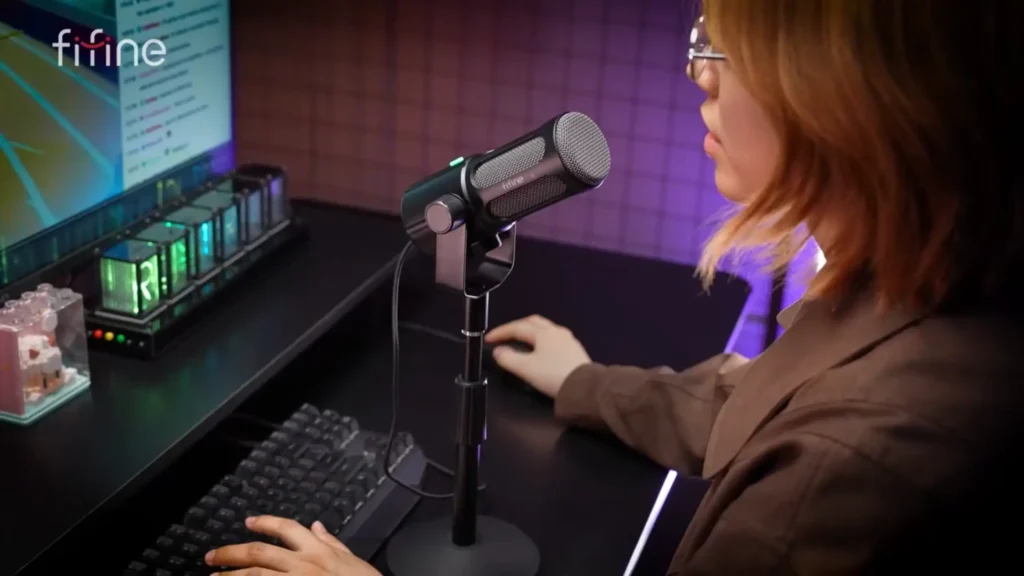
Review Barry Watson tested the FIFINE BS2 with an all-metal mic near a kilogram, FIFINE Tank6, and the stand stayed completely solid.
If you’ve got a heavier microphone, this is a great choice of stand. And of course, if you have a lighter microphone, well, it works equally well.
@Barry-Watson on YouTube
The riser is height-adjustable with a clean slip-clutch mechanism, so you get more range than the fixed stands of old. The included 3/8″-to-5/8″ adapter is a nicer part than you’ll find bundled with most starter kits.
The honest limitation: This is a straight vertical stand. There’s no tilt joint or boom, so a side-address mic in a shock mount will face wherever the riser points it.
Shure Desktop-2
Verdict: The versatility king, if you have the desk space.
Pros
- Boom arm plus a telescoping post for full positioning freedom
- Only stand here with integrated cable management
- Heavy, robust metal foot that won’t budge
- Let’s you bring the mic closer if you’re not right at the desk
Cons
- Takes up far more space than a simple stand
- Can feel unwieldy in a multi-person setup
- Heaviest and bulkiest option on the list
If positioning is your priority, the Shure Desktop-2 is hard to beat. It combines a small but seriously heavy base with a telescoping riser and a boom arm that swings out over your desk. Knobs let you set the height, extend the arm, and rotate the mic, so you can chase the exact angle you want instead of fighting a single locking screw.
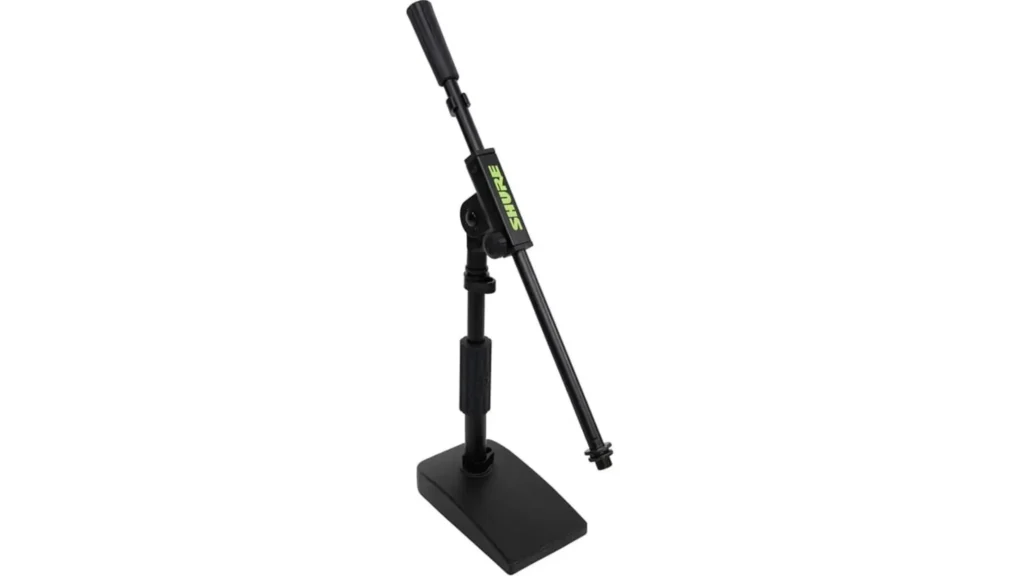
The highlight: It is designed with cable management. Clips route your XLR cable along the arm so it stays tidy, and a tug won’t yank your mic loose.
The catch is real estate. This stand is bigger and heavier than everything else here, and four of them on one table would get cluttered fast. For a solo creator or a two-person show with room to spare, that’s a fair trade for arm-like flexibility you don’t have to bolt to your desk.
Elgato Wave Desk Stand
Verdict: The easiest stand to reposition, and a favorite for streaming setups.
Pros
- Multi-angle mount makes positioning quick and intuitive
- Long, weighted base stays stable at full reach
- Includes rubber cable ties
- End mount is interchangeable with other Elgato arms
Cons
- Coating on the end mount flakes with friction over time
- More plastic in the build than all-metal rivals
- A touch less premium-feeling than the Rode
The Elgato Wave Desk Stand wins on convenience. Its mount isn’t a true ball head, but it moves through enough angles that you can point a side-address mic right at your face from almost any starting position, then lock it.
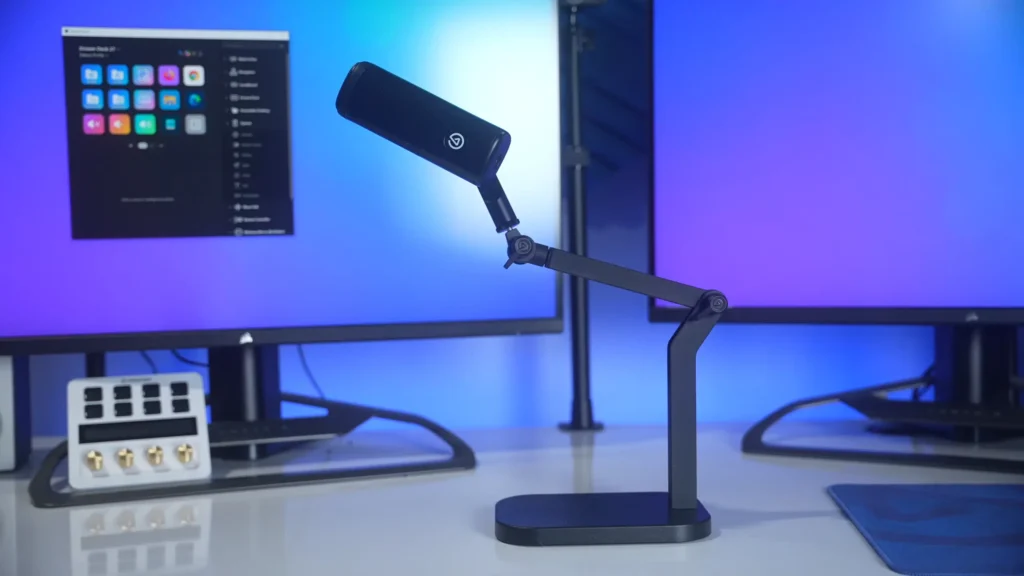
Also, there’s rubber padding underneath. The base is long and curves back, shifting the center of gravity so the stand stays grounded even with a heavy mic extended out front. A lifelong audio/video enthusiast, Tom Buck, confirmed it with the test using the Rode NT with the Elgato Wave Desk Stand.
And it does just back here, which I do think kind of pulls the center of gravity a little more. And this, you can kind of see, like, it’s not going anywhere.
@tombuck on YouTube
The one quirk worth knowing: the powder coating on the end mount rubs off where it grips, leaving little black flakes and a bit of bare silver. It’s purely cosmetic and hides once the mic is mounted, but if you’re picky about how things look on camera, it’s worth noting.
Rode DS2
Verdict: The best-built stand here, at a price that asks a lot.
Pros
- Fully metal construction with a durable, premium finish
- Compact footprint with two pivot points
- Extremely sturdy once locked, never tips
- Includes a 5/8″ adapter
Cons
- The priciest stand on this list
- Friction locking nut loosens and feels fiddly mid-session
- Cable routing holes are too narrow for an XLR plug
There’s no question the Rode DS2 is the nicest-feeling stand here. Every part is metal, the finish is harder-wearing than the coatings on rivals, and it has the kind of build that sticks around for years. It’s compact too, landing between the dead-simple stands and the sprawling Shure, with two pivot points plus a locking nut to turn and set the mic. Lock it all down, and it doesn’t move.
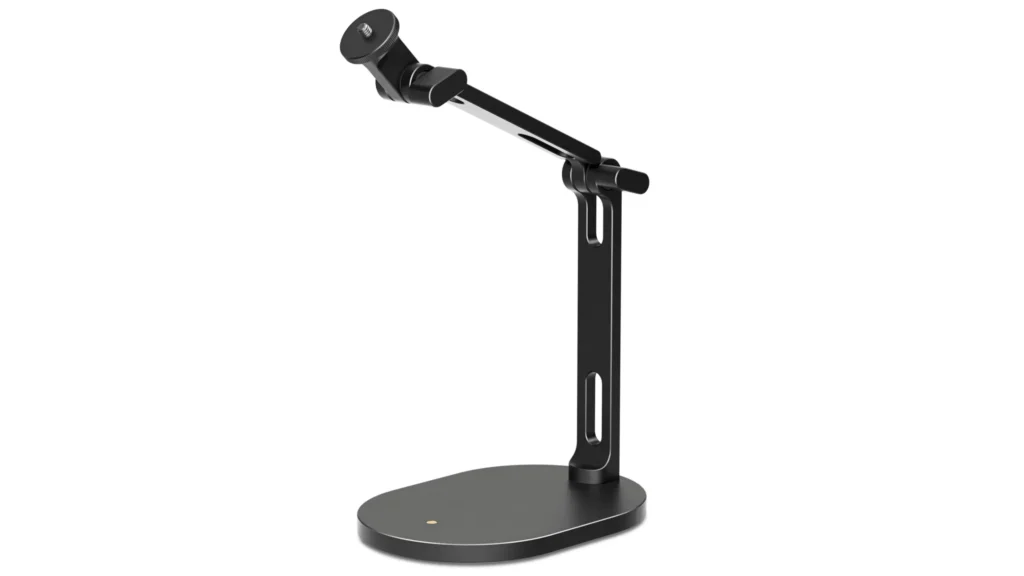
The friction comes during use. The locking nut handles rotation, but it has a habit of creeping loose, which is annoying when you’re trying to nudge a mic mid-recording or hand the stand to a guest.
The narrow holes in the post can’t pass an XLR connector, so cable management is the old wrap-it-around-the-post routine. And the foot, while sturdy, doesn’t give you much reach. None of that is a dealbreaker; you’re paying a premium for materials and finish more than features.
FIFINE BS1
Verdict: The cheap, portable stand that punches above its price.
Pros
- Genuinely affordable
- Small footprint and very portable
- Height-adjustable post with an included adapter
- Works for a light or small camera, not just mics
Cons
- Mic mounts straight on top, so side-address positioning is limited
- No cable management
- Lighter base than the heavier metal stands
The FIFINE BS1 desktop stand is the stand you reach for when you want something fast and uncomplicated. Assembly is three pieces and a screw; the post extends so you can go short or tall, and it ships with the adapter you’ll need for many mics. It’s stable for its weight and stays put for talking-head recording, and because it’s so small, you can park it off to one side and keep working.
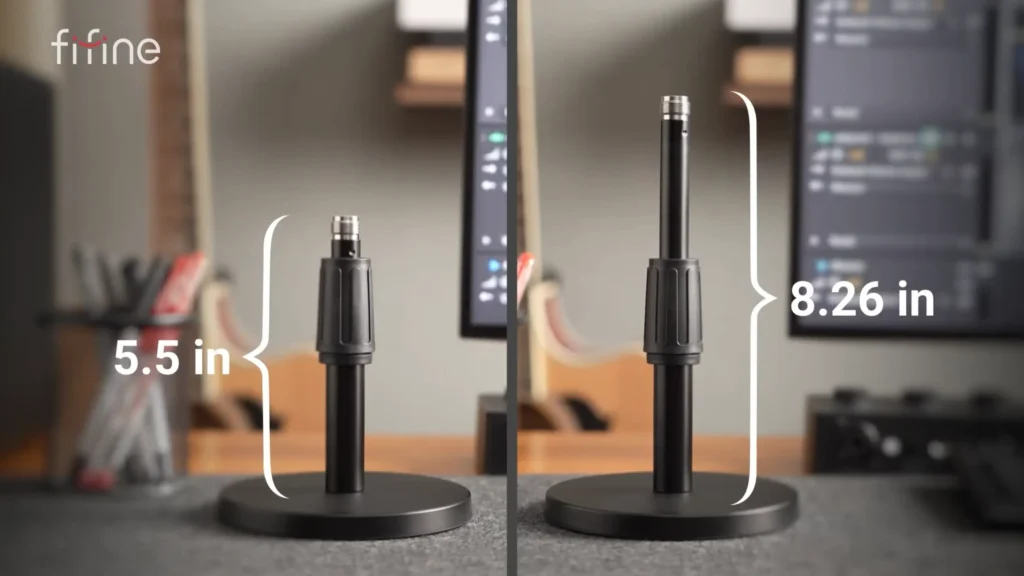
The limitation is positioning. The mic mounts on top and faces forward, so if you need a side-address mic angled in toward you while you watch a screen, this isn’t the one.
But for podcasting on the couch, quick setups, or anything where you just need a tidy, portable home for a mic or a small light, the BS1 does its job and barely costs anything.
Where These Microphone Stands Fit Best
| Stand | Best for | Why |
|---|---|---|
| FIFINE BS2 | Heavy mics and everyday recording | The cast-metal base holds near-1kg mics solid and stays stable |
| Shure Desktop–2 | Solo creators who want boom-arm flexibility | Telescoping post, boom arm, and cable clips, no desk clamp needed |
| Elgato Wave Desk Stand | Streamers tweaking angles often | The multi-angle mount makes repositioning fast and painless |
| Rode DS2 | Buyers who want premium build in a small footprint | All-metal construction and a compact, sturdy design |
| FIFINE BS1 | Portable, on-the-go, and couch setups | Light, cheap, and quick to move anywhere |
What to Look For in a Desk Microphone Stands
1. Build quality
All-metal designs like the Rode DS2 and the cast bases on the FIFINE BS2 feel solid and hold up to daily handling. Plenty of plastic isn’t automatically bad; heavy-duty plastic like the Elgato’s handles works fine, but watch for parts under friction. Powder coatings on moving joints, for example, can wear and flake.
2. Stability
A stand is only as good as its base when a heavy mic hangs off the front. Look for weight and a wide foot. The FIFINE BS2’s 750g cast base and the Shure Desktop-2’s heavy metal foot both refuse to tip, while a longer base like the Elgato’s stays planted even when a mic reaches out front. A light base plus a forward-leaning mic is how stands end up face-down on your keyboard.
2. Positioning and versatility
This is where these stands differ most. A straight riser (BS2, BS1) holds the mic wherever the post points, which is fine if your mic and mount cooperate. A multi-angle mount (Elgato) or a full boom arm (Shure) lets you chase the exact angle. Decide how often you’ll reposition before you pay for flexibility you won’t use.
4. Cable management
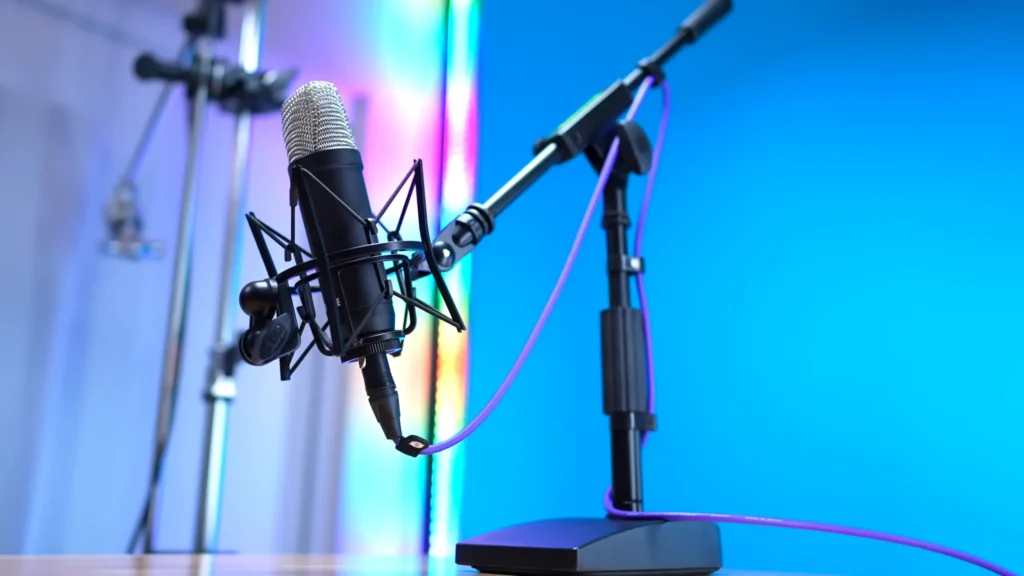
Most desk stands ignore this, and you end up wrapping the cable around the post, which stops a tug from yanking your plug. If tidy cable routing matters to you, the Shure Desktop-2 is the standout with built-in clips, and the Elgato Wave Desk Stand throws in rubber cable ties.
Watch the holes on some posts, too: on the Rode DS2, they’re too narrow to pass an XLR connector.
5. Footprint and isolation
Remember, these live on your desk. A boom-style stand like the Shure is brilliant solo, while small stands like the BS1 tuck away easily.
One more thing worth a thought: vibration. Tapping or bumping your desk travels up the stand into the mic. A heavy base damps some of that, and dedicated isolating stands with foam feet block the most, though they’re bulky. A shock mount on your mic is the simplest fix.
Which is Your Best Desk Microphone Stand?
For the best desk microphone stands, the FIFINE BS2 desktop microphone stand is the one to put in your cart, with the ultimate stability and easy setup.
Shopping for a specific need instead? Go for the Shure Desktop-2. Pick the Elgato Wave Desk Stand when you reangle your mic all day, the Rode DS2 when you want an all-metal build that outlasts the desk, or the FIFINE BS1 for the budget choice.
Pick based on your mic, your space, and your budget, and any of these five will serve you well.
FAQ
Do I really need a desk stand if I can mount a boom arm?
Not necessarily. A boom arm gets the mic up and off your desk and out of the way, which many people prefer. A desk stand is the better call when you can’t clamp to your table, want something portable, or like a simpler setup. Both are valid; it comes down to your space.
Will these stands hold a heavy microphone?
The heaviest mics are where cheap stands struggle. The FIFINE BS2 and Shure Desktop-2 have the mass to hold mics near a kilogram without tipping. Lighter stands handle most mics fine, but check the base weight if yours is heavy.
Can I use a desk mic stand for a light or camera instead of a mic?
Yes. With the right adapter, most of these stands work as a compact stand for a small light or camera. The FIFINE BS1 and the simpler stands are especially handy for this since they’re light and easy to move.
Why does my stand pick up table noise?
Vibrations from tapping or bumping your desk travel up the stand into the mic. A heavier base reduces it, isolating stands with foam feet block the most, and a shock mount on your mic helps in every case.
What’s the difference between a 3/8″ and a 5/8″ mount?
There are two common thread sizes for mic mounts. 5/8″ is the more typical size for most mic clips and shock mounts. Some stands, including the FIFINE BS2, include an adapter so you can use either, which means almost any mic will fit.
