

FIFINE BM88 vs. BM66: Traditional or Low-Profile Boom Arm?

You already know you need a boom arm. Traditional or low profile? All metal or with plastic? Both the FIFINE BM88 low-profile boom arm and the BM66 boom arm make sense for your setup.
FIFINE BM88 vs BM66? In practice, they solve very different problems — and picking the wrong one can mean a mic that’s constantly in your shot or a clamp that doesn’t fit your desk. We’ll break down exactly where each arm shines here, and where it falls short. All for your clean desk setup and smooth workflow.
FIFINE BM88 vs BM66 Head to Head
| Spec | FIFINE BM88 | FIFINE BM66 |
| Arm Type | Low profile | Traditional boom |
| Max Reach | ~29in”(73 cm) | ~34.25 in (87 cm) |
| Max Weight Capacity | 1.5 kg / 3.3 lbs | 2 kg / 4.4 lbs |
| Vertical Adjustment | 220° | 180° |
| Horizontal Rotation | 360° | 360° |
| Articulation Points | 1 (central joint) | 2 (base + mid-arm spring) |
| Spring Mechanism | No (tension/friction) | Yes (internal spring) |
| Extension Riser Tube | No | Yes (+5.9 in / 15 cm) |
| Exterior Material | All metal | Plastic over a metal frame |
| Cable Management | Snap-in plastic covers | Rubber gasket strips |
| Thread Adapters Included | 1/4″, 3/8″, 5/8″ | 1/4″, 3/8″, 5/8″ |
| Desk Clamp Fit | 0.8–2.4 in thick | 0.8–2.4 in thick |
| Clamp Type | Spring-loaded ratchet | T-handle screw |
| Color Options | Black, White, Pink | Black |
Reach
This is the most significant spec difference between the BM88 and BM66. The BM88 extends approximately 26–29 inches from the desk clamp to the mic mount point. That’s plenty for standard desk setups where you’re clamping behind your monitor and pulling the mic forward to your face.
The BM66 stretches much further — up to 34.25 inches at full extension. It also ships with a removable riser tube that adds roughly 5.9 inches of vertical height off the desk. If you need to mount the arm at the back of a deep desk, route it behind a monitor, and swing it overhead or from the side, the BM66 gives you that flexibility.
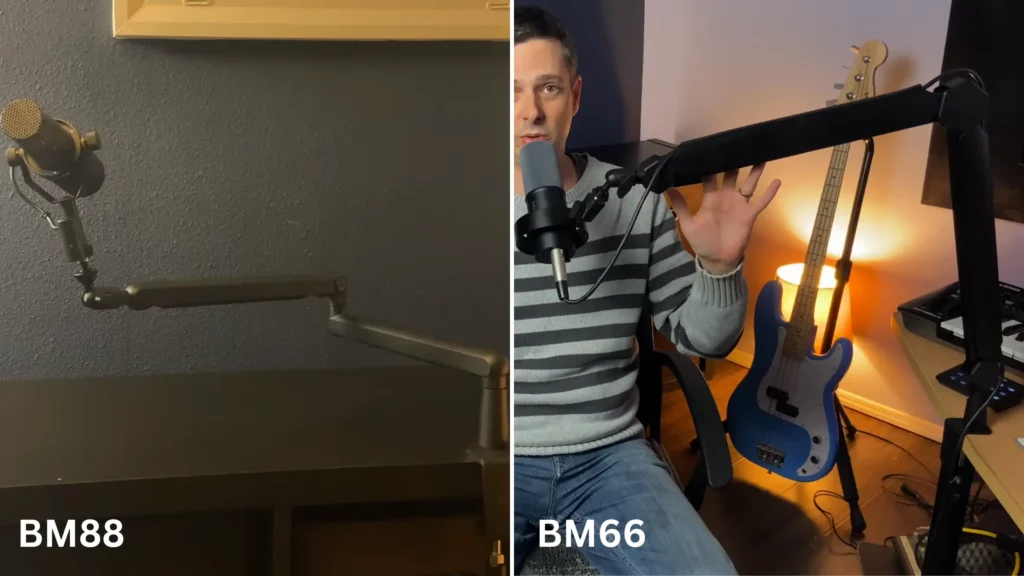
Winner: BM66. If your desk is deeper than 30 inches or you need overhead mic positioning, the extra reach matters. For standard streaming and podcast desks, the BM88’s reach is more than sufficient.
Weight Capacity
The BM66 supports mics weighing up to 2 kg (4.4 lbs), thanks to its internal spring mechanism. The BM88 handles up to 1.5 kg (3.3 lbs) using a tension-based joint system that you adjust with an Allen key.
Both arms hold popular mics like the FIFINE K688, AM8, and even the Shure SM7B without sagging. Reviewers like @Adam Talks Tech and @Audio Sweetener confirmed this. But the BM66’s spring gives it a clear edge with heavier condenser mics or setups that add a shock mount and pop filter to the overall weight.

Winner: BM66. Though most podcast and gaming mics fall well within the BM88’s limit, the BM66 is the safer pick if you own (or plan to upgrade to) a heavier studio mic.
Build Quality and Materials
Here comes the struggle for metal or plastic. FIFINE BM88’s all-metal design is solid, but the combination of metal and plastic in the FIFINE BM66 boom arm also works well.
The BM88 is constructed almost entirely from metal — solid metal tubes that feel dense and durable in hand. The BM66, despite being the “heavier duty” option on paper, uses a metal internal frame wrapped in plastic exterior housing.
BM88 definitely looks way sleeker, way more minimal. Bm66 is a little bit heavier duty and easier to reposition.
@Adam Talks Tech shares on YouTube
Both arms use sturdy C-clamps that grip desks between 0.8 and 2.4 inches thick. The BM88’s clamp features a spring-loaded ratcheting handle, while the BM66 uses a T-handle screw. Both lock down firmly, with rubber padding to protect your desk surface.
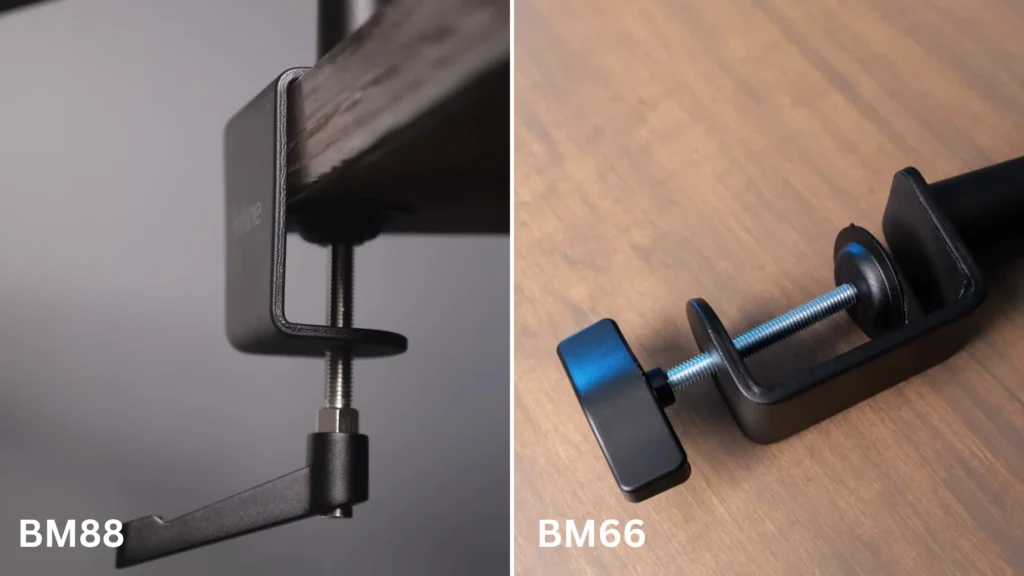
Winner: BM88. All-metal construction gives it a more solid, lasting feel. The BM66’s build is still reliable, but the plastic exterior doesn’t match the BM88’s tactile quality.
Cable Management
Enclosed cable channels are available in FIFINE BM88 and BM66 microphone boom arms. They work differently, though.
The BM88 uses snap-in plastic covers along the underside of each arm segment. You slide the cover off, lay your XLR or USB cable into the channel, and snap it back into place. @A MINOR ERROR noted that prying the covers open can pinch your fingers on the metal edges, especially the first few times. Once your cable is routed, though, it stays put even if the cable gets tugged.
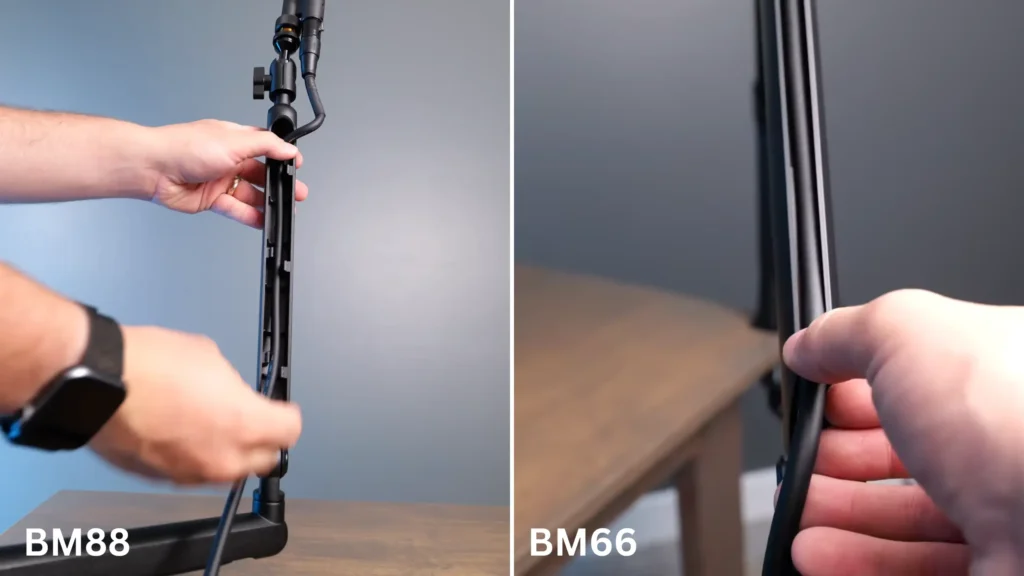
The BM66 takes a different approach with rubber gasket-style strips along the top and back of each arm. You peel the rubber back, press the cable in, and push the gasket back into place. It’s faster to access and less likely to catch your skin. The rubber seals also dampen any cable rattle.
Winner: Tie. The BM66’s rubber gaskets are quicker and more finger-friendly to use. The BM88’s snap channels hold cables more securely over time. Pick based on whether you reroute cables often (BM66) or set it and forget it (BM88).
Articulation and Positioning
The BM66 has two independent articulation points — one at the base and one at the mid-arm spring joint. This gives it a wide swing range, the ability to reach high overhead, and enough flexibility to come in from virtually any angle. The internal spring makes repositioning smooth and nearly silent.
The BM88 operates differently. The bottom joint is a fixed right-angle mount, so your main articulation happens at the central joint between the two arm segments. You adjust the vertical angle (up to 220°) and get full 360° horizontal rotation at the base. It’s designed to stay low and sweep in from behind your monitor — not arc overhead.
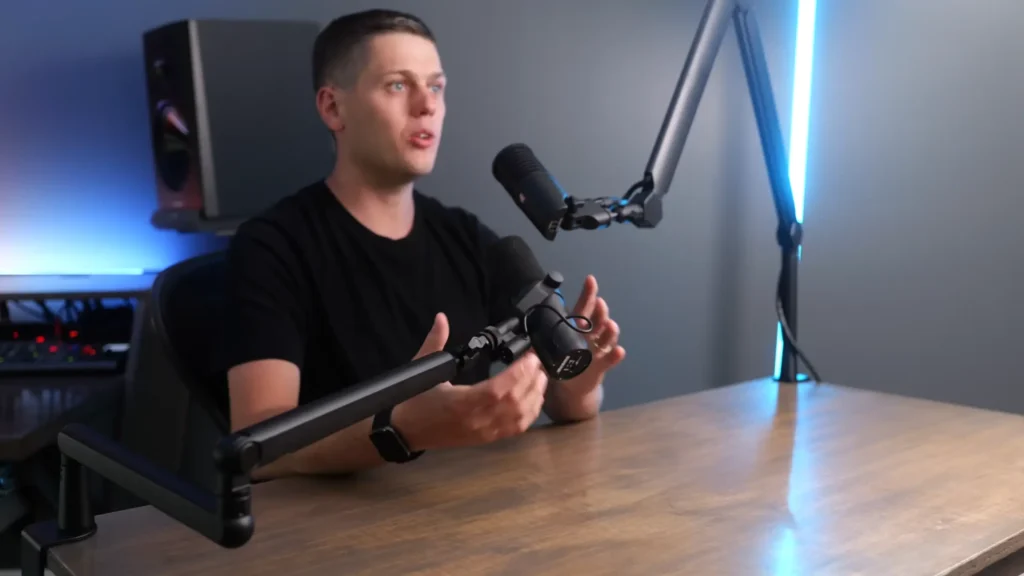
Winner: BM66 for flexibility; BM88 for low-profile positioning. Singers and overhead condenser users benefit from the BM66’s range. Streamers, podcasters, and gamers who want the arm hidden behind a monitor should favor the BM88.
Aesthetics
The BM88 is the quieter arm — literally no visible branding except a small logo on the side of the desk clamp. It’s available in black, white, and pink, which lets you color-match your setup. The low-profile design keeps it almost invisible on camera.
The BM66 carries a “FIFINE” logo on the arm itself, and its traditional boom-arm silhouette takes up more visual real estate. It’s only available in black.

Winner: BM88. If a clean, minimal frame matters to your content, the BM88 is the better-looking option by a wide margin.
Who Should Buy Which?
Numbers and specs only tell half the story. The real question is how each arm fits into your daily workflow. Here’s a breakdown by creator type.
The FIFINE BM88 Is Built For:
- Streamers and gamers who need a mic arm that stays invisible. The low-profile design sits beneath your monitor line, keeping your facecam shot clean and uncluttered. No bulky arm dominating the frame throughout your stream.
- Podcasters recording at a standard desk. The BM88 pairs naturally with dynamic podcast mics like the FIFINE K688 or Shure SM7B. Its minimal branding and black-or-white color options let it blend into any backdrop.
- Virtual meeting pros and online educators. The 1/4″ thread adapter doubles as a webcam mount. A mic or a camera is available. Also, the low clearance under the arm (2.8 inches) makes your keyboard and mouse fully accessible.
The FIFINE BM66 Is Built For:
- Singers and vocal recording artists. The BM66’s 34+ inch reach and dual articulation points let you swing the arm up high, angle it down toward your mouth, and lock it there with the internal spring.
- Home studio owners with deep or L-shaped desks. If your desk is deeper than 30 inches, or you clamp the arm on a side return and need it to reach across, the BM66’s length lets you know the difference.
- Creators need to frequently reposition the mic. The BM66’s spring mechanism makes the adjustments smooth and one-handed. The BM88’s tension joints hold position well, but they’re designed more for “set it once” workflows.
- Users with heavier mic setups. The BM66’s 2 kg capacity and spring-loaded resistance handle the extra weight without gradual droop. It may be difficult for BM88, with is friction-based joints.
Final Review on FIFINE BM88 vs BM66
The FIFINE BM88 costs less, looks cleaner on camera, feels more solid in the hand, and tucks away behind your monitor. The FIFINE BM66 is the better arm if you need reach and raw load capacity. It’s the right call for deep desks, overhead mic positions, or heavier condenser setups.
The best microphone boom arm is on your setup and in demand. For an invisible mic arm that stays out of your shot? Go BM88. Need maximum flexibility to position a heavier mic? Go BM6. Either way, both arms punch well above their price point, and both outperform most competitors at double the cost.
FAQs
Can the BM88 hold a Shure SM7B?
Yes. Multiple reviewers mounted an SM7B on the BM88 without sagging issues, though you may need to tighten the Allen key tension bolts to keep it locked in place over time. The SM7B weighs about 1.69 lbs (766g), well within the BM88’s 3.3 lb capacity.
Does the BM66 come with the riser tube installed?
No. The extension tube is a separate piece included in the box. You can install or remove it depending on how much vertical height you need.
Can I use either arm as a camera mount?
The BM88 includes a 1/4″ thread adapter, which is the standard mount for cameras and webcams. Several reviewers specifically praised it as a convenient camera arm. The BM66 also includes a 1/4″ adapter, but its boom-style design is less ideal for keeping a camera low and out of frame.
Which arm is better for a condenser mic with a shock mount?
The BM66. Its longer reach and higher weight capacity better accommodate the added bulk and weight of a shock mount plus condenser mic. The BM88’s low-profile design works best with podcast-style dynamic mics that mount directly to the ball head.
Do I need any extra tools to install either arm?
Both arms come with the Allen keys needed for tension adjustment. The desk clamp on each arm is installed by hand. Setup takes under five minutes for either model.
