
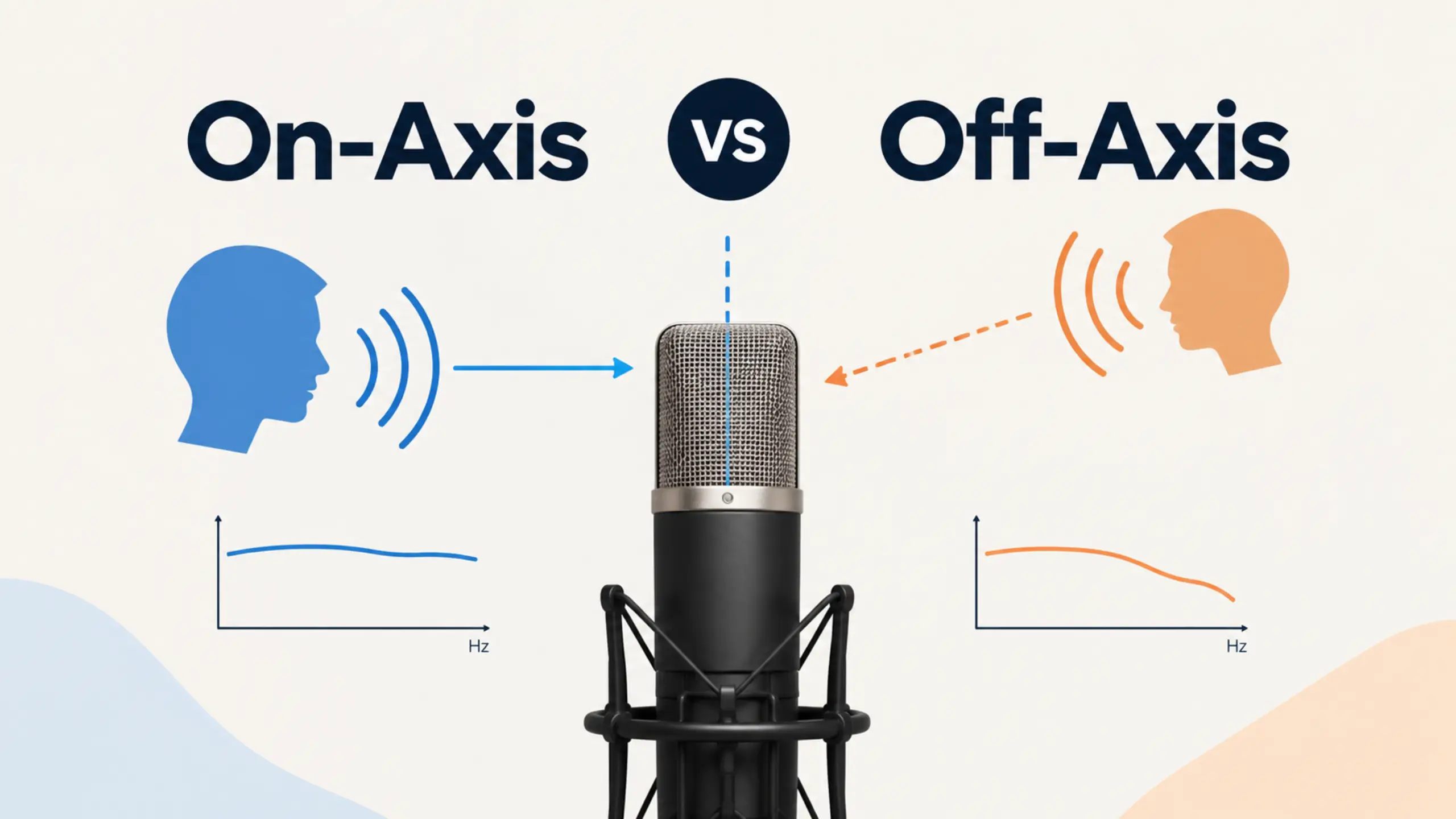
On-Axis vs. Off-Axis Microphone Placement: How Mic Angle Matters?

Speak straight into a cardioid mic, then turn it 45 degrees and say the same line again. Play both back and you’ll hear the difference effect. That’s on-axis vs. off-axis microphone placement at work, and it may explain why your voice sounds harsh, hissy or a little dull on recordings. Which angle should you use?
Below, we compare the two across frequency response, tonal balance, sibilance, attack and room pickup, then show where each technique earns its place. By the end, you’ll know how mic angle shapes your sound and how to set up your mic.
What Is On-Axis Microphone Placement?
Every microphone has an acoustic axis: an imaginary line running straight out from the center of its capsule, the part that turns sound into an electrical signal. When sound travels along that line and hits the diaphragm head-on, you have on-axis sound incidence. Audio engineers often call this the sweet spot, or speaking “down the barrel.”
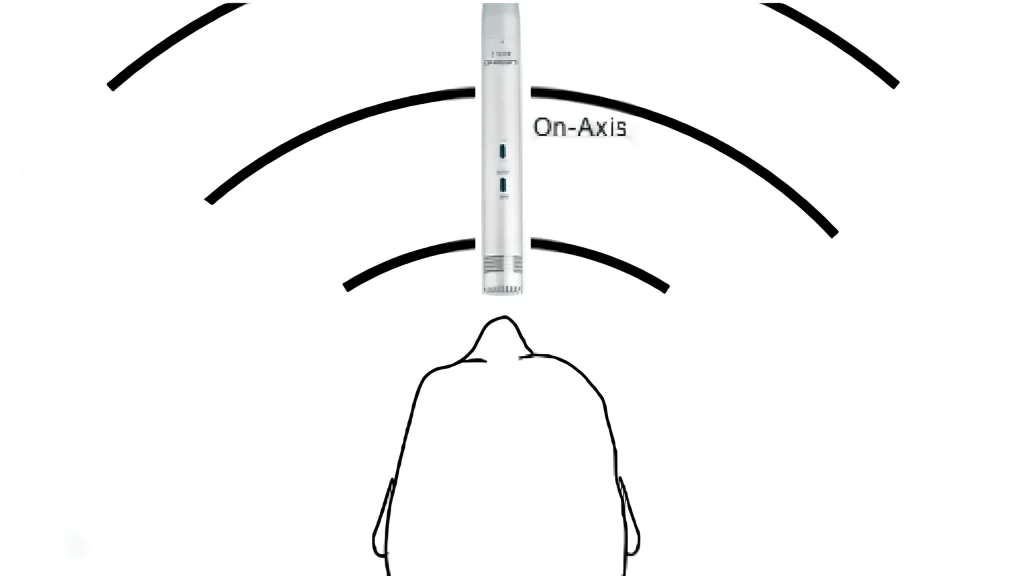
To set up an on-axis microphone:
- Check the address type. End-address mics, like most dynamic models, pick up from the top. Side-address mics, common among USB condensers, pick up from the side of the grille.
- Aim the center of the capsule directly at your mouth or the sound source.
- Set your distance. For podcasting, 6 to 12 inches is a common starting range. Dynamic mics usually want you closer, fifine AM8 dynamic mic is recommended to speak within 2-6 inches.
On-axis placement gives you the strongest direct signal and the most detail. Typically, manufacturers test a mic’s frequency response at this position, which is about 1 meter away. In other words, on-axis is the closest you’ll get to the sound printed on the spec sheet.
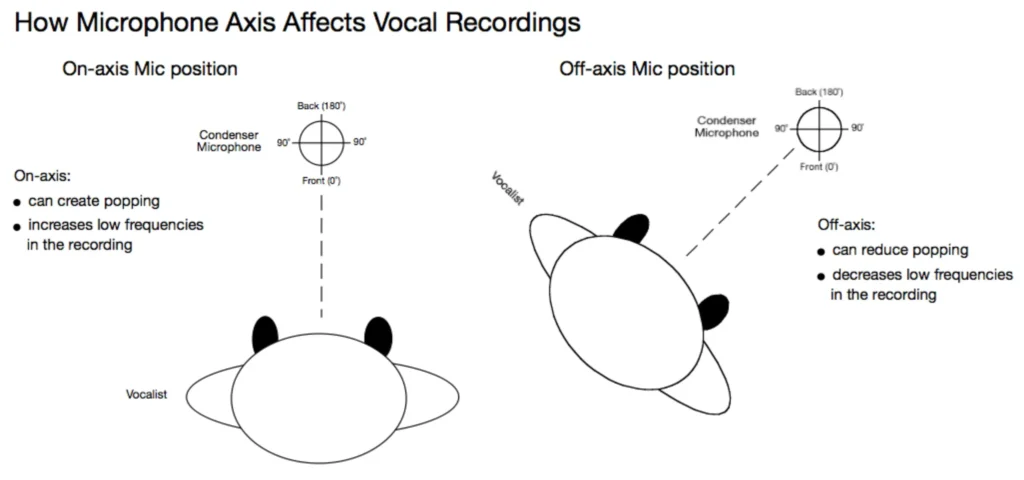
The trade-off: you’re aiming bursts of air from P, and B sounds straight at the capsule, so a pop filter becomes your friend.
What Is Off-Axis Microphone Placement?
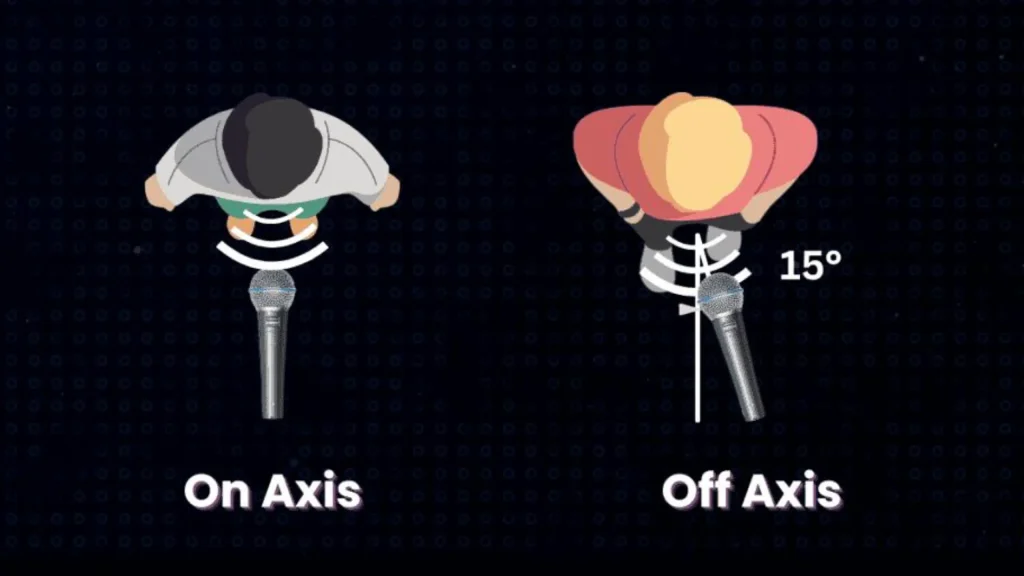
Off-axis sound incidence happens when sound reaches the microphone at an angle. The off-axis angle is the angle between the mic’s axis and the direction of the source: 0 degrees is on-axis, 90 degrees is the side and 180 degrees is the rear.
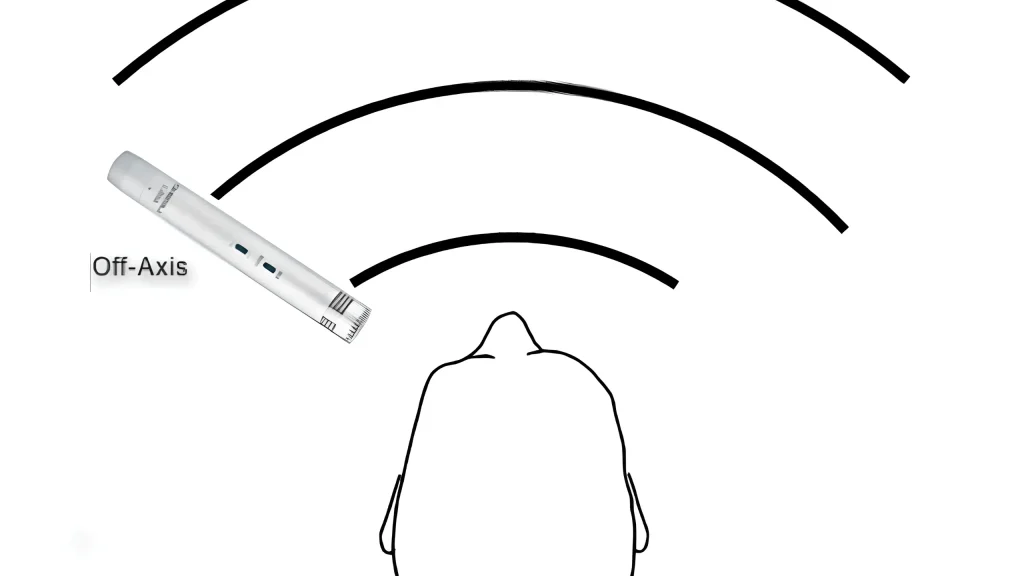
There are two different moves people lump together here, and they do different things:
- Rotating the microphone. The mic turns away from the source, so your voice now arrives off its axis. This changes the tone: highs fade first, then mids.
- Speaking past the microphone. The capsule still points at your mouth, but you direct your breath just past the grille. Your voice stays on the mic’s axis, so the tone barely changes, yet air blasts miss the capsule, which saves the plosive about on-axis mic placement.
Why go for off-axis mic placement? It softens a harsh voice, tames sibilance, reduces plosives and mouth noise, and warms up a bright source. But sometimes, small angles may change very little on some mics.
Also, some mics have bumpy off-axis responses, and turning away can let more reflections from a bright, untreated room into the mix. Your ears decide, not the rule of thumb.
On-Axis vs. Off-Axis Microphone Placement: Key Differences
| Dimension | On-axis | Off-axis |
|---|---|---|
| Mic aim | Straight at the source (0 degrees) | Angled away, often 15 to 45 degrees to start |
| Tonal balance | Bright, direct, closest to published response | Often warmer and smoother; highs drop first |
| Detail and clarity | Maximum articulation | Slightly softer; mild angles keep intelligibility |
| Sibilance and plosives | More exposed; pop filter helps | Often reduced |
| Perceived attack | Sharper, more forward | Softer, rounder |
| Level and room sound | Highest direct level | Lower direct level; room and bleed can rise relative to source |
Frequency Response and Tonal Balance
High frequencies travel in a narrower beam than low frequencies. Lows spread out in nearly every direction, while highs behave more like a flashlight beam. So when you rotate a directional mic away from a source, the highs drop out first, then the mids. The lows hang on longest because they wrap around the mic anyway.
Turn a mic far enough off-axis and you hear mostly the low end of a voice: present but muffled, with little detail. But it doesn’t just depend on the microphone placement. Capsule size, housing, grille and polar pattern all shape its off-axis frequency response.
High-Frequency Detail and Clarity
The low frequencies of your voice carry its basic vibration. The mids and highs carry the shape of words, the harmonics and overtones your mouth and tongue use to form consonants.
On-axis saves all of them, so it ensures maximum articulation. It suits more on dynamic mics, which tend to be less sensitive to high frequencies.
That said, off-axis doesn’t sacrifice clarity. Brightness and clarity aren’t the same thing. A 20- or 30-degree angle can remove a harsh edge while keeping consonants crisp.
Sibilance and Harshness
Does off-axis placement reduce sibilance? Often, yes. The energy in S, SH and T sounds sits high in the frequency range, which is exactly where off-axis pickup drops first. Angling a mic 30 to 45 degrees is a classic first fix for a sibilant voice or a bright condenser.
But if you have to angle so far that your voice turns dull, use a de-esser instead. For plosives, which are air blasts rather than high frequencies, a pop filter or speaking past the capsule is often the cleaner solution.
Transients and Attack
Transients are the fast, sharp starts of sounds: a pick hitting a string, a stick hitting a snare, a hard consonant—much of what makes them sound sharp lives in the high frequencies. When off-axis placement rolls off those highs, the attack sounds softer and rounder.
That said, it’s a perceived change. You’re changing how much of the attack’s high-frequency detail reaches the capsule, not the transient behavior of the instrument.
Sound Level, Room Sound, and Bleed
A directional mic picks up less from off-axis directions, so turning it away from the source lowers the direct signal. @moomamedia5414 pointed a mic at the floor, then sideways, at the same distance; his voice shrank, and the room reverb took over. The result sounded distant and washed out.
Aim the mic so an unwanted source, like a keyboard or a nearby drum, sits in the mic’s least sensitive zone, and bleed drops. Results depend on your room, where each source sits, and how directional your mic is.
How Do Microphone Polar Patterns Affect On-Axis vs. Off-Axis Placement?
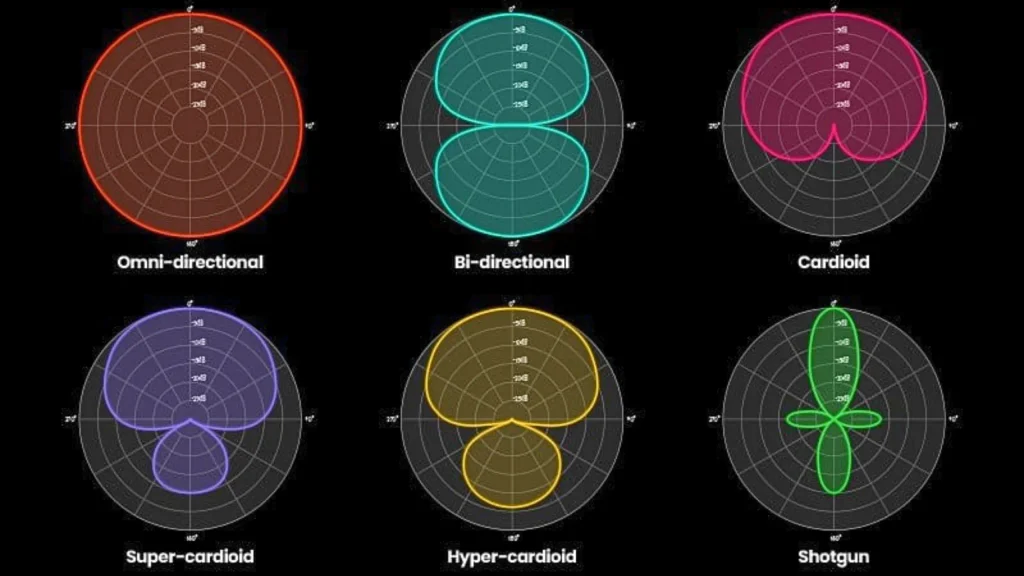
Different polar patterns pick up sound from different degrees. Is the polar patterns decide on-axis or off-axis microphone placement? Actually, the two are related, but they’re not the same thing. Check out our microphone polar pattern guide.
| Polar pattern | Most sensitive | Least sensitive (ideal) | What angle changes |
|---|---|---|---|
| Cardioid | Front | Rear (180 degrees) | Gradual level drop toward the sides, plus tonal change |
| Omnidirectional | All directions | None | Level stays steady; highs can still drop off-axis |
| Supercardioid | Narrow front, small rear lobe | Around 125 degrees | Steeper level drop; tighter isolation |
| Hypercardioid | Narrower front, larger rear lobe | Around 110 degrees | Steepest front drop of the group |
| Figure-8 | Front and rear | Sides (90 degrees) | Big level drop as source moves to the side |
These are textbook values. Real microphones vary.
Cardioid Microphones
Cardioid mics hear best from the front, less from the sides and least from the rear. Move off-axis and you change two things at once: output level and tonal balance.
Take fifine AmpliGame AM8 dynamic mic. A slight tilt, so your breath passes over the capsule instead of into it, can cut plosives without much tonal cost. Tilt too far and the level drops, so you’ll add gain and pull in more keyboard noise.
The same logic applies to instruments: on-axis for punch and detail, a modest angle to soften a bright source.
Omnidirectional Microphones
Ideally, an omnidirectional mic hears every direction equally, so angle shouldn’t matter. Practically, omni mics come close at low and mid frequencies, but at higher frequencies the mic’s own body and capsule start to shade sound arriving from the sides and rear. The result can be a slightly duller tone off-axis.
Look at the fifine K690 microphone. It uses three 14 mm condenser capsules and switches between cardioid, omnidirectional, bidirectional, and stereo patterns. In omni mode, it picks up a roundtable conversation at similar levels from all sides, but the person facing the front of the mic will usually still sound a touch clearer than someone behind it.
Supercardioid and Hypercardioid Microphones
These patterns narrow the front pickup further than a cardioid. The catch is a small rear lobe of sensitivity. Their least sensitive points sit at an angle behind the mic, not directly behind it. Place unwanted sources at those angles, not straight at the back.
Because level drops faster as you move away from the axis, small aiming mistakes matter more. Drift off-axis with a supercardioid, and you’ll hear the tone and level change quickly.
Figure-8 Microphones
Figure-8, or bidirectional, mics hear equally from the front and rear and reject sound from the sides. Rotate the source toward 90 degrees and the level falls sharply. That makes figure-8 handy for two-person interviews facing each other across one mic, such as the K690 mic in bidirectional mode, with side noise pushed into the nulls.
When Should You Use On-Axis vs. Off-Axis Microphone Placement?
| Source | Start on-axis when… | Try off-axis when… |
|---|---|---|
| Vocals, podcasting, streaming | You need clarity, your dynamic mic sounds dull, or your room is noisy | Your voice is sibilant or harsh, or a condenser sounds too bright; try 30 to 45 degrees |
| Acoustic guitar | The guitar sounds thin or you need strumming detail | Pick noise or string squeak stands out |
| Electric guitar amp | You want a clear, punchy, aggressive tone aimed at the center of the speaker cone | You want a warmer, rounder tone that sits back in a mix; angle toward the edge of the cone |
| Drums and percussion | You want snare crack or stick attack | Cymbals sound harsh, or you need to aim a null at a neighboring drum or cymbal |
| Brass, woodwinds, other instruments | The part needs presence and cut | Aiming straight into a brass bell sounds piercing; angle slightly off the bell |
For vocals, the best microphone placement is usually on-axis with a pop filter, or 30 to 45 degrees off-axis if sibilance or plosives get in the way. If you move your head a lot, angle the mic slightly above or below your mouth so small movements don’t swing the tone.

How to Position a Microphone Off-Axis
Start with an On-Axis Reference
Aim the capsule directly at the source and record a short clip. Use the same phrase or musical passage every time. This is your baseline.
Experiment with Different Off-Axis Angles
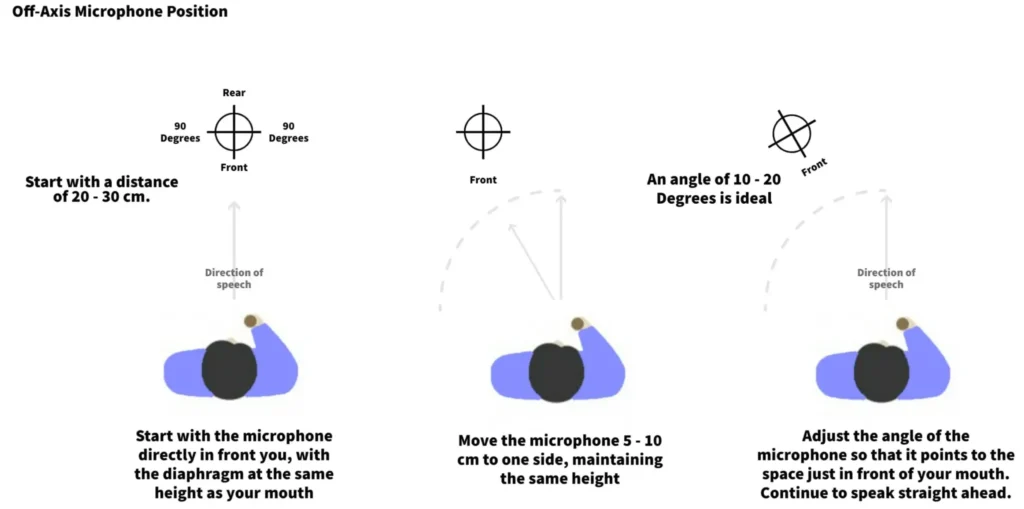
Rotate the mic to around 15, 30 and 45 degrees and record the same clip at each angle. Treat these numbers as starting points, not rules. One mic may change noticeably at 15 degrees, while another barely shifts until 45.
Maintain a Consistent Microphone Distance
Microphone angle and distance change tone in opposite ways. Moving off-axis drops the highs first, then the mids. Moving farther away drops the lows first, because you lose the proximity effect; the bass boost directional mics add up close. So, measure the distance from your mouth to the capsule and keep it fixed while you rotate.
Compare Recordings with Level Matching
Off-axis clips come in quieter, and louder almost always sounds better to our ears. Keep the gain, performer and performance the same, then match the playback levels before you compare. Level-matched A/B listening is the only fair test of tone.
Fine-Tune by Listening and Measuring
Listen for five things: tonal balance, sibilance, attack, room sound and bleed. If you want a second opinion, drop the clips into a spectrum analyzer in your DAW and compare the high-frequency region where sibilance lives. A small change in angle or distance often makes a bigger difference than you’d expect.
Conclusion: Choosing the Right Microphone Angle
On-axis vs. off-axis microphone placement? They aren’t rivals, but complementary tools. Start on-axis to hear what your mic really sounds like, then rotate it to shape tone, tame sibilance, or push unwanted sound into the mic’s blind spots.
Remember the three pieces: mic angle decides where your source sits, the polar pattern decides how much the mic hears from there, and the off-axis frequency response decides what that sound actually sounds like. Skip fixed rules and test it personally. For more techniques, head to our Microphone Placement guide.
FAQs
Is On-Axis or Off-Axis Microphone Placement Better?
Neither is better across the board. On-axis gives you the most detail and the strongest signal. Off-axis gives you a warmer, smoother tone with fewer harsh highs and plosives. Start on-axis, then adjust based on what you hear.
What Is the Best Off-Axis Angle for Vocals?
There’s no universal best angle, but 30 to 45 degrees is a common starting point for podcasting and voice work. Test them and pick the one that controls sibilance without dulling your voice.
Does Off-Axis Placement Affect Frequency Response?
Yes. High frequencies are more directional, so they drop first as you move off-axis, followed by the mids. Low frequencies are the least affected. How much the tone changes depends on the mic’s design.
Does Microphone Polar Pattern Affect Off-Axis Sound?
In some degrees, yes. The polar pattern sets how much level drops at each angle. The off-axis frequency response, shaped by the capsule and housing, sets how the tone changes. But it doesn’t the only influence.
Can You Use Off-Axis Placement with Any Microphone?
Yes, with different results. Directional mics like cardioid and supercardioid models change the most. Omnidirectional mics change less in level but can still lose some high-frequency detail off-axis. On a figure-8 mic, avoid the sides, where the nulls cut the signal sharply.
