
FIFINE H8 Review: A Studio Headphone Built for Monitoring

Studio monitor headphones used to mean spending real money. The FIFINE H8 lands in a different corner of the market. It stays usable for those users who want a music headphone at an extremely budget-friendly price.
What is the actual FIFINE H8 review for a first-time podcaster, a bedroom producer, or a voice actor who wants a working pair of cans without dropping a hundred bucks? We’ve tested the FIFINE H8 studio headphone in real usage. Here’s what we found.
FIFINE H8 Studio Headphone Quick Review
Pros
- Two coiled cables, a 3.5mm and a 1/4″, in the box
- Cables detach at the left cup, which is easy to replace
- Roughly 212 grams without a cable
- Padded headband holds up through long sessions
- Sits close to flat for monitoring
- 50mm drivers serve up plenty of low end for tracking
Cons
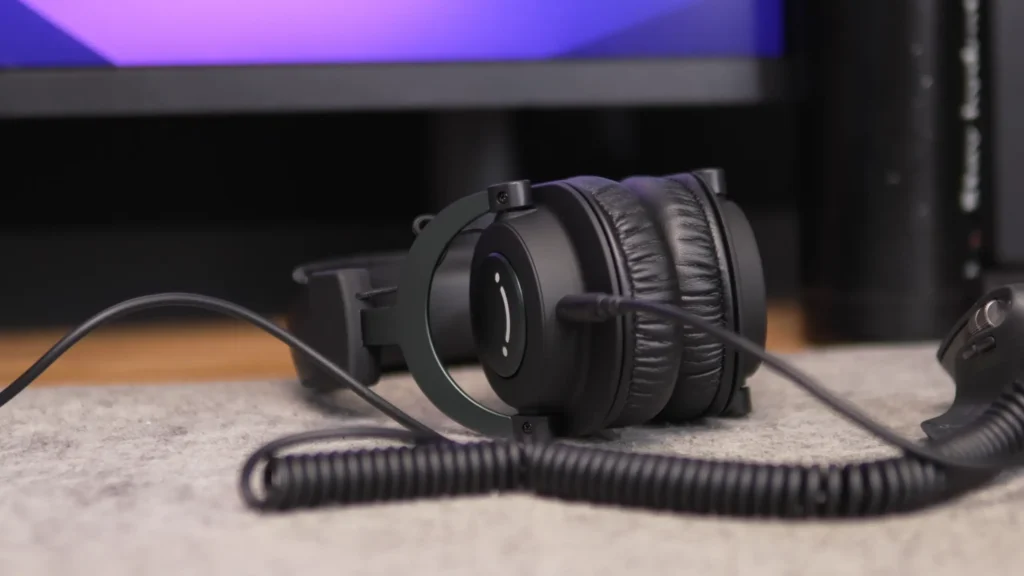
- Cups don’t fold or swivel, which makes them clumsy to travel with
- Ear openings run small if you’ve got a larger head
- The clamp grips hard until you break it in
- No onboard volume or playback controls
- That bass-forward tuning isn’t built for critical mixing
FIFINE H8 Review: Budget & Useful Studio Headphones
| What we scored | Score |
|---|---|
| Build & materials | 7.0 / 10 |
| Comfort & fit | 7.5 / 10 |
| Sound quality | 7.5 / 10 |
| Monitoring & recording | 8.0 / 10 |
| Cables & in-box value | 9.0 / 10 |
| Value for money | 9.0 / 10 |
| Overall | 8.0 / 10 |
Build & Materials — 7.0 / 10
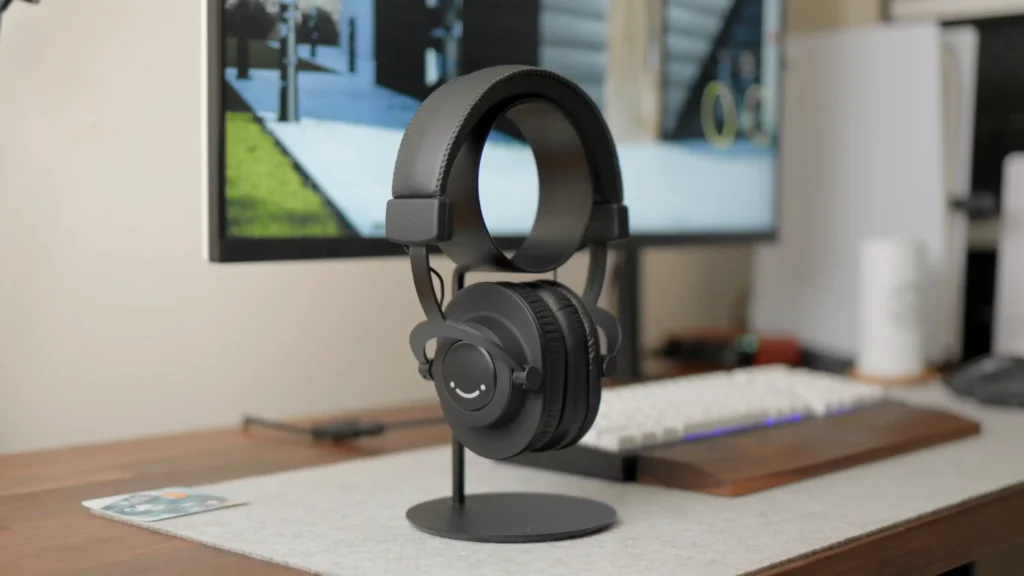
The H8 is mostly plastic. The shells, the headband, and the adjustment hinges all carry that lightweight, low-cost feel. There’s metal where it counts, though: a band runs through the headband core, and the yoke and end caps that hold the cups add a bit of backbone. The exposed wiring that feeds each cup is braided. “Surprisingly solid for the price,” said reviewer @imJMB on YouTube.
For the build quality of the FIFINE H8 studio headphone test, the frame survived flexing the headband, weighing the cups, swapping the cables a dozen times, and checking for creak. The honest knock came from @HeroVisionYT with a larger head, who found the plastic and thin padding closer to a kid’s headset than a pro tool.
Both reactions are fair. For roughly $35, the build is solid, and the metal touchpoints earn the score.
Comfort & Fit — 7.5 / 10
Comfort is where the H8 surprised people most. Start with weight. FIFINE lists the H8 at 265 grams, but on the scale, it came in lighter, around 212 grams without a cable. That’s a touch lighter than the ATH-M40x, and you feel it on long days.
The headband carries real padding, and the closed-back cups lock out a fair amount of room noise on their own. But if you’ve got a bigger head, the pads can press your ears instead of cupping them. The cups also don’t swivel, so you can’t tilt one off for quick one-ear monitoring like the ATH-M40x.
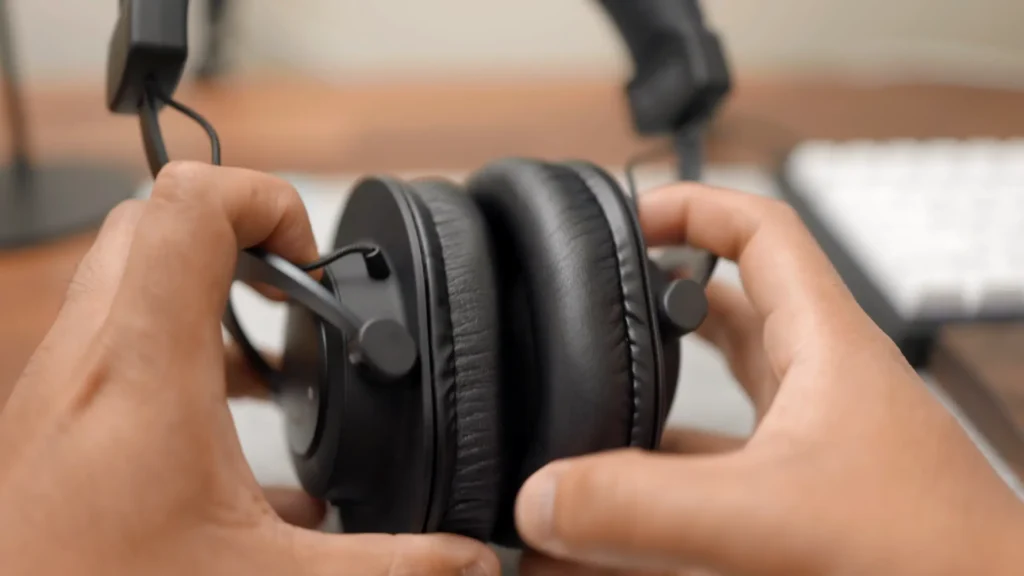
A voice actor, @TTG2025, flagged “much clamping force these have on my head”. But the H8 lightness makes it not mind. A smart and cheap fix can solve it.
I would probably recommend grabbing these headphones and putting them over a pillow for as long as you possibly can, like overnight, which is ideal.
@TTG2025 on YouTube
For most heads, though, this is a headphone you can wear for hours of tracking without the scalp line or the ache that cheaper cans leave behind.
Sound Quality — 7.5 / 10
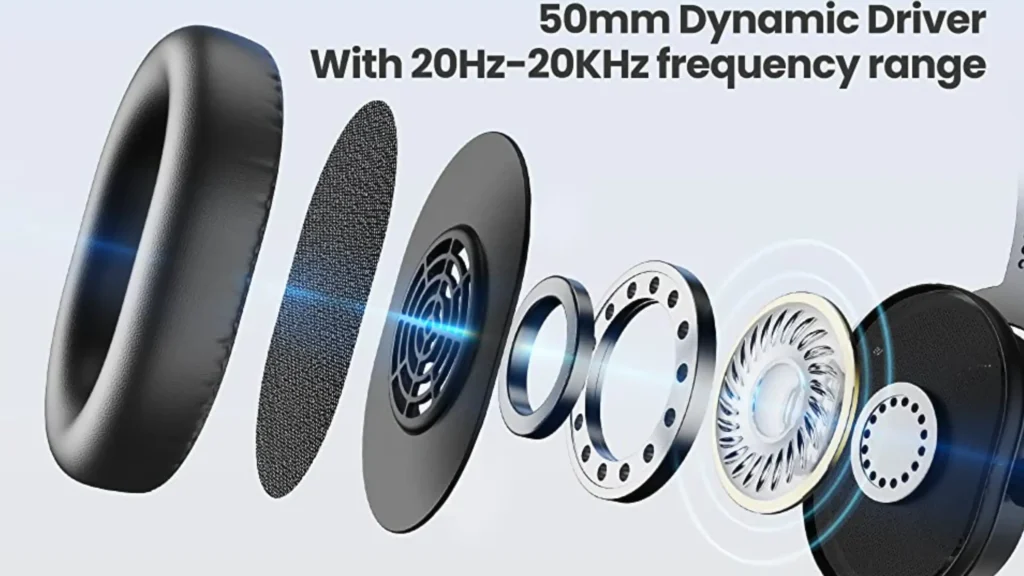
FIFINE H8 studio headphone features 50mm drivers, 32-ohm impedance, and a rated frequency range of 20Hz–20kHz. The low impedance matters more than it sounds; it means the H8 gets loud enough off a phone, tablet, or interface without a separate amp.
The H8 leans warm, which flatters tracking and casual listening but won’t give you the clinical flatness mixing demands. Keef Keyz tracked on FIFINE H8 for two weeks, praised the bass and noted he wasn’t missing detail in the mids or highs.
You get a lot of low end, and it doesn’t seem as if there’s a lot of scooping in the mids or in the highs. The low end sounds beautiful. This is good for tracking. You don’t necessarily need to hear a ridiculously flat response, but it does have a lot of low end, so I would not mix in these headphones whatsoever. But they’re enjoyable to track in.
@KeefKeyzproductions on YouTube
For music and video playback, expect “good, not revelatory.” A couple of testers suggested running an EQ if music is your priority, which is sound advice. As a recording and reference tool, though, the H8 lands well above its price.
Monitoring — 8.0 / 10
This is the category the H8 was built for. Plug the 1/4″ cable into your interface, and you hear yourself back in real time with no latency, exactly what you want when you’re tracking a vocal or voicing a line and need to ride your own performance.
@HeroVisionY bought a pair specifically to monitor guests and said it nailed that task without fuss. For the H8 monitoring function, he was clear: “I can hear my audio back in real time without any latency,” which was exactly what he needed. When the goal is “let me hear the source cleanly while I record,” the H8 delivers.
The one recurring gripe is the lack of onboard controls. There’s no volume wheel or mute on the cups, so if a co-host gets loud mid-take, you’re reaching for the interface or the software rather than a button on your ear. For live multi-person monitoring, it’s a small but real friction point.
Cables & In-Box Value — 9.0 / 10
The cabling is the H8’s quiet win. You get two coiled cables: one with a 3.5mm jack on both ends for phones and tablets, and one with a 3.5mm on one end and a 1/4″ on the other for interfaces and gear.
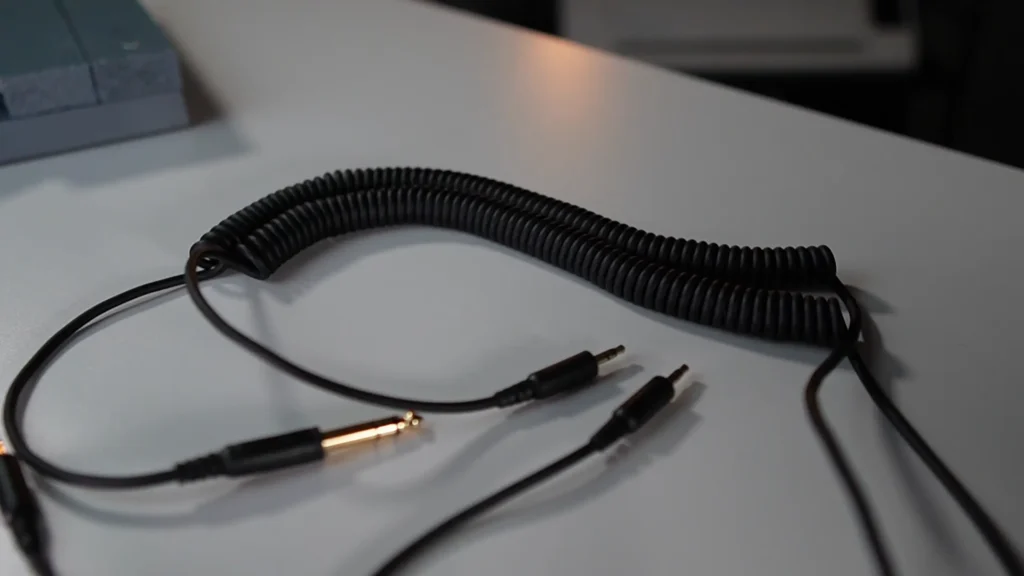
No adapter to lose, no extra purchase. Both coil down to around four feet at rest and stretch to roughly ten feet when you need the reach.
Better still, the cables detach at the left cup and aren’t proprietary. If one frays, you replace it for pocket change instead of buying a brand-specific part, the way you would on the M40x. For a headphone you’ll yank around a studio, that’s a feature you’ll appreciate the first time someone trips over a cable.
Value for Money — 9.0 / 10
Math makes the case here. At about $35, the H8 costs roughly a third of the ATH-M40x. And if you wanted that M40x flat enough for confident mixing, you’d add a SoundID Reference license on top, pushing your real spend toward $200. The H8 lands in usable, near-flat territory for the price of a couple of cables.
It won’t out-build or out-feature the pricier options, and it isn’t trying to. As a low-risk way into studio monitoring, or a second and third pair to scatter around a room, it’s tough to argue with the value.
Who is FIFINE H8 Studio Headphone for?
| You are… | Should you buy the H8? |
|---|---|
| A home recordist tracking vocals or instruments | Yes. This is the sweet spot. |
| A podcaster or voice actor monitoring through an interface | Yes. Zero-latency monitoring is the whole point. |
| Buying your first studio headphones on a tight budget | Yes. A low-risk way to start. |
| A mixing engineer chasing a flat reference | Maybe. The bass runs hot, so lean on EQ or calibration software. |
| Mainly a music or movie listener | Only with EQ. Better pure-listening options exist near this price. |
| A frequent traveler who needs to pack light | Probably not. No fold, no swivel, no case. |
| A competitive gamer who wants onboard controls and a mic | No. Look at a gaming headset instead. |
Studio Headphones vs Gaming Headsets
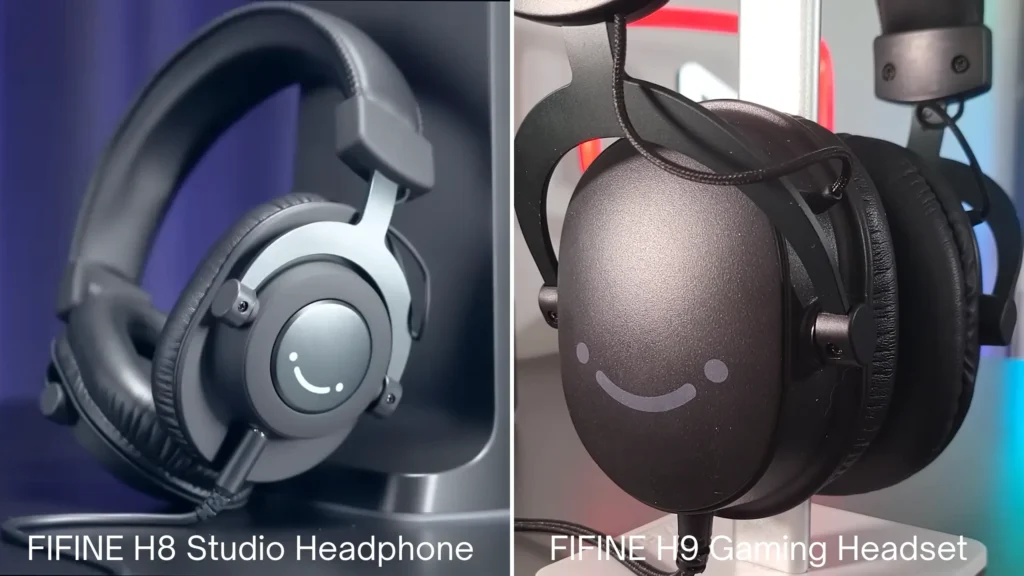
If you’re stuck between the H8 and a gaming headset, the difference comes down to what each tool is built to do. For studio headphones vs gaming headsets, here’s the quick version.
A studio headphone like the FIFINE H8 is built to be honest. It’s wired for low latency, leans toward a flatter response, so you hear your recording as it really is. That focus is the feature.
A gaming headset, like the FIFINE H9 gaming headset, flips the priorities. It bakes in a microphone, on-ear volume and mute controls, and spatial audio like 7.1 surround sound to widen the soundstage so you can place footsteps and gunfire. The tuning is tuned for immersion.
| FIFINE H8 (studio) | Gaming headset | |
|---|---|---|
| Built-in mic | No | Yes |
| Onboard controls | No | Usually |
| Connection | Wired, low latency | Often wireless / Bluetooth |
| Sound goal | Flatter, honest | Wide, immersive, bass-forward |
| Best for | Recording, monitoring, tracking | Gaming, voice chat, casual listening |
FIFINE H8 Alternatives
Made it this far and still unsure? Here are two we’d point you toward, depending on what the H8 is missing for you.
Audio-Technica ATH-M40x
Pros
- Tuned flat for accurate monitoring and mixing
- 90-degree swiveling, foldable cups, plus a carrying pouch
- Detachable cables and a screw-on 1/4″ adapter in the box
Cons
- Roughly triple the price of the H8
- Bass can read hot enough that mixers reach for calibration software
- Pads are denser, and the cups are heavier on the head
If you mix as well as track, the ATH-M40x is the safer reference. Its 40mm drivers, swiveling cups, and fold-flat design make it a more complete studio tool, and it travels properly. You’ll pay for it, and many engineers still pair it with SoundID Reference to flatten the low end, but it’s the obvious step up when the H8’s tuning and lack of portability hold you back.
Corsair HS80 MAX Wireless
Pros
- Built-in mic plus on-ear volume and mute controls
- Wireless and Bluetooth, with Dolby Atmos spatial audio
- Larger pads with more room around the ears
Cons
- Far pricier, sitting around $140
- Tuned for gaming immersion, not flat monitoring
- Overkill if all you do is track into an interface
If the H8’s missing mic and lack of controls are dealbreakers because you game or chat as much as you record, the Corsair HS80 MAX Wireless covers all of that with wireless freedom and an adjustable headband that the H8 can’t match. It’s a gaming headset first, so don’t buy it expecting a flat studio reference.
FIFINE H8 Review: Should You Buy It?
As a monitoring tool, the FIFINE H8 studio headphone does the important work: real-time, latency-free monitoring, a near-flat starting point, two useful coiled cables, and a light, padded fit you can wear for hours.
The compromises are real and predictable. Cups and ears can’t fix all people, and the warm tuning may need EQ adjustments for critical mixing. But if you’re recording vocals, voicing scripts, or launching a podcast and you want a dependable pair of monitors without the spend, the H8 earns its place on your desk. Although it’s not perfect, it’s worth for your desk.
FAQ
Are the FIFINE H8 good for mixing?
Not as your main mixing reference. The tuning leans warm with a strong low end, which is great for tracking but can mask detail when you’re balancing a mix. If you want to try, run an EQ or a calibration tool like Sonarworks SoundID Reference to flatten the response first.
Does the H8 come with a 1/4″ adapter?
It comes with a full 1/4″ cable. You get two coiled cables in the box: a 3.5mm-to-3.5mm for phones and tablets, and a 3.5mm-to-1/4″ for audio interfaces and other gear.
Can I replace the cables if one breaks?
Yes, easily. The cables detach at the left cup and aren’t proprietary, so a standard replacement works and costs very little.
Are they comfortable for long sessions?
For most people, yes. They’re light at around 212 grams without a cable, and the headband is well-padded. The clamp does grip firmly at first, so if it feels tight, stretch it over a pillow overnight to loosen the fit. Note that the ear openings run small, so larger ears or heads may find them snug.
Can I use them for gaming?
You can, and they sound fine for it thanks to that healthy low end. But they have no built-in mic and no onboard controls, so a dedicated gaming headset like the FIFINE H13 gaming headset will serve you better if gaming is your priority.
