
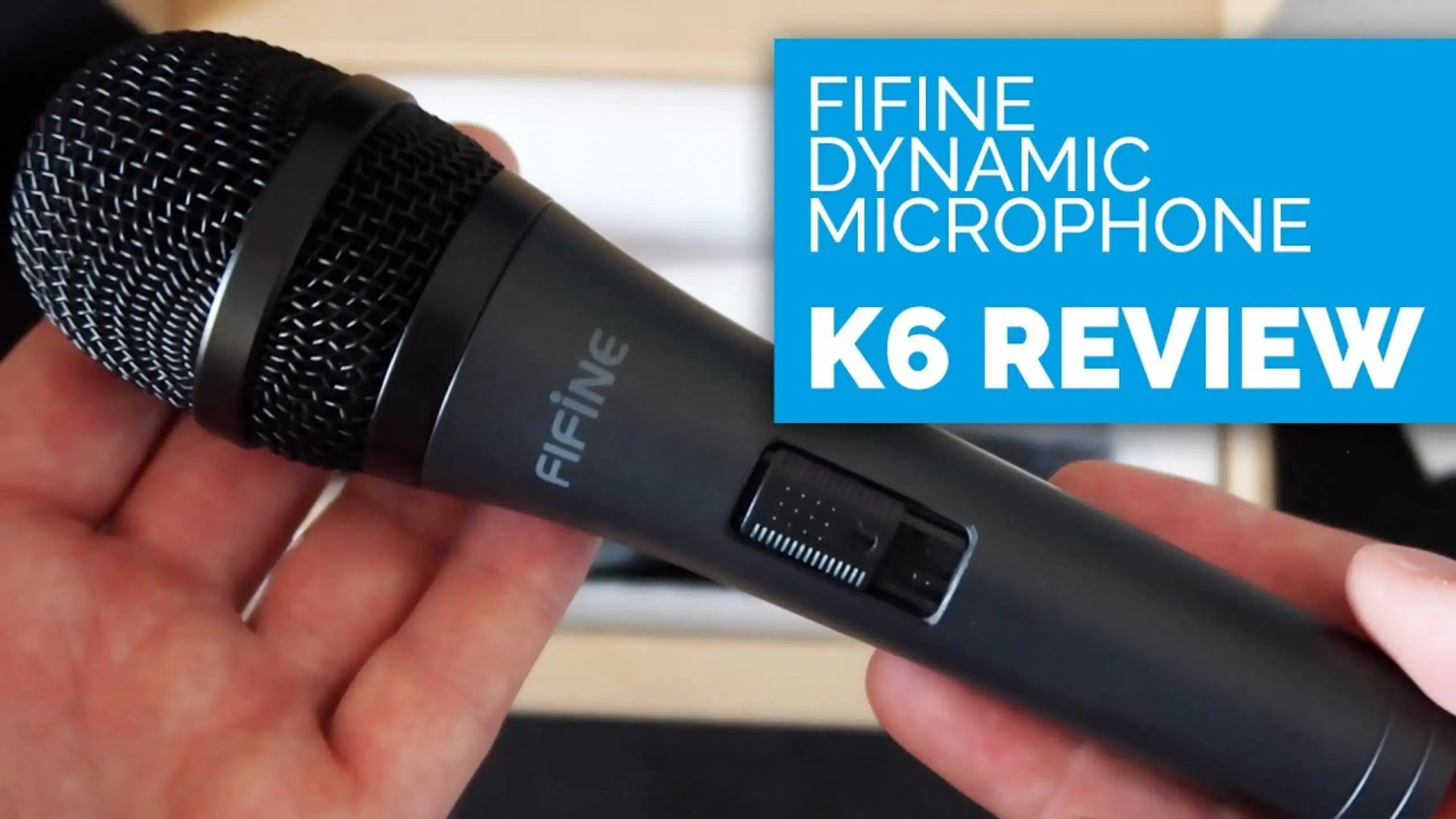
FIFINE K6 Review: The Budget Dynamic Mic for Karaoke and Speeches

For karaoke nights, speeches, or conference rooms, fifine K6 microphone is one of the easiest budget recommendations. This dynamic handheld microphone punches well above its weight with its metal body, zero setup, and a warm tilt. It has rough edges — a soft plastic switch, a consumer-grade cable — but they’re the kind of compromises you forgive at this price. Here’s what we found about the fifine k6 review.
FIFINE K6 Review at a Glance
| What we tested | Score |
|---|---|
| Sound quality | 8/10 |
| Build quality | 8/10 |
| Ease of use | 9/10 |
| In-box value | 7/10 |
| Value for money | 10/10 |
| Versatility | 7/10 |
| Overall | 8.5/10 |
Pros
- Sounds close to handheld mics that cost five times more
- Rugged full-metal body with real heft
- Built-in pop filter tames plosives and sibilance
- Plug-and-play — no phantom power needed
- Ships with a 14.8-foot cable in the box
- On/off switch is handy for events and mic handoffs
Cons
- The plastic slide switch doesn’t click into place
- Bundled cable ends in a quarter-inch jack, not XLR-to-XLR
- A warm mid-low lift means trained voices need EQ
- No case or clip in the box
Sound Quality — 8/10
This is where the K6 surprised everyone. Reviewer @Andyhhhdx read the same news paragraph into the K6 and a Sennheiser e815, using the same mixing-desk settings for both. He was genuinely surprised at how well the fifine K6 mic held up. He then took it live on Twitch, and viewers — with no idea which mic was which — called the fifine K6 crisper and clearer than the Sennheiser.
For voice — the job this mic exists to do — it’s clean, clear, and well. The K6 leans warm, boosting the mid-low frequencies for a bit of extra body. If you’re an untrained or casual singer, that lift is your friend — it fills out a thin voice and papers over rough edges.
If you’re a trained vocalist chasing a neutral, accurate capture, you’ll want to notch out some of that low-mid boom with EQ. It’s not a flaw so much as a personality, and it’s aimed at exactly the crowd this mic is built for.
Build & Design — 8/10
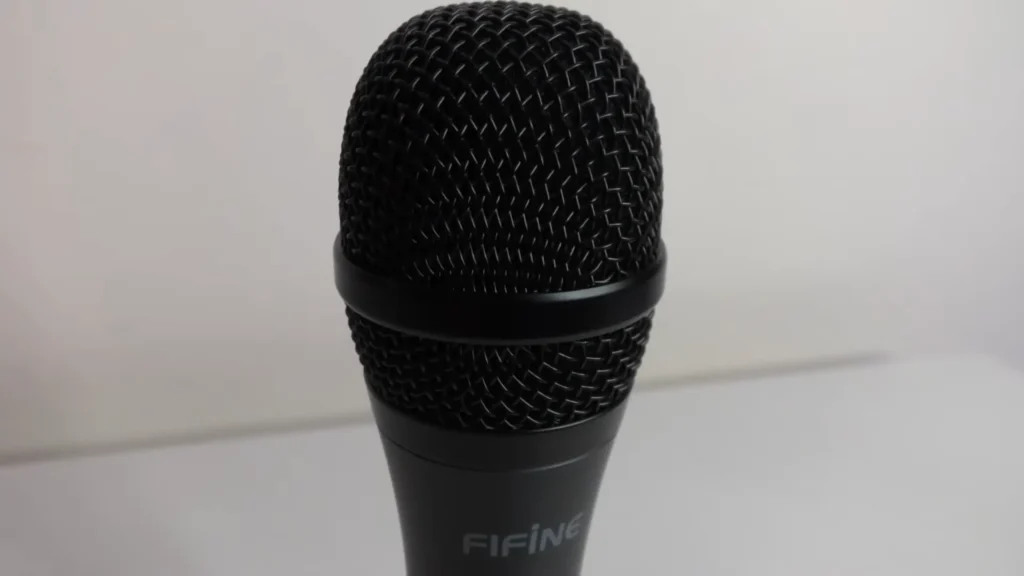
Pick the K6 up and the cheap-plastic worry disappears fast. It’s built from metal, the zinc-alloy body — with a metal mesh grille up top that hides a built-in pop filter. That filter is doing quiet work: it softens plosives and sibilance, so you’re not popping the mic on hard consonants.
Instead of the click button, the on/off switch is plastic and slides, which is easy to set up. Plus, the small bumps on the switch increase friction, making it easier to slide the switch. Nevertheless, some reviewers are worried about the long-term use and find the capsule threading a touch loose. But nothing here is a dealbreaker for a $20 mic.
Aesthetically, one reviewer flat-out preferred the K6’s look to his older Sennheiser. Take that as you will — but it’s telling that a budget mic held its own on the shelf, not just in the mix.
Ease of Use & Setup — 9/10
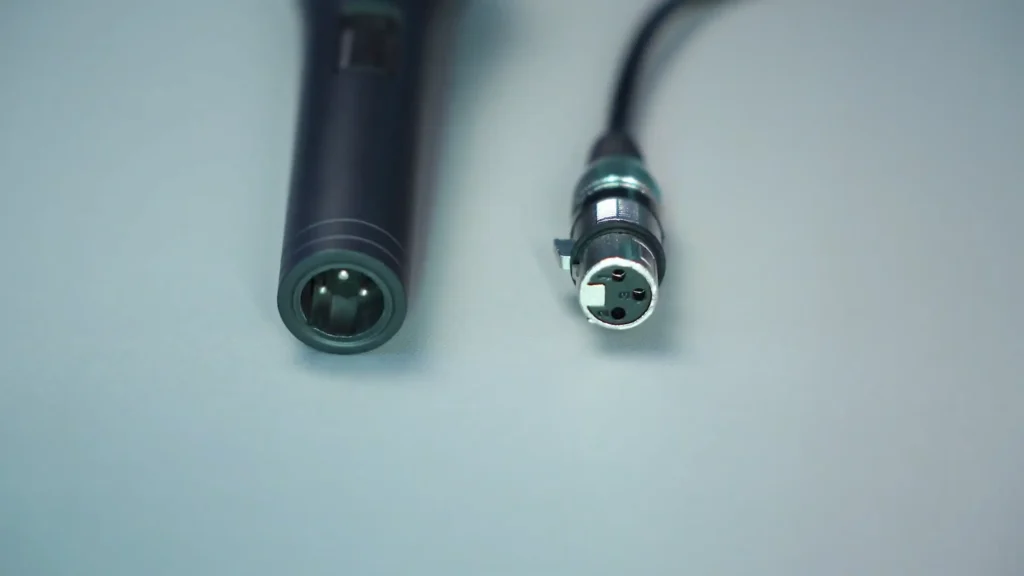
This is the K6’s quiet strength. Because it’s a dynamic mic, it needs no phantom power — a genuine relief if you’ve ever fought with a condenser and an interface that won’t cooperate. You plug the female XLR end of the cable into the base of the mic, run the other end to your mixer or interface, and you’re recording. That’s why it’s great for stage use.
The cardioid pickup pattern is the other half of the story. It hears what’s in front of it and rejects most of what’s beside and behind it, which keeps room noise and feedback down. The practical version: point it at your mouth, and you get the full, rich signal; let it drift off to the side, and the sound thins out.
For a first-time buyer, “plug in, and it works” is worth a lot, and the K6 delivers it.
What’s in the Box — 7/10
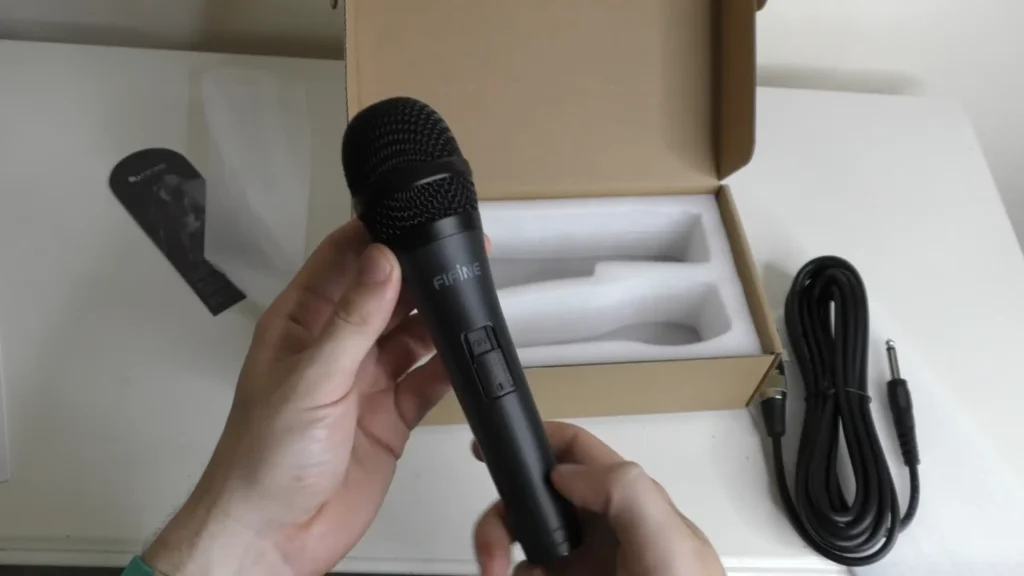
Open it up, and you get the mic, a thank-you card with the brand’s contact and social links, a genuinely detailed user guide, and a 14.8-foot cable. Getting a cable at all is a small win. There’s also a two-year extended warranty available if you register online within 90 days of purchase.
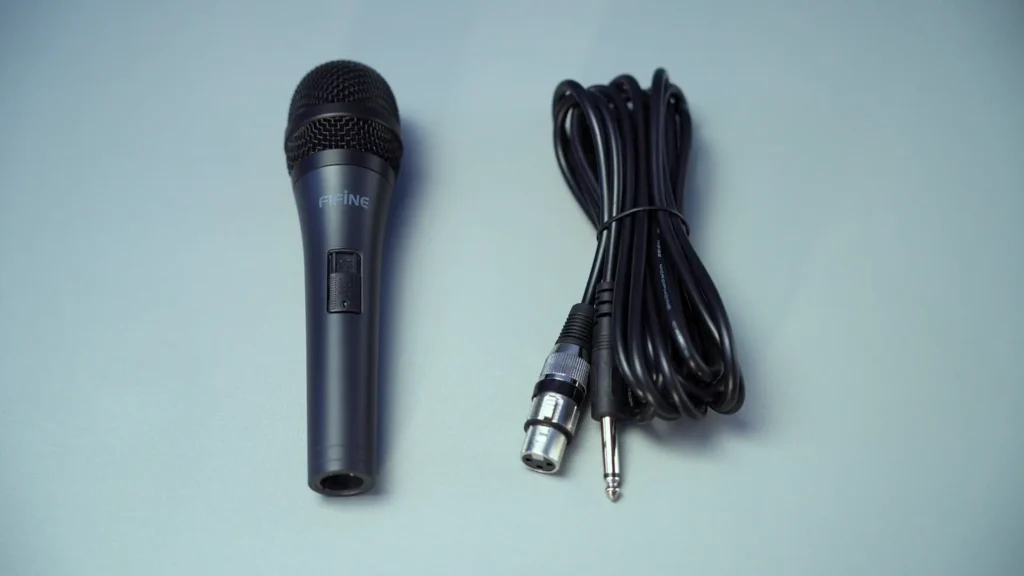
The asterisk is the kind of cable. It’s XLR to quarter-inch, not XLR-to-XLR. For plugging into a home interface, a small mixer, or an amp, that’s fine. For a professional stage rig, you’ll want to swap in a proper XLR-to-XLR run.
So: a useful bundle for the target buyer, a starter cable for everyone else.
Value for Money — 10/10
Across every review, the money question got the same answer. @Andyhhhdx, after ranking fifine K6 against a mic five times dearer, said outright that you won’t find a $20 mic that performs better than this one.
Put the K6 against the field, and the pitch writes itself: full-metal build, a bundled cable, a built-in pop filter, and voice quality that trades blows with $100 mics. The “perfect” isn’t the assignment at this price. “Nothing better for the money” is, and the K6 clears that bar.
Versatility — 7/10
As a vocal mic, the K6 covers a lot of ground: karaoke, solo live performance, spoken word, presentations, and phone or video calls all sit comfortably in its wheelhouse. That’s its home turf, and it’s very good there.
Push past the voice, and the picture gets more honest. Reviewer @PatFlanigan put fifine K6 on an electric guitar cab and a drum kit for a full home demo. His verdict: it’ll do the job if it’s the only mic you own and you’re tracking a quick demo, but nobody’s choosing it as a dedicated instrument mic. It’s a “make it work” tool for instruments, not a first pick.
Who Is the fifine K6 Microphone For?
| If you’re a… | Is it for you? | Why |
|---|---|---|
| Karaoke or first-time singer | Yes | The warm mid-low lift flatters an untrained voice, and it’s forgiving to hold |
| Speaker, presenter, or event host | Yes | The on/off switch makes mic handoffs clean, and the included cable is plug-ready |
| Budget podcaster or streamer | Yes | Clear voice pickup and no phantom power to worry about |
| Home recordist tracking a quick demo | Mostly | Great on voice, usable on instruments in a pinch |
| Touring live vocalist | Not quite | You’ll want a firmer switch and a pro XLR-to-XLR cable |
| Trained singer chasing a neutral capture | Not quite | The mid-low boom means EQ work to tame the color |
fifine K6 Handheld Microphone Alternatives
Want more considerations? Here are three mics you can try beside the fifine k6 handheld microphone:
Behringer Ultravoice XM8500 (~$26)
The K6’s most direct rival — same price bracket, same job. The Behringer feels a touch sturdier and ships in a hard case with a mic clip, though its bundle skips a usable cable. A fair coin-flip; pick on whether you value the K6’s cable or the Behringer’s case.
Shure SM58 (~$100)
The industry standard. It’s the neutral, road-tough workhorse that live engineers trust, and if you’re gigging regularly it’s the safer long-term buy. But in casual listening tests the K6 held its own, and note that some SM58 models skip the on/off switch the K6 includes.
Sennheiser e815 (~$100)
A reference-grade vocal mic in the same tier as the SM58. In one test the K6 matched or even beat it in a blind live comparison — a remarkable result at the price gap, and the clearest sign of how far $20 now stretches.
What Makes a Good Handheld Microphone?
What actually a good handheld microphone features? A few things separate a mic you’ll keep from one you’ll regret:
- Dynamic vs. condenser. Dynamic mics like the K6 are rugged, feedback-resistant, and need no phantom power — ideal for stage, karaoke, and untreated rooms. Condensers are more sensitive and detailed but fussier to set up.
- Cardioid pickup pattern. This heart-shaped pattern captures what’s in front and rejects the sides and rear, which cuts room noise and feedback. The trade-off: you have to aim it at your mouth to get the full sound.
- A metal body. Weight and metal construction usually signal a mic that survives being dropped, bumped, and hauled around. Featherweight plastic is a warning sign.
- A built-in pop filter. It softens the hard “p” and “b” pops and harsh “s” sounds before they hit your recording.
- An on/off switch — if you want one. Useful for presentations and mic handoffs; a liability for a live singer who could knock it mid-song. Know which camp you’re in.
- A cable in the box. Cheap on paper, annoying to discover you’re missing. And check the connector: XLR-to-XLR for pro gear, XLR-to-quarter-inch for many home setups.

Final Verdict on fifine K6 Review
For around $20, you get a metal-bodied dynamic mic with a built-in pop filter, a cable in the box, and voice quality that trades blows with mics costing five times as much. For karaoke, speeches, and first-time recording, it’s an easy yes.
Some small stuff held it back: a plastic switch that slides instead of clicks, a quarter-inch cable, and a warm low-mid tilt. None of it is a dealbreaker for a karaoke singer, speaker, presenter, or budget podcaster. Ready to hit record? Grab the fifine K6 handheld microphone now.
FAQ
Does the FIFINE K6 need phantom power?
No. It’s a dynamic mic, so you plug it in and go — no 48V required.
What’s in the box?
The K6 mic, a 14.8-foot XLR-to-quarter-inch cable, a detailed user guide, and a thank-you card with the brand’s contact details.
Is the FIFINE K6 good for karaoke?
Yes — it’s arguably the best fit. Its warm mid-low tilt flatters casual and untrained voices, which is exactly what a karaoke singer wants.
Can I use it for singing and recording vocals?
Absolutely for casual and untrained voices. Trained vocalists after a neutral sound can still use it, but should expect to EQ out some of the low-mid warmth.
Can I plug it straight into a professional stage rig?
You can, but swap the bundled quarter-inch cable for a proper XLR-to-XLR run first. The included cable is aimed at home interfaces, mixers, and amps.
