

Pop Filter vs. Foam Cover: Do You Really Need One?

A little accessory, like a pop filter or foam cover, will help to improve your recording quality. A pop filter and a foam cover deal with the same enemy, blasts of air slamming into your microphone’s diaphragm, but they tackle the problem with completely different strategies, and choosing wrong can cost you clarity, tone, or both.
Pop filter vs foam cover? After a long test and analysis, we can say that the pop filter takes the overall win for most recording scenarios. Nonetheless, a foam cover isn’t bad; it’s just a different tool for a different job. Follow us to see how they work, how they measure up against the specs that matter, and who should buy what.
Head to Head
Pop Filter
Foam Cover (Windscreen)
Plosive Reduction
Sound Transparency
Ease of Setup
Portability
Value for Money
9 / 10
9.5 / 10
7 / 10
5 / 10
9 / 10
Plosive Reduction
Sound Transparency
Ease of Setup
Portability
Value for Money
6.5 / 10
6 / 10
9.5 / 10
9 / 10
8 / 10
The Basics: What is a Pop Filter & a Foam Cover?
Pop Filter
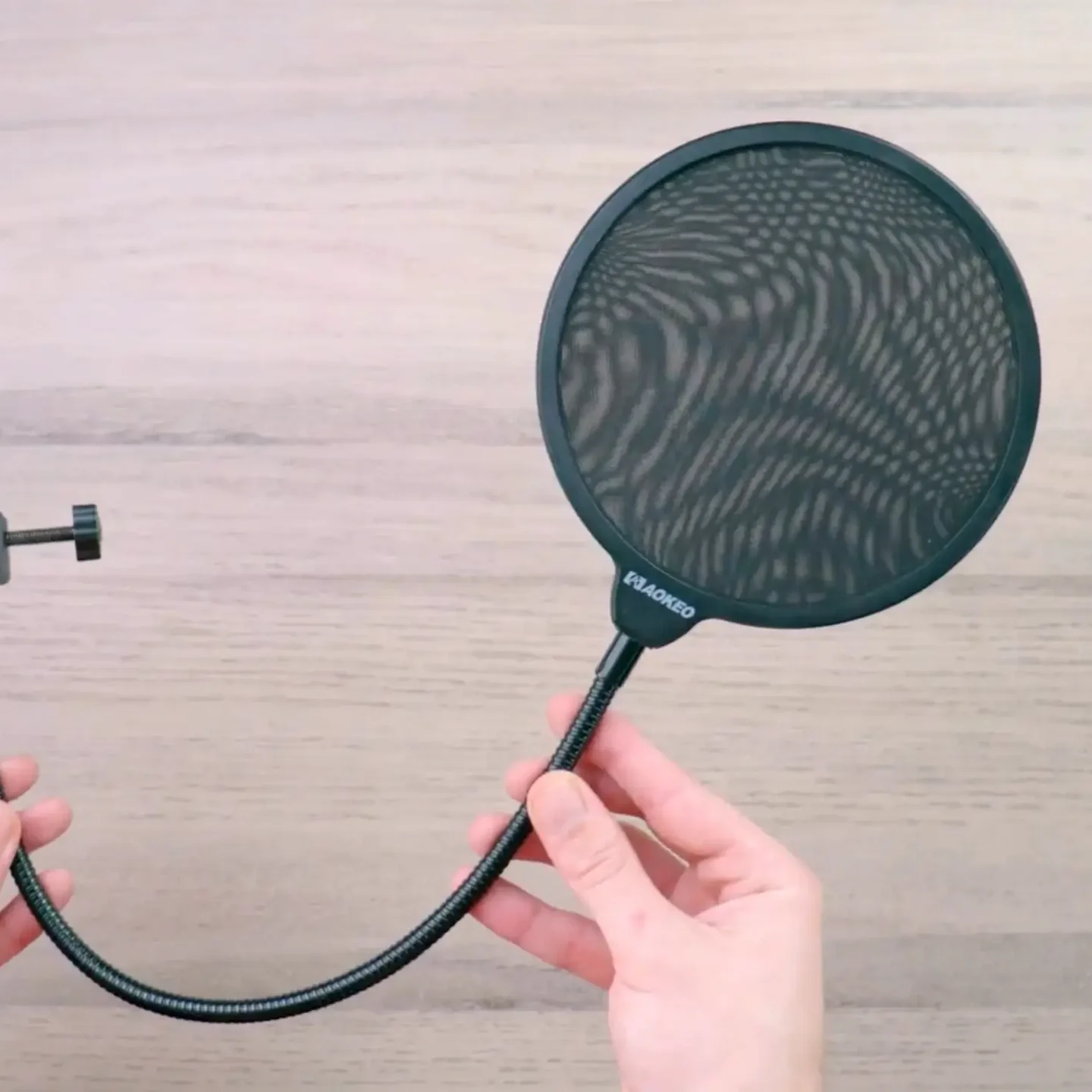
A pop filter is a screen that is mounted on a gooseneck arm that clamps to your mic stand. It sits a few inches in front of your microphone, directly between your mouth and the capsule.
Its job is one thing: intercept the burst of air you produce when you pronounce hard consonants like “P” and “B” (called plosives) and either diffuse that air through mesh layers or deflect it downward away from the diaphragm.
Common Type of Pop Filter
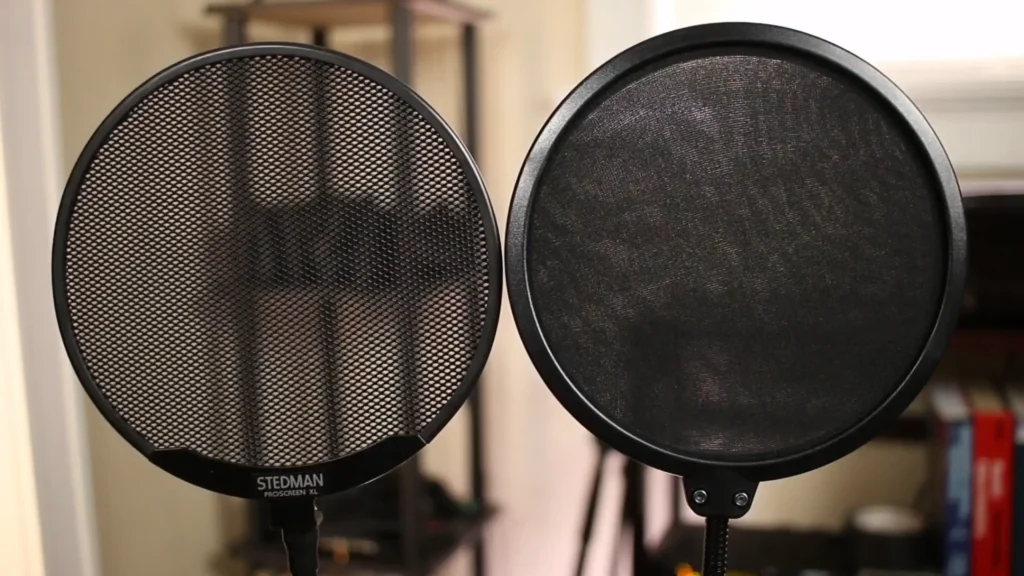
- Nylon pop filters use a dual-layer fabric design. Air hits the first layer, slows down, passes through the second layer, and arrives at the capsule with far less force.
- Metal pop filters, like the well-known Stedman proscreen line, take a different approach entirely. Their stamped metal mesh redirects air downward rather than absorbing it. The air exits below the filter, not behind it.
Both styles get the job done, but metal versions tend to edge out nylon in head-to-head plosive tests.
Foam Cover (Windscreen)
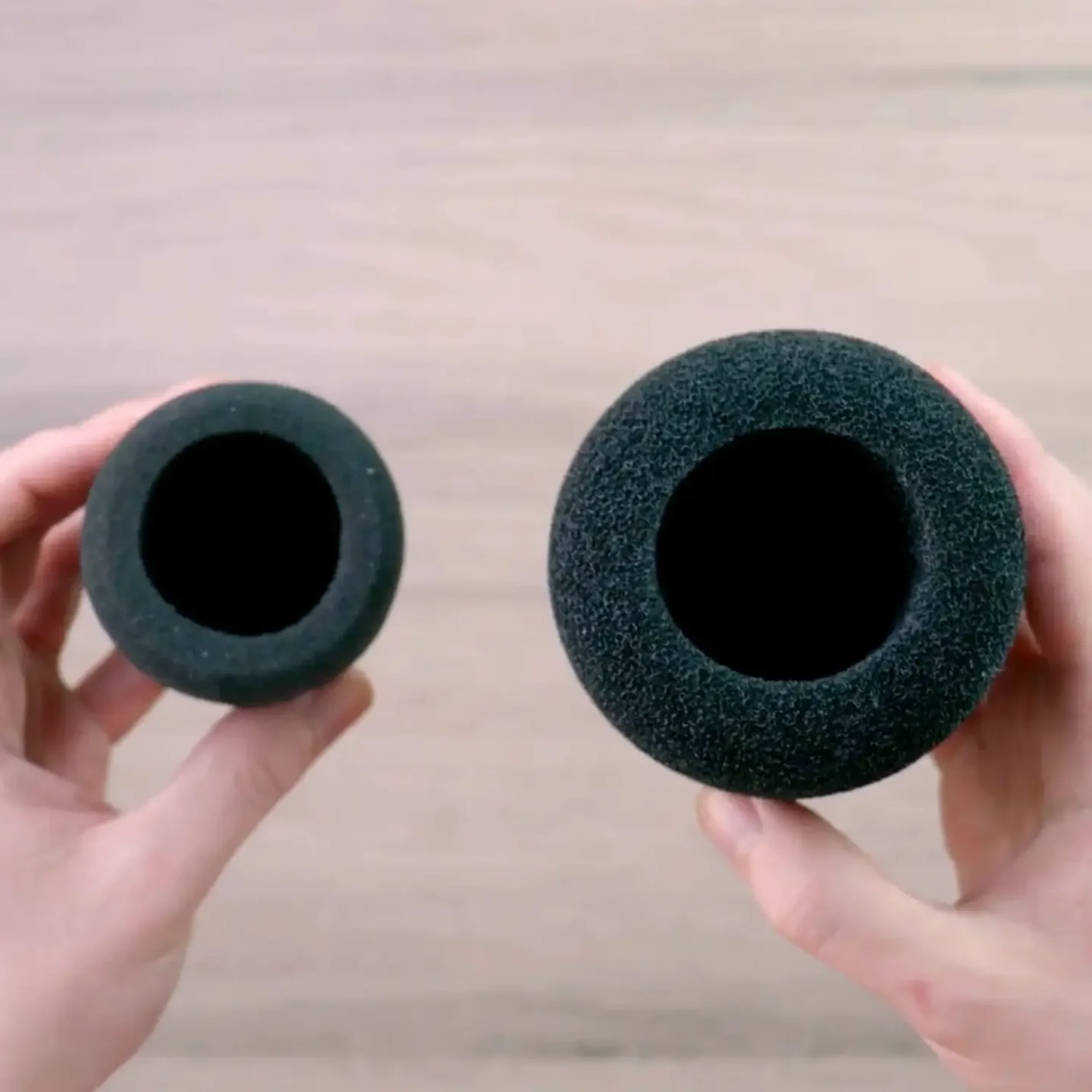
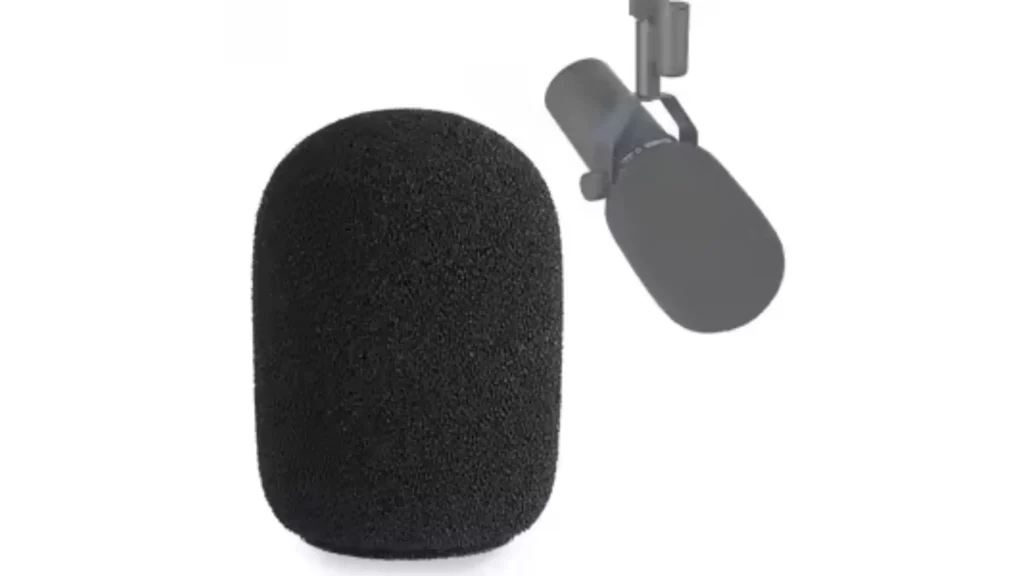
A foam cover, also called a windscreen, wind foam, or windsock, is a snug-fitting piece of open-cell foam that slides directly over the microphone capsule.
It wraps the diaphragm in 360 degrees of protection, absorbing air pressure from any direction before it reaches the element. Foam covers are typically quarter-inch to half-inch thick and custom-sized to fit specific microphone models.
Because foam covers the entire capsule, they’re particularly useful outdoors. They also double as physical protection for the mic head during transport or live events. However, as the foam sits right on top of the diaphragm, it inevitably absorbs some high-frequency energy along with the wind.
Measurements: How They Stack Up
| Measurement | Pop Filter | Foam Cover |
|---|---|---|
| Plosive Reduction | Excellent — deflects or diffuses targeted air blasts directly | Moderate — absorbs air but can still let strong plosives through |
| Frequency Impact | Minimal to none — mesh is acoustically transparent | Noticeable roll-off above 8–10 kHz |
| Wind Protection | Poor — only blocks air from one direction | Strong — 360° coverage handles gusts from any angle |
| Size & Footprint | Large — gooseneck + 4–6″ screen can block your line of sight | Compact — adds minimal bulk to the mic itself |
| Mic Compatibility | Universal — fits any mic with a stand | Model-specific — must match your mic’s diameter |
| Price Range | $10–$100 (nylon cheapest, metal mid-range, premium metal at top) | $5–$60+ (generic foam cheap, brand-specific covers pricier) |
Plosive Reduction — Winner: Pop Filter
This is the core matchup, and the pop filter wins decisively. In waveform comparison tests across multiple reviewers, like @Podcastage, metal mesh pop filters (particularly Stedman models) eliminated plosive spikes almost entirely, while dual-layer nylon filters came in a close second.
Foam covers reduced plosives but couldn’t match dedicated pop filters. The foam simply absorbs rather than redirects, and heavy “P” sounds can still punch through a quarter-inch of foam.
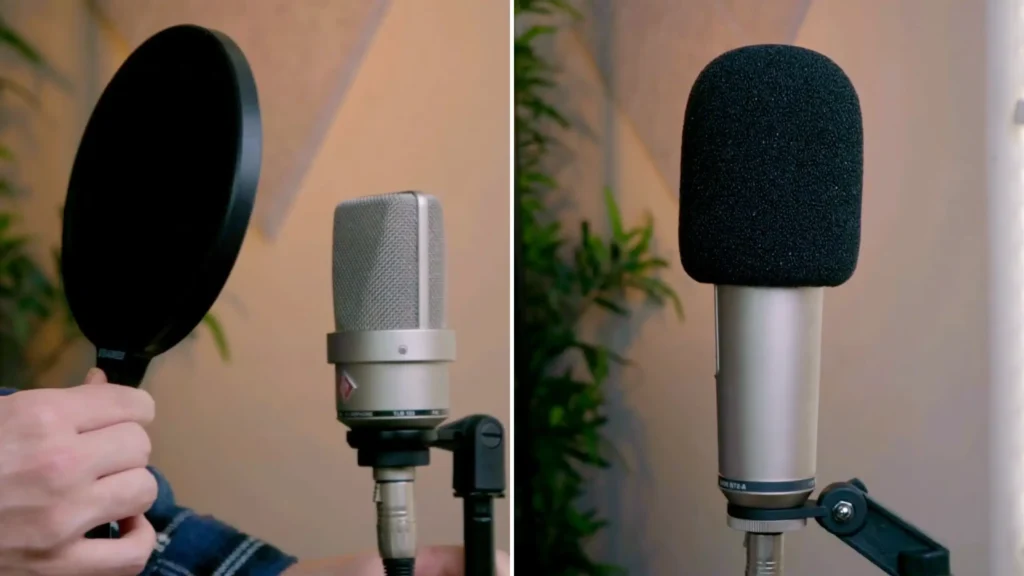
Sound Transparency — Winner: Pop Filter
Pop filters are thin enough that sound frequencies pass through essentially unaltered. Whether you use nylon or metal mesh, your recording’s frequency response stays flat.
Foam covers, like Neumann Foam Windscreen, roll off high frequencies — typically in the 8–10 kHz range. Although Neumann says it is “acoustically transparent,” making it sound the same is just “impossible,” as it always colors the sound to some degree, @Home Studio Pro puts it.
If you need every ounce of brightness and presence from your mic, a foam cover works against you. That said, if your mic sounds overly bright or sibilant, a foam cover can function as a subtle EQ adjustment without touching any software settings.
Wind Protection — Winner: Foam Cover
Pop filters only block air from one direction — the direction you’re speaking from. Take your setup outside, and a crosswind will blow right past the pop filter and straight into the capsule. Foam covers wrap the entire diaphragm, stopping gusts from every angle. For outdoor broadcasting, field interviews, or any location recording with ambient wind, a foam cover is the only viable option of the two.
Size and Visual Footprint — Winner: Foam Cover
If you’re on camera, a 6-inch pop filter on a gooseneck arm can block half your face. Streamers, YouTubers, and video podcasters often prefer the low-profile look of a foam cover (or a small clip-on windscreen). It sits on the mic and stays out of the frame. But if you don’t need to appear on camera, the pop filter’s visual bulk doesn’t matter. It depends on where you use it.
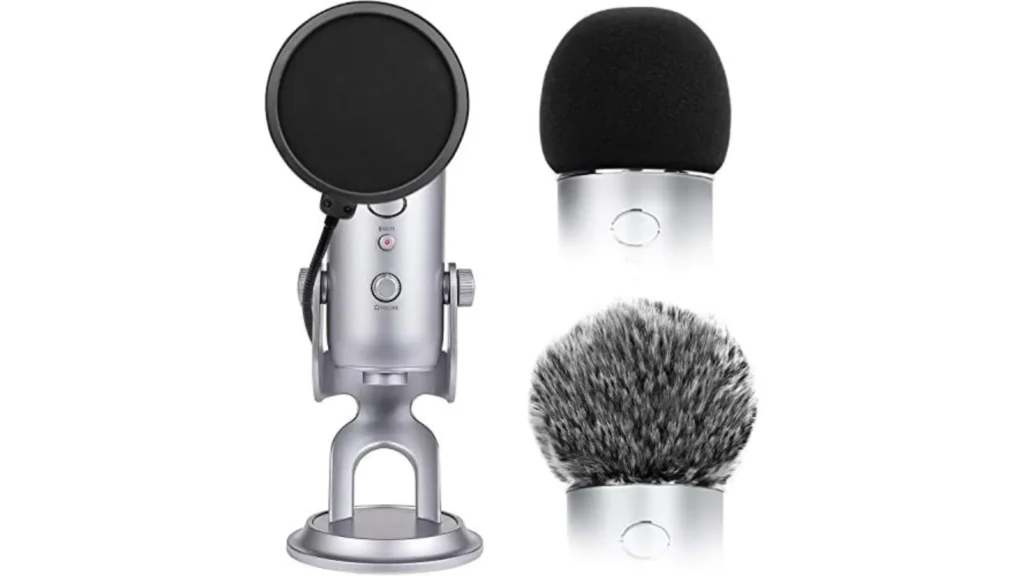
Compatibility — Winner: Pop Filter
Pop filters clamp to any mic stand or boom arm and sit in front of any microphone. Buy one and use it across your entire mic collection. Foam covers need to match your specific microphone’s diameter and shape. Different shapes of your mics need different covers. This makes pop filters a more flexible investment.
Overall measurements winner: Pop Filter. It leads in the two categories that matter most for audio quality — plosive reduction and sound transparency. The foam cover takes wind protection and compactness, which are important but situational.
Pop Filter vs Foam Cover: How to Pick
- Get a pop filter if you’re a home studio vocalist, voiceover artist, or podcaster recording indoors in a controlled space. You want the cleanest possible sound with zero frequency coloring, and you don’t mind a gooseneck arm in your setup. If you own multiple mics, one pop filter covers them all.

- Get an afoam cover if you’re a streamer, YouTuber, or on-camera podcaster who needs plosive protection while showing your face. It’s also the right call if you record outdoors, do field interviews, or just want a grab-and-go solution that slides onto your mic in two seconds.
- Get both if you split time between studio vocal sessions and on-camera content. Use the pop filter when sound quality is the priority, and swap to the foam cover when you need to stay compact and visible on screen.
Other Mic Accessories Worth Knowing About
If pop filters and foam covers aren’t your only options. Here are a few related accessories that solve different problems:
| Accessory | What It Does | Best For |
|---|---|---|
| Clip-on windscreen | Mounts directly to the mic with a metal/mesh front and foam backing — a compact hybrid of pop filter and foam cover | Streamers and podcasters who want plosive protection without a gooseneck in the frame |
| Dead cat / furry windshield | Faux-fur cover that breaks up air turbulence better than foam alone | Outdoor field recording, film sets, location interviews |
| Reflection filter/isolation shield | Absorbs room reflections around the mic — tackles acoustics, not plosives | Untreated home studios with boxy or reverberant sound |
| Mic technique (free!) | Angle the mic 45° so you speak across the capsule instead of into it | Anyone looking to reduce plosives with zero gear and a little practice |
Pop Filter vs Foam Cover: Which is Right for You?
The pop filter is the overall winner for anyone recording in a controlled indoor environment. It handles plosives better, preserves your mic’s full frequency response, and works with any microphone you own. Nevertheless, a foam cover is better for recording outdoors, streaming on camera, or needing a compact solution that won’t obstruct your face.
Some creators even use both — a foam cover for day-to-day streaming and a pop filter when they switch to dedicated vocal or voiceover sessions. But the real choice is to match the tool to the task.
FAQs
Can I use both a pop filter and a foam cover at the same time?
You can, and some creators do. Stacking both gives you plosive protection from the pop filter, plus additional wind and ambient noise reduction from the foam. Just be aware that the combined setup will likely cut more high-frequency detail than either accessory alone.
Do pop filters fit all microphones?
Yes. Pop filters mount to your mic stand or boom arm with a clamp — they don’t attach to the microphone itself. This makes them universally compatible regardless of mic size or brand. Foam covers, on the other hand, need to match the specific diameter of your microphone.
Will a foam cover damage my microphone?
No. Foam covers are soft, lightweight, and designed to slip on and off without contacting the diaphragm. In fact, they add a layer of physical protection against bumps and dust. Just make sure you’re using the correct size so the fit is snug but not overly tight.
How far should a pop filter be from the microphone?
A good starting point is about two to four inches from the mic capsule. Too close and plosive air can still push through the mesh. Too far and you lose effectiveness. A closed-fist distance between the filter and the mic is a reliable rule of thumb.
Can good mic technique replace both accessories entirely?
To a degree, yes. Speaking across the microphone at a 45-degree angle rather than directly into it reduces plosive impact most. For most people, especially anyone recording solo without a sound engineer monitoring in real time, a pop filter is cheap insurance against ruined audio.
