

Condenser vs. Dynamic Microphone: Which Should You Choose?

Condenser vs dynamic microphone? It might be the first struggle when you want to get your first mic. Both mic types look similar on the outside, but they capture the sound and performance your sound differently.
How to pick the right one? Show before exploring this guide. We’ll compare dynamic and condenser microphones across the dimensions you may care about, from the pros and cons to the ideal scenarios. Also, the ribbon microphones are a third option you may feel interested in.
Quick Comparison Table
| Dimension | Dynamic Microphone | Condenser Microphone |
|---|---|---|
| How it works | Magnetic induction (moving coil) | Variable capacitance (charged plates) |
| Requires phantom power | No | Yes |
| Sensitivity | Lower — needs more preamp gain | Higher — needs less gain |
| Frequency response | Narrower, often colored | Wider, more linear |
| Transient response | Slower (heavier diaphragm) | Faster (lighter diaphragm) |
| Max SPL handling | Excellent — built for loud sources | Good, but can clip without care |
| Durability | Very rugged | Handle with care |
| Self-noise | None (passive circuit) | Some (active circuit) |
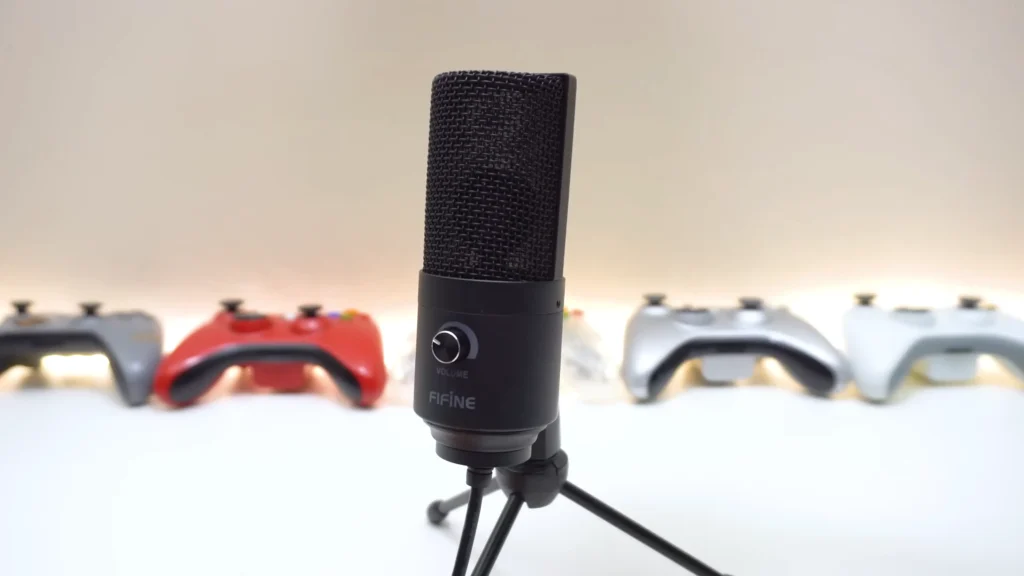
| Common uses | Live vocals, guitar amps, drums, podcasting, streaming | Studio vocals, acoustic instruments, drum overheads, room mics |
What Is a Dynamic Microphone?
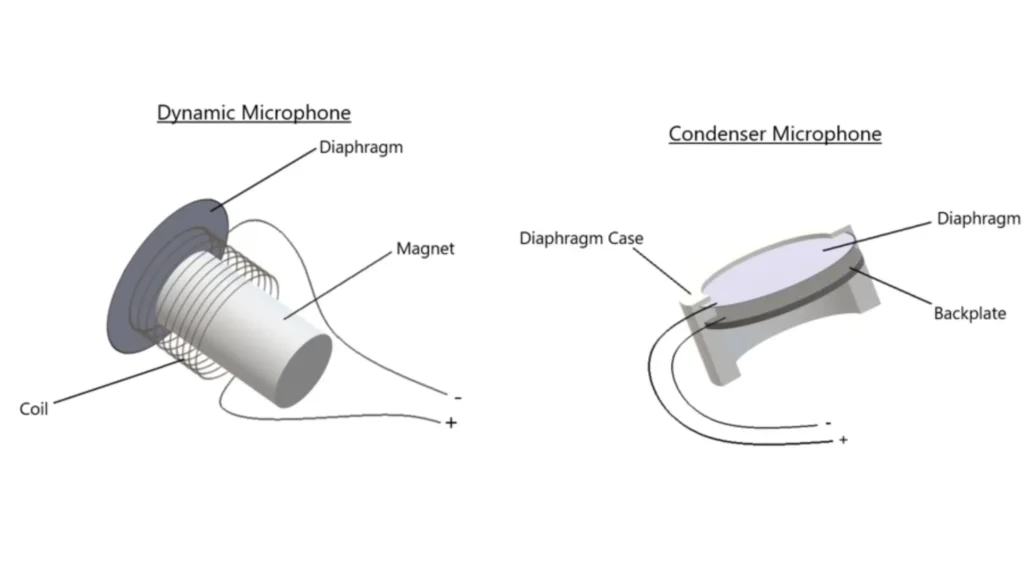
A dynamic microphone, more precisely called a “moving coil” microphone, converts sound into an electrical signal using magnetic induction. Inside the mic capsule, a thin diaphragm is attached to a small coil of wire suspended in a magnetic field. When sound waves hit the diaphragm, the coil moves within that magnetic field and generates an electrical current. That current becomes your audio signal.
Most dynamic mics also include a transformer to boost the signal, balance the output, and set the output impedance. They also have a pronounced “presence peak”, a boost in the upper midrange that helps vocals cut through a mix.
Pros
- Built to survive. They feature a simple and sturdy internal design. You can drop it, kick it across a stage, and it still sounds the same.
- Handles loud sources without flinching. The heavier diaphragm-and-coil assembly can absorb high sound pressure levels without distorting.
- Naturally directional. Most dynamic mics use cardioid, supercardioid, or hypercardioid pickup patterns. They focus tightly on what is in front of the capsule.
- No phantom power needed. Plug in and go. One less thing to worry about.
- Low handling noise. If you’re holding the mic (live vocals, interviews, run-and-gun recording), dynamics keep rumble and bumps to a minimum.
Cons
- Less sensitive. You’ll need to crank your preamp gain higher to get the same signal level as a condenser, and that extra gain can introduce preamp noise.
- Narrower frequency response. Dynamics often roll off the extreme highs and lows, which can sound warm and musical but also less detailed.
- Slower transient response. The heavier diaphragm assembly can’t react as quickly to sudden changes in sound pressure. Delicate details may get slightly smoothed over.
What Is a Condenser Microphone?
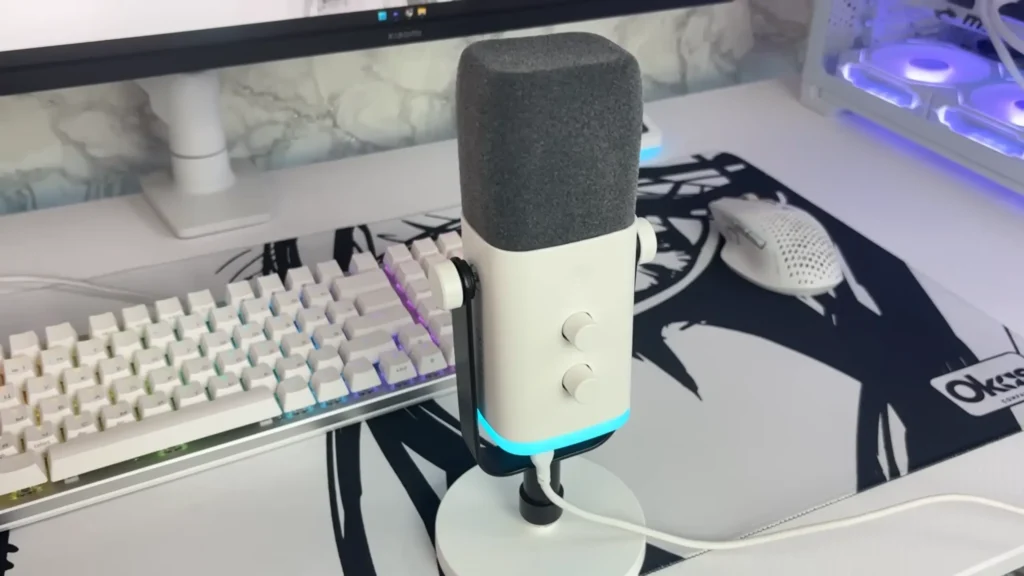
A condenser microphone, also called a capacitor microphone, uses variable capacitance to convert sound into voltage. Two thin metal plates sit close together inside the mic capsule, forming a capacitor.
A small voltage is applied to those plates via phantom power (typically 48V from your audio interface, mixer, or preamp). One plate is fixed; the other acts as the diaphragm. When sound waves move the diaphragm, the distance between the plates changes, creating a fluctuating electrical current. An internal amplifier, either FET- or tube-based, boosts the signal before it reaches the output.
Large-diaphragm condensers (think Neumann U87 or AKG C414) are the studio standard for vocals. They make voices sound polished and present. In contrast, small-diaphragm condensers excel at capturing instruments with precision, such as acoustic guitar, piano, strings, and drum overheads.
Pros
- Higher sensitivity. Condensers pick up quieter sounds with less preamp gain. That means a cleaner signal chain and lower overall noise in many cases.
- Wider, more linear frequency response. You get a more accurate representation of the source, from the lowest rumble to the airiest highs.
- Faster transient response. The lighter diaphragm reacts quickly to sudden changes in sound pressure, capturing the snap like a pick on a string with more precision.
- Multiple polar pattern options. Some condenser mics let you switch between cardioid, omnidirectional, and figure-8 patterns. They are more versatile across different scenarios.
- Two flavors to choose from. Small-diaphragm condensers (“pencil mics”) deliver neutral, accurate sound. Large-diaphragm condensers add a bigger, more characterful quality that flatters vocals.
Cons
- Requires phantom power. Without 48V from your interface or preamp, the mic won’t work.
- Less durable. Drop a condenser mic, and you could permanently alter its sound. The delicate capsule and active electronics need careful handling.
- Picks up everything. That sensitivity cuts both ways. In an untreated room, a condenser will capture the slight noise, like keyboard clicks, air conditioning hum, or traffic noise.
- Can distort with very loud sources. A loud sound might cause clipping. You’ll need to manage mic distance and input levels carefully.
Condenser vs Dynamic Microphone: Key Differences
1. How They Work
The core engineering difference, moving coil vs. charged plates, creates a cascade of practical differences.
A dynamic mic‘s heavier diaphragm assembly needs more sound pressure to get moving, which is why it handles loud sources so well but requires more preamp gain for quieter ones. A condenser‘s lighter diaphragm responds to the faintest vibrations, giving you detail and speed but also picking up sounds you might not want.
Mini verdict: For loud, close-miked sources, reach for a dynamic. For detail, nuance, and accuracy, a condenser wins.
2. Noise and Signal-to-Noise Ratio
Many people assume dynamic mics are “quieter” because they’re less sensitive. But sensitivity and noise aren’t the same thing.
The signal-to-noise ratio between your voice and the ambient noise in your room is fixed. It doesn’t change based on mic type. When you use a dynamic mic, you need to crank the preamp gain higher to match the same signal level a condenser achieves. That extra gain amplifies preamp noise right along with your voice.
In a test by @Randy Rektor, he tested the output levels of condenser vs dynamic microphones, the Maono PD100 XLR dynamic mic, UA SP1 condenser mic, Shure SM58 dynamic mic, and Peluso P-12 condenser mic. It shows nearly identical ambient noise pickup, whether dynamic or condenser. That said, the condenser performs slightly better because it needs less gain to reach the same level.
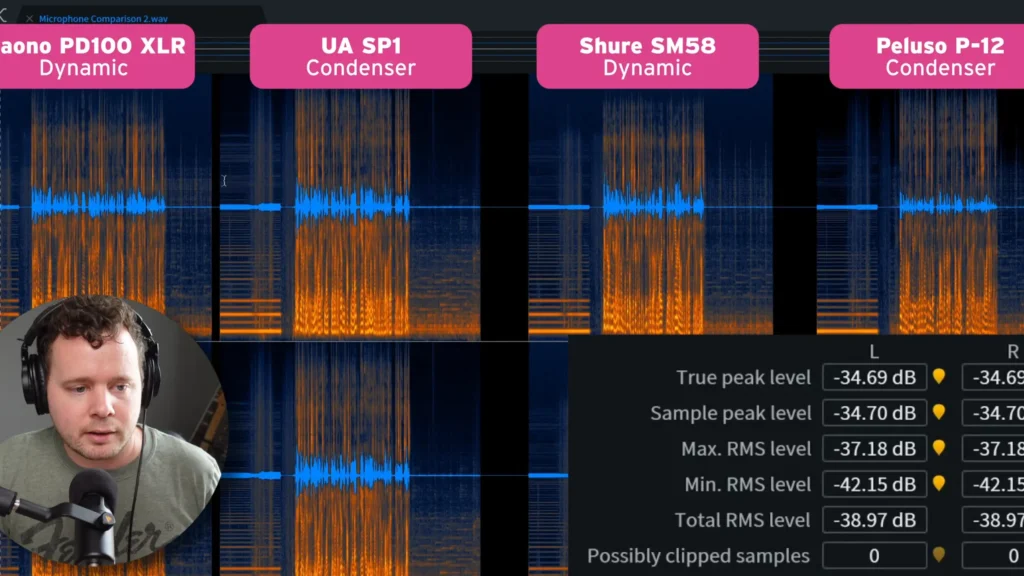
The real tool for fighting background noise? Polar pattern. A cardioid or hypercardioid mic rejects sound from behind and to the sides. That’s what actually reduces environmental noise in your recordings.
Mini verdict: Choose based on polar pattern first, then consider sensitivity, gain requirements, and your preamp’s quality.
3. Durability and Build
Dynamic mics are tough. The simple mechanical design, such as coil, magnet, and diaphragm, can survive touring, gigging, and general abuse. Condenser mics, with their delicate capsules and active electronics, demand more careful handling and storage.
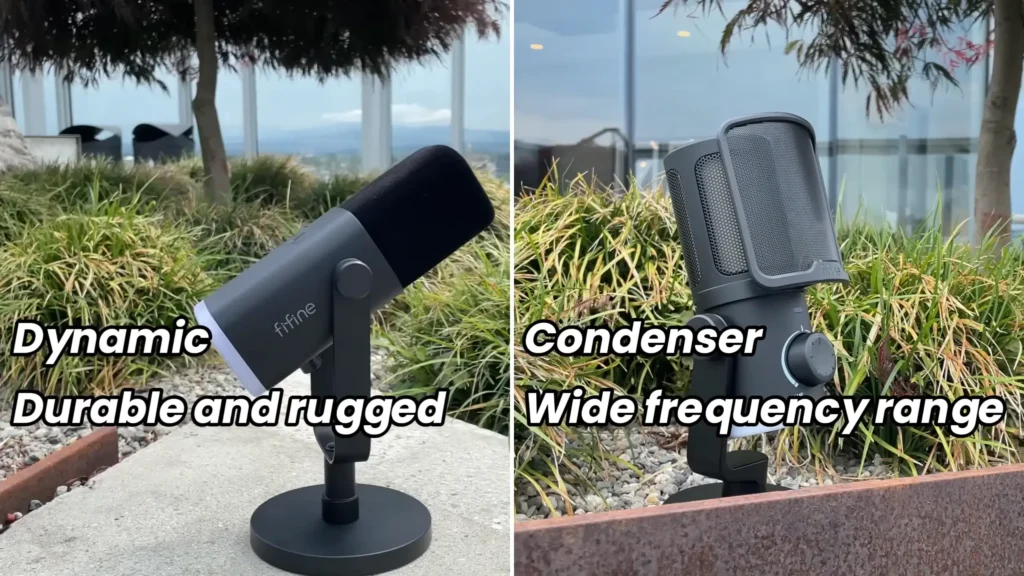
Mini verdict: If the mic will be handheld, transported frequently, or used in unpredictable environments, a dynamic is the safer bet.
4. Frequency and Transient Response
Condensers generally offer a wider, flatter frequency response and react faster to transient peaks. This makes them better at faithfully reproducing the full character of a sound source.
Dynamics tend to color the sound, rolling off highs, smoothing transients, which can actually be desirable for sources that benefit from a warmer, less detailed treatment.
Mini verdict: Need accuracy? Go condenser. Want character and controlled warmth? A dynamic can deliver that naturally.
5. Price and Value
At the entry level, dynamic mics tend to offer more bang for your buck. A $100 dynamic like the SM58 remains a go-to mic for professionals decades after purchase. A $100 condenser often gets replaced once you upgrade the rest of your signal chain.
Mini verdict: If budget is tight, a quality dynamic mic will serve you longer and in more situations than a budget condenser.
When to Use a Dynamic vs. a Condenser
| Scenario | Best Choice | Why |
|---|---|---|
| Live performance | Dynamic | Handles high SPLs, survives stage abuse, rejects monitor bleed |
| Studio vocals | Condenser (large-diaphragm) | Captures full frequency range and vocal nuance in a treated room |
| Guitar amps & brass | Dynamic | Absorbs extreme volume without clipping; adds natural warmth |
| Acoustic guitar, piano & strings | Condenser (small-diaphragm) | Faithfully reproduces detail, transients, and tonal accuracy |
| Close-miked drums (snare, kick) | Dynamic | Withstands peak SPLs at point-blank distance without distortion |
| Podcasting & streaming (untreated room) | Either — but lean dynamic | Directionality helps reject keyboard clicks, fans, and room reflections |
| Podcasting & streaming (treated room) | Either — but lean condenser | Higher sensitivity delivers cleaner, more detailed voice capture at lower gain |
| In-game voice chat | Either | Modern software noise cancellation (Discord, OBS) closes the gap — pick the sound you prefer |
A Third Choice: Ribbon Microphones
While dynamics and condensers dominate the conversation, there’s a third mic type worth knowing about: the ribbon microphone.

Ribbon mics use a thin strip of metal (the “ribbon”) suspended between two magnets. When sound waves move the ribbon, it generates an electrical signal, similar in principle to a dynamic mic, but with a much lighter moving element.
Ribbon mics are prized for their smooth, natural high-frequency response and warm midrange character. They almost always have a figure-8 polar pattern, picking up sound equally from the front and back while rejecting the sides.
The trade-off: Ribbon mics are typically the most fragile mic type. Many vintage models can be damaged by phantom power (though modern designs are better protected). They also tend to have very low output, meaning you’ll need a high-quality, low-noise preamp to get the best results.
Condenser vs Dynamic Microphone: Which One Fits You?
It is not the literally “best” microphone. Dynamic microphones earn their place through durability, loud-source handling, and low-maintenance simplicity. Condenser microphones win on detail, sensitivity, and studio-grade accuracy.
If you perform live or record loud instruments, start with a quality dynamic. If you’re tracking vocals or acoustic instruments in a controlled space, a condenser will serve you better. The best microphone is the one that makes you want to hit record.
FAQs
Do I need phantom power for a dynamic microphone?
No. Dynamic mics are passive devices and don’t require any external power. Condenser mics need 48V phantom power, which is supplied by most audio interfaces and mixers.
Can I use a condenser microphone for live performance?
You can, but it’s less common. Condensers are more fragile and more sensitive to stage noise, handling bumps, and feedback. Some rugged condenser models (like the Shure SM81) are built for live use, but dynamic mics remain the standard for most live applications.
Is a dynamic microphone really better for noisy rooms?
Not necessarily. When you match the output levels of a dynamic and a condenser, the ambient noise pickup is often nearly identical. Dynamic mics need more preamp gain, which can introduce its own noise. For rejecting background sound, polar pattern choice (cardioid or hypercardioid) matters more than mic type.
What’s the difference between a large-diaphragm and a small-diaphragm condenser?
Large-diaphragm condensers add a slightly colored, “larger-than-life” quality that flatters vocals and works well for many instruments. Small-diaphragm condensers (pencil mics) are more neutral and accurate, making them ideal for capturing sources like acoustic guitar, piano, and cymbals exactly as they sound in the room.
Can loud sounds damage a condenser microphone?
Not usually. But they can cause the mic’s internal electronics to clip or distort. Pay attention to your input levels and increase the distance between the mic and the source when recording very loud instruments.
