
Best Microphone Boom Arms in 2026: 5 Arms Tested and Compared

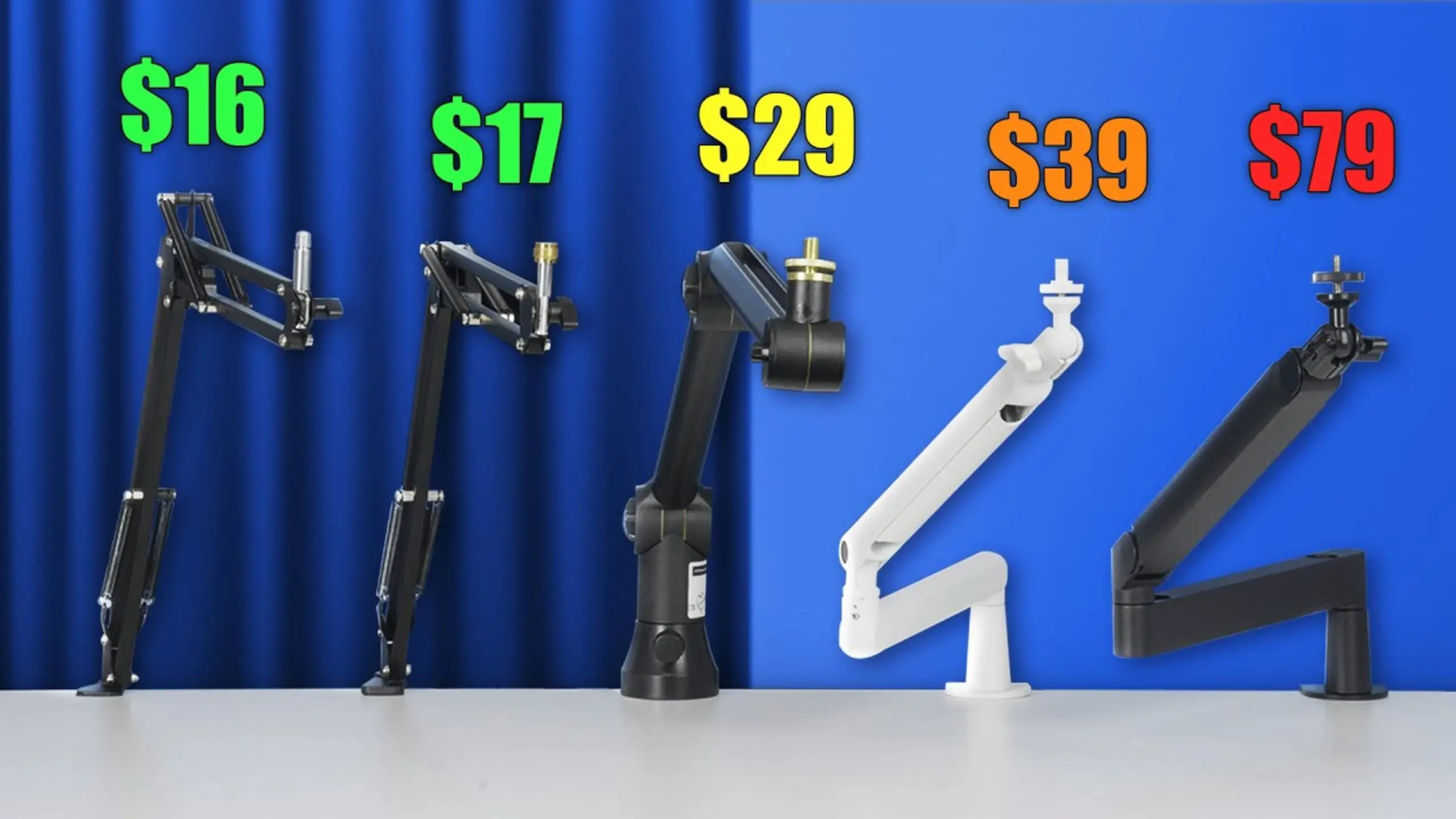
A good microphone arm does more than hold your mic. But with dozens of options, which are the best microphone boom arms? Low-profile or traditional? Spend $15 or $130? Does the pricier arm actually perform better, or are you just paying for a logo? We tested five boom arms head-to-head across build quality, cable management, weight capacity, and reach. Here’s what we found.
The Best Microphone Boom Arms Compared
| Product | Type | Max Desk Thickness | Max Range | Weight Capacity | Thread Sizes | Colors | Price |
|---|---|---|---|---|---|---|---|
| FIFINE BM88 | Low-profile | 2.4’’ | 27.8’’ | 1.5 kg/3.3lb | 1/4″, 3/8″, 5/8″ | Black, White, Pink | $50-$60 |
| Elgato Wave Mic Arm LP | Low-profile | 2.4’’ | 29.1’’ | 2 kg/4.4 lbs | 1/4″, 3/8″, 5/8″ | Black, White | $90-$100 |
| Sensic SA-30 | Traditional | 65mm | 32″ | 1kg/2.2 lb | 1/4″,3/8″, 5/8″ | Black | ~$70 |
| FIFINE CS1 | Traditional (scissor) | 2″ | 26’’ | Most mics | 3/8″, 5/8″ | Black, White, Pink | $17–$20 |
| Røde PSA 1+ | Traditional | 70mm | 940mm | 1.2kg | 3/8″, 5/8″ | Black, White | $130-$140 |
FIFINE BM88 — Best Overall
✔️Pros:
- Three thread sizes for mics, cameras, and lights
- Deep, secure plastic cable trays
- Black, white, and pink color options
- Ratchet desk mount works against walls
- Minimal branding
❗Cons
- Bottom-only cable routing
- Plastic (not metal) cable trays
The BM88 is the Amazon bestselling microphone stand for a reason — the black version alone moved over 3,000 units last month. It supports 1/4″, 3/8″, and 5/8″ threads, so you can mount a webcam, LED panel, or mic without extra adapters. The rounded bar feels smooth when repositioning, branding stays hidden near the desk clamp, and the build feels genuinely solid.

The BM88 closely mirrors the Elgato LP in form and function — same ratchet mount, same low-profile design, same thread versatility. The Elgato wins on material quality, but the BM88’s cable trays “are a lot deeper and there’s a lot more space for those cables to kind of go down side”, @Darkened Cyrus said on YouTube.
The only knock: no cable cutouts on top of the bars, so cables route from the bottom only. Minor hassle for most setups.
Elgato Wave Mic Arm Low Profile — Best Premium
✔️Pros:
- Premium weight and build
- Cable cutouts on both arms
- Upgraded magnetic covers
- Ratchet mount for tight spaces
- Clean aesthetic on camera
❗Cons:
- Magnetic covers detach when repositioning
- The ball head is hard to tighten
If budget isn’t your first concern and you want the most polished low-profile arm on the market, the Elgato LP delivers. Heavier metal, upgraded magnetic cable covers, and a level of fit and finish that feels distinctly high-end.
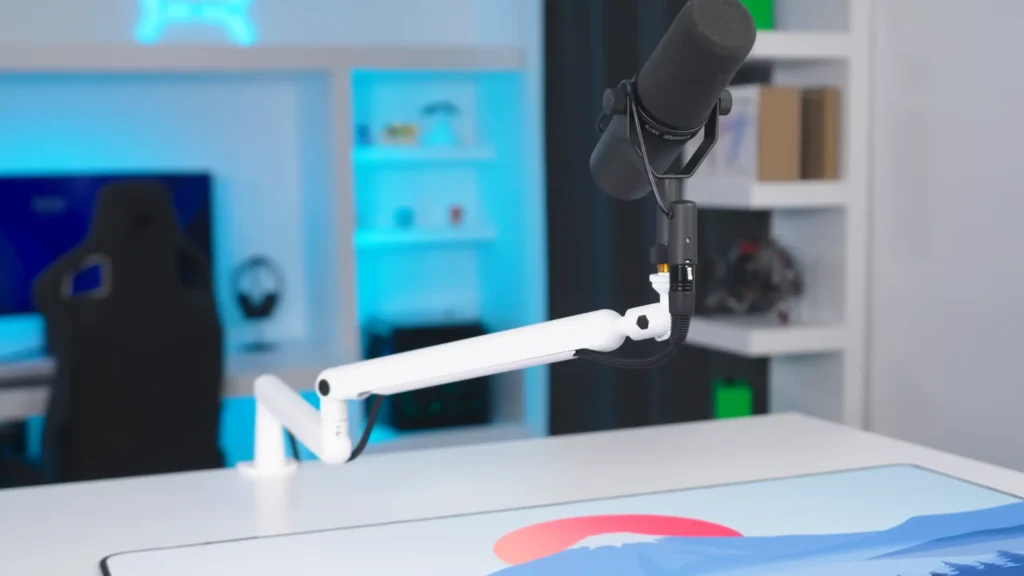
The Elgato LP arm runs cables through cutouts on both the top and bottom arms, uses upgraded magnetic trays that grip much better than the original release, and the ratchet desk attachment works beautifully in tight spaces. Pricing around $90-$100, this is a much more premium product than the other options.
What You May Concern: The ball head can be tricky to tighten with heavier mics. @DarkenedCyrus puts it, “This is kind of going to be with everything this screw. It is like the hardest thing to tighten.” And the magnetic cable covers can pop off when you extend the arm quickly. If you rarely reposition your mic, that’s fine. If you move it daily, it gets old.
Sensic SA-30 — Best for Gamers
✔️Pros:
- Smoothest arm movement tested
- 33″ extension for larger desks
- Ball mount for versatile mic positioning
- Detachable riser
- Integrated cable track
❗Cons:
- The plastic casing looks bulkier
- 2.2 lb max weight (lowest among traditional arms)
The Sensic SA-30 is the smoothest arm we tested. Period. If you need a traditional-style boom arm with maximum reach, butter-smooth movement, and a gaming-ready look, this is the one. At $70, it’s not cheap — but the build quality and functionality justify every dollar.
Designed for gaming setups, the SA-30 features a metal frame wrapped in a plastic casing with an integrated cable track. The 6″ detachable riser adds height, and the ball-mounted mic connection gives you more flexibility than fixed-mount alternatives. At 32″ of full extension, it’s the longest traditional arm we tested.

The plastic casing looks a bit chunky compared to sleeker arms, but the trade-off is a fully enclosed cable path that keeps everything hidden.
FIFINE CS1 — Best Budget
✔️Pros:
- Less spring noise than Innogear
- Sturdier desk mount
- Solid sub-$20 build
- Three color options
❗Cons:
- Some spring noise
- No 1/4″ thread
- Limited accessories
- Won’t match mid-range arm smoothness
The FIFINE CS1 is a classic scissor-style boom arm that looks like every other budget arm on Amazon. The difference is in the details. Side-by-side with the Innogear MU051 (its closest competitor), the CS1 produced noticeably less spring noise when repositioned — a big deal when springs sit right next to your mic.

In our testing, the Innogear mount also caused visible damage to the desk, likely from the clamping pin pushing through its stop pad. The CS1 in FIFINE held firm without marks.
Available in black, white, and pink at $17–$20. The FIFINE CS1 boom arm ships with 3/8″ and 5/8″ threads — no 1/4″ option for webcam mounting. The Innogear does ship with more accessories (pop filter, windscreen, mic mount), but the real build quality in FIFINE CS1 actually wins the game.
Røde PSA 1+ — Best for Longevity
✔️Pros:
- Decade-plus durability
- 34″ reach (longest tested)
- Fabric-covered arms
- Flush desk mount option
- 2.5″+ clamp spacing
❗Cons:
- No ball mount
- Not as smooth as the SA3
At $130, Røde the PSA 1+ earns its price through sheer durability. Fabric wraps the arms for a refined, studio-grade appearance, and cable management clips run along the edge.
The desk mount offers standard clamping plus a flush-mount option that fits directly into a desk hole for a seamless, clean finish. With 34″ of extension, over 2.5″ of clamp spacing, and a maximum weight capacity of 2.6 lb, it handles larger desks and thicker surfaces better than anything else here.
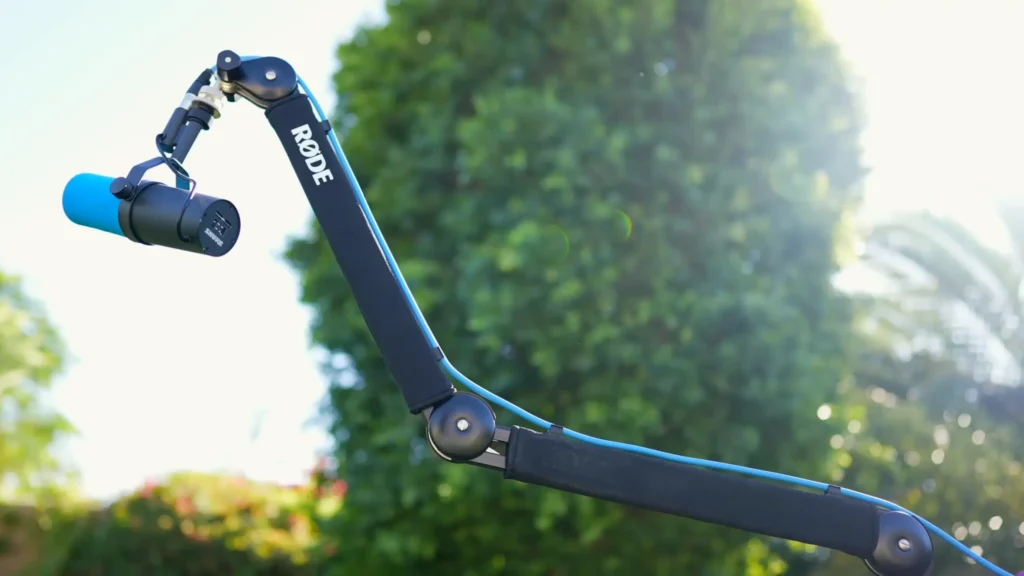
The drawbacks: It’s not the smoothest arm (the SA-30 wins there), and it skips the ball mount. But that simpler joint design is part of why it lasts — fewer moving parts, fewer failure points.
Which Boom Arm Fits Your Setup?
Not every arm suits every scenario. Here’s a quick-reference chart matching each pick to the people and use cases where it shines — and where it falls short.
| Product | Best For | Not Ideal For |
|---|---|---|
| FIFINE BM88 | 🎙️Streamers and content creators who want a clean look on camera 🎙️Dual-use setups (mic + webcam on the same arm type) 🎙️Remote workers on daily video calls | Users who need maximum vertical reach above the desk |
| Elgato Wave Mic Arm LP | 🎙️Creators seeking premium materials and top-tier design 🎙️Studio builds where the arm stays in one position 🎙️Multi-camera setups using 1/4″ thread | People who reposition their mic frequently (magnetic covers pop off) |
| Sensic SA-30 | 🎙️Gamers who need smooth, quiet repositioning 🎙️Podcasters at wide desks needing 33″ reach 🎙️Anyone who values buttery arm movement | Minimalist setups — the plastic casing looks bulky on camera |
| FIFINE CS1 | 🎙️Students, beginners, or anyone on a tight budget 🎙️Backup or secondary recording stations 🎙️Temporary setups for events or travel | Heavy mic users (SM7B long-term) · On-camera setups where aesthetics matter |
| Røde PSA 1+ | 🎙️Professional home studios and vocal recording setups 🎙️Podcasters who invest in gear for years 🎙️Thick-desk owners (standing desks, butcher block) | Budget-conscious buyers · Gamers who want quick, smooth repositioning |
What to Look for in a Microphone Boom Arm
Build Quality and Materials
The biggest differentiator between a $15 arm and a $100 one. All-metal internals with quality springs hold tension longer. If you hear loud cracking from the springs when moving the arm, that’s a red flag — cheap springs wear out faster, too.
Cable Management
Look for arms with integrated channels, hidden tracks, or deep trays. Magnetic covers look premium but can pop off during repositioning. Plastic trays with locking clips tend to be more reliable. Check whether the arm offers top-side and bottom-side cable access — some only route from one direction.
Weight Capacity and Reach
Match the arm to your mic. Most budget mics weigh under 2 lb, so even a 2.2 lb capacity arm works. For heavy dynamic mics like the SM7B, aim for 3 lb+. Full extension under 27″ may feel limiting on wider desks; 33″+ gives serious flexibility.
Thread Mount Sizes
Standard arms ship with 3/8″ and 5/8″ threads. Arms that also include 1/4″ (like the FIFINE BM88 and Elgato LP) double as mounts for webcams, LED panels, or cameras.
Low-Profile vs. Traditional
Low-profile arms sit under your monitor and stay out of your camera frame — cleaner on stream. Traditional scissor-style arms offer more vertical reach and are easier to swing aside. Choose based on whether you prioritize aesthetics or flexibility.
Desk Clamp Compatibility
Check your desk thickness. Most arms accommodate up to 2″, but thicker desks need the 2.5″+ spacing that premium arms like the Røde PSA 1+ provide.
Wrapping It Up
For most people, the FIFINE BM88 is the boom arm to buy and the best value in our testing by a comfortable margin.
Want the absolute best build quality? The Elgato Wave Mic Arm LP is a worthy upgrade. Gamers who need smooth movement and long reach should grab the Sensic SA-30. On a tight budget, the FIFINE CS1 gets the job done. And if you’re building a setup for the long haul, the Røde PSA 1+ will still be working long after everything else on your desk has been replaced.
FAQs on the Best Microphone Boom Arms
How much should I spend on a microphone boom arm?
$30–$50 gets most people a well-built arm with solid cable management. Budget arms under $20 work but tend to develop spring noise over time. Premium arms ($80+) make sense if you’re on camera daily or want gear that lasts years.
Can I use a boom arm for my webcam?
Yes, if it supports a 1/4″ thread mount. The FIFINE BM88 and Elgato LP both include 1/4″ adapters for webcams, LED panels, and small cameras.
Low-profile or traditional — which should I pick?
Low-profile stays hidden below your monitors, keeping your camera frame clean. Traditional offers more vertical reach and easier repositioning. Streamers and video callers tend to prefer low-profile, voice-only recording setups that lean traditional.
Will a budget boom arm hold my Shure SM7B?
The SM7B weighs about 1.69 lb, so most arms can technically hold it. All eight arms in our testing supported it without immediate sagging. For sustained heavy use, aim for arms rated at 2.5 lb+ capacity.
How do I stop my boom arm from making noise?
Spring noise is common with scissor-style arms. Low-profile arms avoid it entirely since they use internal tension instead of exposed springs. For existing noisy arms, a small amount of white lithium grease on spring contact points can help.
