
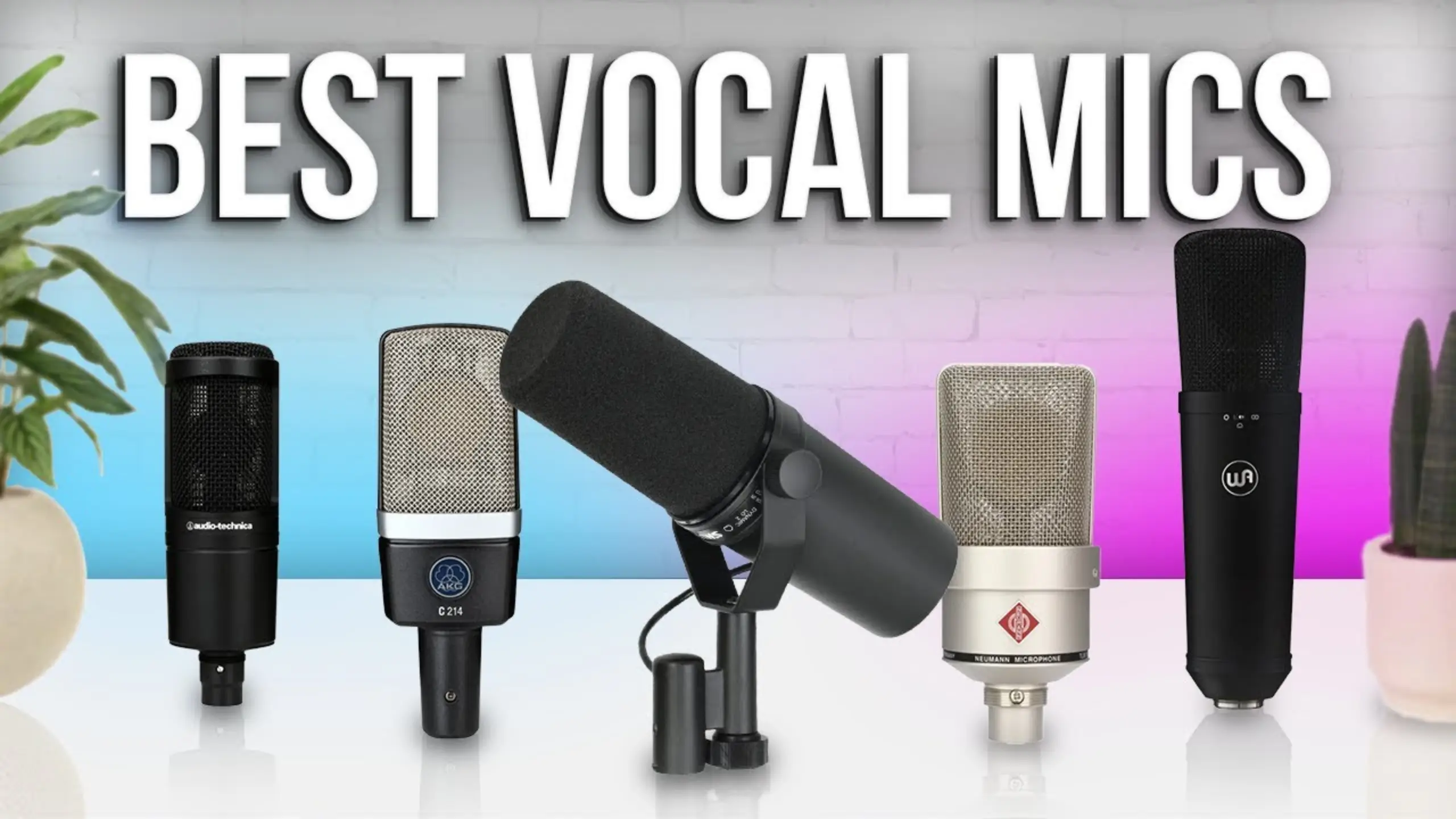
Best Microphones for Recording Vocals: Top 5 Picks for 2026

Recording vocals with your phone is the easiest way, while a good microphone will level up your vocal recordings. But with hundreds of options, it’s easy to get overwhelmed. We spent weeks testing the best microphones for recording vocals across multiple genres and voice types. We evaluated each on sound quality, versatility, build, value, and how well it handles real-world home studio conditions. Here’s what we found.
Warm Audio WA-87: Best Overall
Verdict: 9.2/10— The mic we reach for first, every time.
| Criteria | Score |
| Sound Quality | 9.5/10 |
| Versatility | 9.5/10 |
| Build Quality | 9.0/10 |
| Value for Money | 9.0/10 |
Pros:
- Captures the vintage Neumann U87 character at ~$700 vs. ~$3,200
- Midrange-heavy tone that sits beautifully in a mix
- Responds well to EQ and processing
- Doubles as a versatile instrument mic
Cons:
- Raw recordings can sound slightly warm and require EQ
- Not the cheapest option on this list
- Doesn’t perfectly replicate the original U87
The WA-87 leans into the midrange — exactly where vocals live. Your voice sits naturally in a mix without much post-production wrestling. For singers with thinner voices, it adds body. For deeper voices, it preserves richness without muddiness.
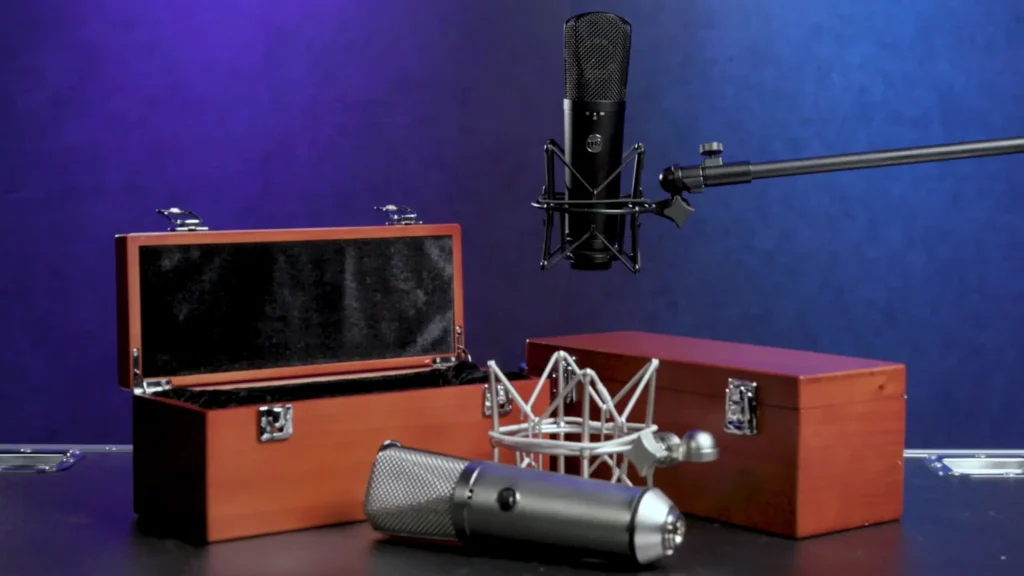
It also doubles as a studio workhorse for guitars, pianos, and drums. At ~$700 vs. the $3,200 Neumann U87 it’s modeled after, the value proposition is hard to beat. The midrange focus means raw recordings benefit from a little EQ, but that’s a small trade-off for this level of versatility.
Shure SM7B: Best for Untreated Rooms & Podcasting
Verdict: 9.4/10 — The highest-scoring mic on our list, held back only by one quirk.
| Criteria | Score |
| Sound Quality | 9.5/10 |
| Versatility | 8.5/10 |
| Build Quality | 10/10 |
| Value for Money | 8.5/10 |
Pros:
- Warm, full-bodied tone that flatters almost every voice
- Rejects room noise like no other mic on this list
- Go-to choice for background vocals and layered tracks
- Built to last decades (Michael Jackson recorded Thriller on one)
Cons:
- Requires a Cloudlifter (~$150) for most budget interfaces
- Less high-end sparkle than condensers
The SM7B is a studio icon. Its warm profile makes it a go-to for singers who belt — it absorbs energy without harshness. As a dynamic mic, it shrugs off background noise, making it perfect for untreated home studios.
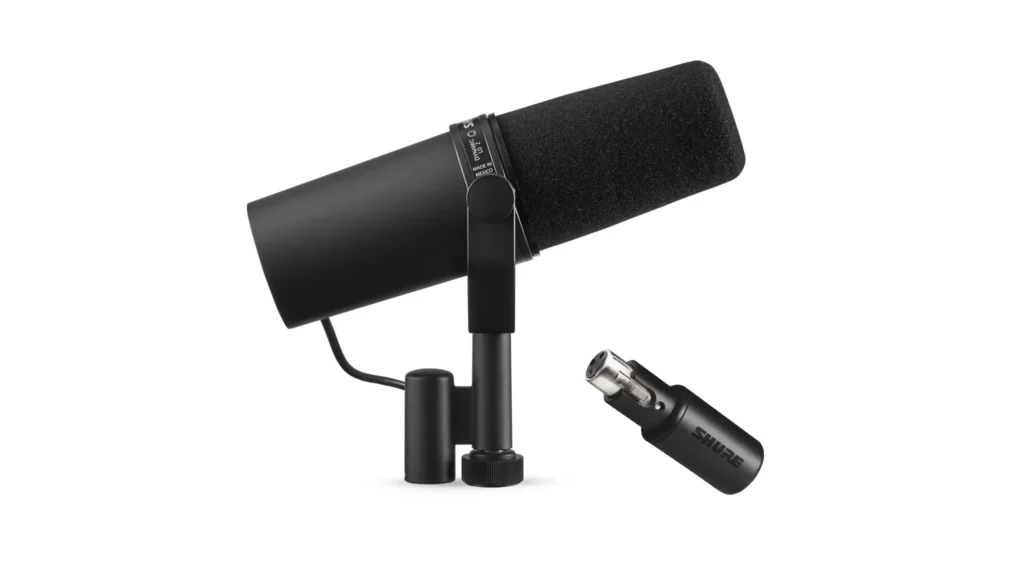
It’s the industry standard for podcasting, but equally at home recording lead or background vocals. That warm tone helps the backing vocals blend seamlessly. Fun Fact: Michael Jackson used it to record his Thriller album.
The gain issue is real, though. Budget interfaces will struggle. A Cloudlifter (~$150 extra) solves it. It’s worthy, especially if your room isn’t treated.
AKG C214: Best for Modern Pop & Hip-Hop Vocals
Verdict: 9.1/10 — A clarity machine for modern production.
| Criteria | Score |
| Sound Quality | 9.5/10 |
| Versatility | 8.0/10 |
| Build Quality | 9.0/10 |
| Value for Money | 8.5/10 |
Pros:
- Detailed high-mid presence that’s hard to replicate with EQ
- Professional clarity that outperforms budget condensers
- Solid step up from the AT2020 and NT1
- Great for any vocalist focused on modern production styles
Cons:
- ~$500 price tag
- Can sound too bright on thinner voices
- Less versatile for folk or acoustic genres
The AKG C214 is the little sibling of the legendary AKG C414, and it holds its own for pop and hip-hop vocals. That 4–6 kHz presence range is critical for modern vocal production — it gives vocals their “front of the mix” quality. You can boost that range with EQ on a cheaper mic, but the results never sound as natural as capturing it at the source.
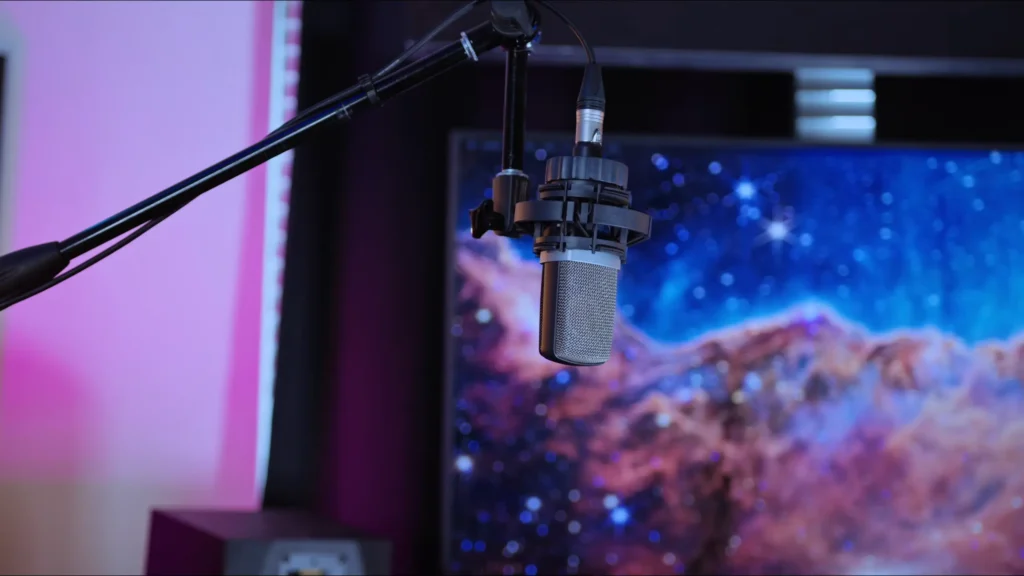
Less suited for softer acoustic recordings, but for modern genres, it punches hard. At ~$500, it’s a meaningful upgrade over entry-level condensers in terms of detail and clarity.
RØDE NT1 (5th Gen): Best Budget Condenser Mic
Verdict: 8.6/10 — The smart upgrade from entry-level.
| Criteria | Score |
| Sound Quality | 8.5/10 |
| Versatility | 8.0/10 |
| Build Quality | 9.0/10 |
| Value for Money | 9.0/10 |
Pros:
- 32-bit float recording prevents clipping
- Detailed, crisp sound at a budget-friendly price
- One of the best-selling large diaphragm condensers ever
- Solid step up from the Audio-Technica AT2020
Cons:
- Top-end brightness can be harsh on thinner voices
- Requires a treated room (like all condensers)
- Don’t confuse it with the brighter NT1-A — they’re different mics
At $160, the 5th gen RØDE NT1 hits a smart middle ground: meaningfully better than true budget mics, but still accessible. The 32-bit float feature is a genuine differentiator — if you’ve ever lost a perfect vocal take to clipping, you’ll appreciate the peace of mind.

Just be mindful of your voice type. It leans bright, which suits deeper voices but can be harsh on thinner singers.
FIFINE K688: Best Budget Dynamic Microphone
Verdict: 8.0/10 — The best bang-for-buck mic under $100.
| Criteria | Score |
| Sound Quality | 7.5/10 |
| Versatility | 8.5/10 |
| Build Quality | 7.5/10 |
| Value for Money | 9.5/10 |
Pros:
- Dual USB and XLR outputs for maximum flexibility
- Strong background noise rejection (cardioid pattern)
- SM7B-inspired build and sound at a fraction of the cost
- Versatile enough for vocals, instruments, and podcasting
Cons:
- Bass-heavy when recording instruments head-on (angle it for better results)
- Not in the same league as $300+ mics for critical vocal work
The FIFINE K688 dynamic microphone borrows from the Shure SM7B playbook — cardioid dynamic design at $79. Its biggest selling point is flexibility. USB lets you start recording immediately with no interface, while XLR means you won’t outgrow it when you upgrade. That dual-output design puts it ahead of most mics in this price range.
In testing, the K688 mic handled spoken word cleanly and recorded ukulele and acoustic guitar with usable results straight out of the box. @Johnny McPro joked it’s an “all-in-one Swiss army knife”. At $79, it’s hard to find a more complete package for budget-conscious creators.
One tip: angle the mic slightly when recording instruments rather than pointing it directly at the source — this reduces bass buildup.
Buying Guide: What to Look for in a Vocal Microphone
Dynamic vs. Condenser
Dynamic mics (SM7B, FIFINE K688) reject background noise and forgive imperfect acoustics. Condensers (WA-87, C214, NT1) capture more detail but also pick up room reflections. No acoustic treatment? Go dynamic. Got panels or a booth? A condenser rewards you with extra clarity.
Sound Profile and Voice Matching
Every mic has a character. Some emphasize warmth (WA-87, SM7B), others lean bright (NT1, C214). Deeper voices often benefit from brighter mics that add clarity. Thinner voices usually sound better through warmer mics that add body.
Budget and Total Cost of Ownership
The sticker price isn’t always the whole story. The SM7B needs a ~$150 Cloudlifter. Condensers require phantom power from your interface. Factor in cables, shock mounts, and pop filters — some mics bundle accessories in, while others sell them separately.
Build Quality and Longevity
A good mic should last years. Metal construction, solid shock mounts, and durable connectors matter. Budget mics with plastic housings might save money upfront, but develop issues faster.
Versatility
Buying one mic for everything? The WA-87 and K688 both handle multiple sound sources capably. More specialized mics like the C214 excel in narrower use cases.
Easy Guide to Start Your Vocal Recording
Got your mic? Here’s how to start your vocal recording.
1. Set up your space. Find the quietest room in your home. Usually, a closet is the ideal “recording room”. Close windows, turn off fans, and hang blankets or towels on bare walls if you don’t have acoustic panels.
2. Connect your mic. Plug your mic into recording equipment. Condenser mics need phantom power — look for the “48V” button on your interface and switch it on.
3. Position correctly and set the gain. Place the mic 6–8 inches from your mouth. Use a pop filter to tame plosives (those harsh “P” and “B” sounds). Sing across the mic slightly off-axis to reduce sibilance. Also, adjust the volume level until your levels peak around -12 to -6 dB, so that you’ll have enough headroom to avoid clipping without recording too quietly.
4. Do a test recording. Record 30 seconds, play it back, and listen for room noise, clipping, or muffled sound. Small tweaks here save hours of editing later.
6. Hit record. Once your levels are clean and your positioning feels right, go for it. Don’t chase perfection on take one — record multiple passes and pick the best moments from each.
Pick Your Best Microphones for Recording Vocals
In our best microphone for recording vocals list, the Warm Audio WA-87 earns our top recommendation for its blend of classic tone, versatility, and value. But your best mic depends on your situation. Untreated bedroom? The Shure SM7B handles room noise. Modern pop or hip-hop? The AKG C214 delivers polished presence.
Tight budget? The FIFINE K688 at $79 gives you dual connectivity and capable sound. And the RØDE NT1 is the smart step-up for anyone outgrowing a starter mic. No mic on this list is a bad choice. Match the right one to your voice, your room, and your goals.
FAQs
Do I need an audio interface to use these microphones?
For XLR mics, yes — you’ll need an interface with phantom power (for condensers). The FIFINE K688 connects directly via USB for plug-and-play simplicity.
Which mic type works best in an untreated room?
Dynamic mics like the SM7B or K688. Their tighter pickup pattern rejects background noise better than condensers.
Can I record instruments with a vocal mic?
Yes. The WA-87 and FIFINE K688 microphones both performed well on acoustic guitar and ukulele in our testing.
Is a more expensive mic always better?
No. Voice-mic pairing matters more than price. A $160 RØDE NT1 might sound better on your voice than a $1,200 Neumann. Match the mic’s sound profile to your vocal characteristics.
What about the Audio-Technica AT2020?
Still a solid starter, but recent price increases and strong competition from mics like the Melan Audio MA67 (similar performance, more accessories, same price) mean it’s no longer the automatic budget choice.
